Educators explore environmental problem-solving through e-STEAM

Educators explore environmental problem-solving through e-STEAM

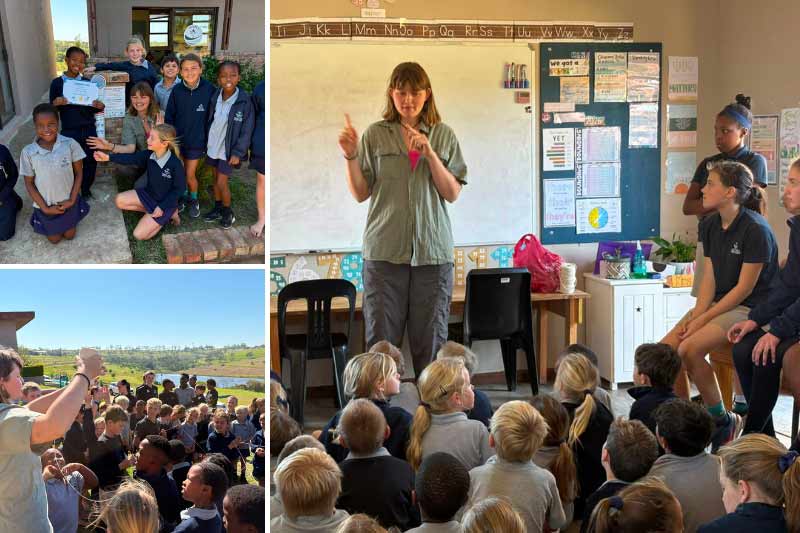
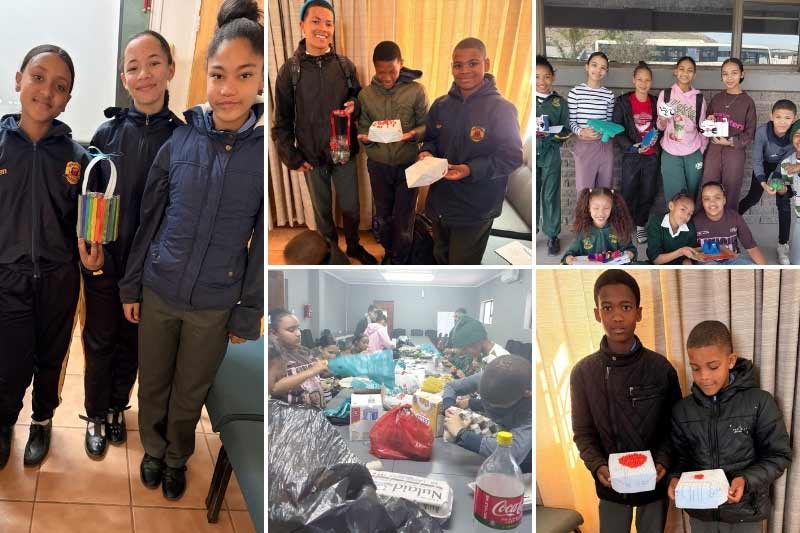
Pictured above: Educators participating in the NAAEE Educators Workshop

How can a butterfly’s feeding process inspire a classroom activity? How can nature help learners think differently about environmental challenges in their communities?

During May 2026, WESSA welcomed educators from six schools to the WESSA uMngeni Valley Nature Reserve for two practical workshops focused on environmental problem-solving through e-STEAM education and biomimicry.

The workshops introduced educators to creative approaches that combine Environmental Education, Science, Technology, Engineering, Arts and Mathematics. By bringing these disciplines together, e-STEAM encourages educators and learners to explore environmental challenges, understand their causes and develop practical solutions.

Equipping educators with tools for innovative learning


Pictured above: Six educators participating in the Concord Trust e-STEAM Project Educators workshop

The first workshop, held from 8–9 May 2026, formed part of the Concord Trust e-STEAM Project. Six educators from Zamuthule Primary School and Lions River Primary School participated in the two-day programme.

The second workshop took place from 15–16 May 2026 as part of the North American Association for Environmental Education Project. It brought together 10 educators from Woodlands Secondary School, Hawkstone Primary School, Curry’s Post Primary School and Crystal Springs Primary School.

Across both workshops, educators explored ways to integrate e-STEAM methodologies into classroom teaching and learner engagement. The sessions introduced arts-based learning and biomimicry, an approach that draws inspiration from nature when exploring challenges and possible solutions.

Turning environmental challenges into opportunities for learning


Pictured above: Educators participating in the NAAEE Project Educators Workshop

The workshops placed practical learning at the centre of the experience.

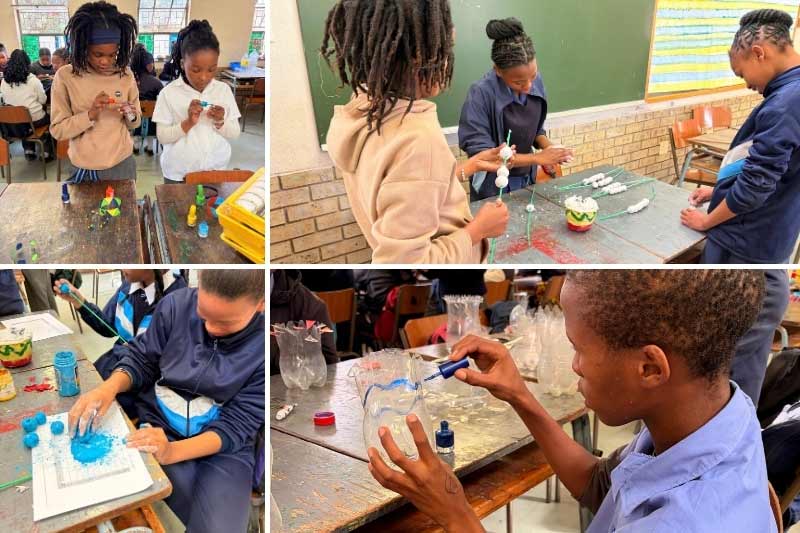
Educators took part in activities inspired by nature, including biomimicry exercises and, during the North American Association for Environmental Education workshop, butterfly feeding simulations.

They also worked through Problem Tree and Solution Flower exercises. These activities encouraged participants to identify environmental challenges, explore their causes and effects, and think critically about possible responses.

Team-building and critical-thinking activities in the e-STEAM room further demonstrated how creative, solution-based learning can encourage collaboration and active participation.

From educator workshops to learner-led solutions


The workshops mark the beginning of a longer learning journey for the participating schools.

Educators will take the knowledge and practical tools gained during the sessions back into their classrooms and school communities. With ongoing support through WESSA school visits and mentorship, participating schools will continue exploring environmental challenges and developing solutions throughout the year.

Learners will ultimately have an opportunity to develop prototypes that respond to the issues identified at their schools and present their ideas during a final showcase workshop.

Inspiring a new approach to environmental education


By combining environmental education with creativity, science and problem-solving, the workshops are helping educators create opportunities for learners to engage with real-world challenges in meaningful ways.

The WESSA uMngeni Valley Nature Reserve offered a fitting setting for this work: a space where educators could learn from nature while exploring how to help young people become thoughtful, innovative environmental problem-solvers.

When learners are encouraged to observe, ask questions and design solutions, environmental education becomes more than a lesson. It becomes a pathway to action.

eWASA Partnership: Building a recycling culture at schools across Springbok and surrounding areas

eWASA Partnership: Building a recycling culture at schools across Springbok and surrounding areas

Pictured above: WESSA Project manager Daniel Jackson engaging learners at Namaqualand High School about the different plastic recycling codes during an assembly

From 5–8 May 2026, WESSA and eWASA launched school recycling programmes at 10 schools in Springbok and surrounding areas in the Northern Cape. The sessions brought together learners, teachers and school staff to build practical knowledge of recycling and establish systems that can support more responsible waste management at school level.

The participating schools included:

  1. Hoërskool Namaqualand
  2. Primêre Skool Springbok
  3. Dr Izak van Niekerk Primary School
  4. Okiep Primary School
  5. Okiep High School
  6. Concordia Primary School
  7. Sacred Heart Primary School
  8. St Cyprians Primary School
  9. Ferdinand Brecher Primary School
  10. Steinkopf High School

Turning knowledge into action

During the education sessions, learners and teachers were introduced to the recycling process and took part in separation-at-source activities. These practical demonstrations showed participants how to correctly separate and sort their waste, helping to make recycling a more accessible part of everyday school life.

Each school received three recycling bins, as well as two bulk-bag stands with bulk bags, to support the start of its recycling journey.

The launch sessions were supported by Lifestone Recycling, which guided schools on which materials can and cannot be recycled and explained how the collection process will be implemented at each school. The Department of Agriculture, Environmental Affairs, Rural Development & Land Reform also joined the sessions in support of the initiative.


Pictured above: (Top left) The eco-committee at Dr Izak van Niekerk Primary School with their new recycling bins; (top right) Recycling education assembly at Steinkopf High; (bottom left & right) Okiep Primary School – Separation at source activity & Lifestone Recycling explaining the recycling collection process

Creating sustainable systems at school level

Providing recycling infrastructure is an important step, but the project is also focused on strengthening understanding and encouraging lasting behaviour change.

Through the sessions, learners and teachers gained practical knowledge of responsible waste management and improved their ability to separate recyclable materials at source. The new bins and bulk bags provide the participating schools with the tools needed to begin building sustainable recycling initiatives of their own.

By helping schools turn waste management education into daily action, the eWASA and WESSA Schools Waste Management and Education Project is supporting a culture of environmental responsibility that can extend beyond the classroom and into the wider community.


Pictured above: : Recycling Bins donated to Primêre Skool Springbok; Recycling education with the eco-committee at Ferdinand Brecher Primary School facilitated by Daniel Jackson, WESSA Project Manager

Sun International Schools shine at Trashion-Art Show, turning waste into creativity

Sun International Schools shine at Trashion-Art Show, turning waste into creativity

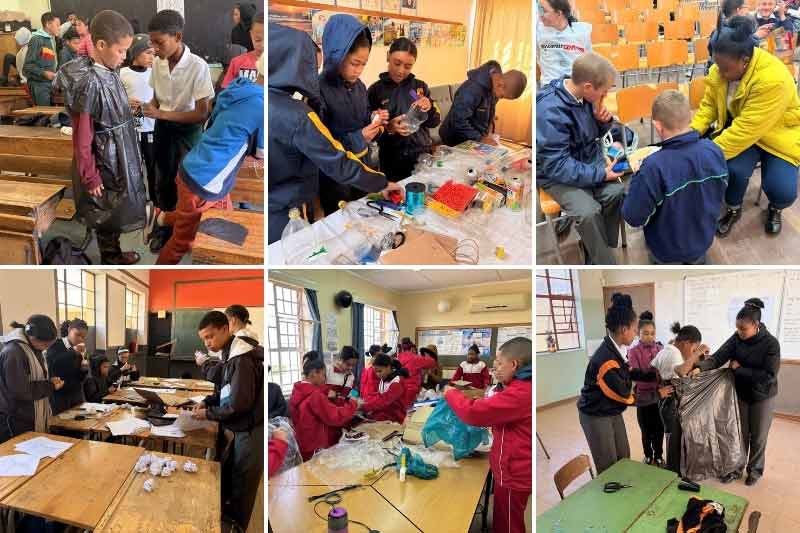
Pictured above: WESSA X Engie – International Day for Biodiversity at Sedi-Laka Primary School

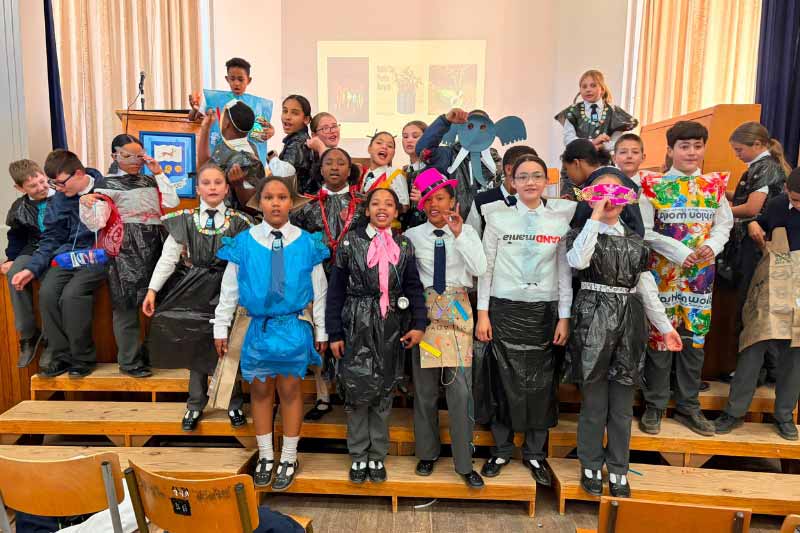
On 8 May 2026, Glenhaven Secondary School hosted a vibrant Trashion-Art Show that brought together learners from four Sun International schools: Glenhaven Secondary School, Palmview Secondary, Waterloo Secondary and Phoenix Secondary.

Learners competed in two creative categories, the Trashion Show and Waste Art, using their imagination to explore how discarded materials can be transformed into something meaningful. The event encouraged participants to think differently about waste and consider innovative solutions to waste-management challenges in their schools and communities.


The programme was supported by Cleansing and Solid Waste (CSW) Durban and Manaza Recycling, who shared practical insights on waste management and sustainability and assisted with adjudicating the competition.


The event celebrated creativity, environmental awareness and the power of young people to turn everyday waste into new ideas.

Congratulations to all participants, and especially to the 1st, 2nd, and 3rd place winners who walked away with amazing prizes for each category.


Pictured above: Engie staff & Sedi-Laka Primary School learners celebrating a successful day of planting initiatives

430+ Schools recognised across South Africa at WESSA Eco-Schools Awards 2025

430+ Schools recognised across South Africa at WESSA Eco-Schools Awards 2025

Pictured above: WESSA CEO Cindy-Lee Cloete

(Press release – 8 May 2026)

The Wildlife and Environment Society of South Africa (WESSA) concluded all provincial awards ceremonies for its 2025 Eco Schools programme end of March this year.

More than 430 schools across South Africa have been recognised for their environmental leadership and measurable sustainability action at the WESSA Eco-Schools Awards 2025, marking a powerful national movement driven by education, youth leadership and community impact.

Across eight provinces – including Gauteng (120+ schools), Free State (134 schools), KwaZulu-Natal (46), Western Cape (31), Eastern Cape (31), Northern Cape (29), Limpopo (24) and Mpumalanga (17) – the awards celebrate schools that are transforming environmental awareness into meaningful, on-the-ground action.

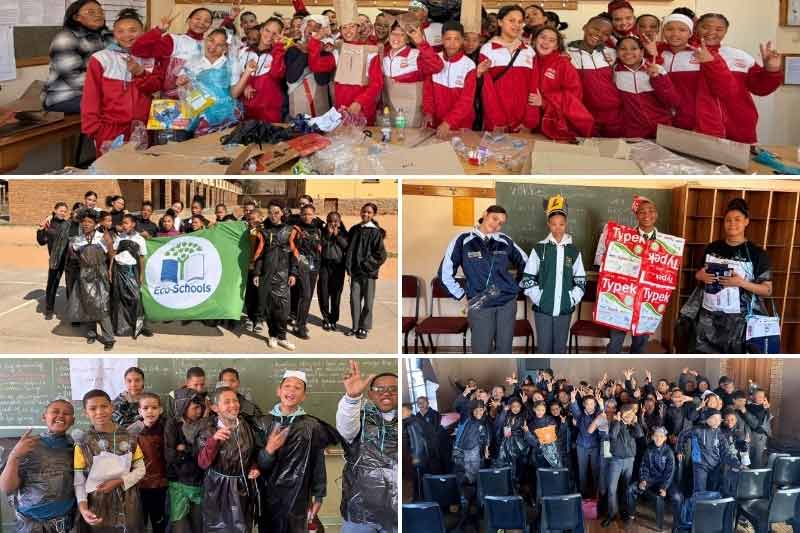
(Pictured above: (clockwise from top) Kwa-Zulu Natal, Mpumalanga, Western Cape, Northern Cape recipients)

Implemented by WESSA (The Wildlife and Environment Society of South Africa), the Eco-Schools programme continues to demonstrate how education can drive real-world solutions – from water conservation and waste reduction to biodiversity protection and circular economy initiatives.

WESSA CEO Cindy-Lee Cloete positions the Eco-Schools programme within the organisation’s centenary milestone and reinforces its national significance: “In 2026 WESSA celebrates 100 years of citizen action, 100 years of environmental leadership, and 100 years of believing that education is the lever that will make a change in our communities and in our schools. Eco-Schools in South Africa is one of the most impactful environmental education programmes in this country – a teacher movement and a learner-led action campaign.”

Across provinces, a consistent theme emerged: schools are no longer simply learning about sustainability, they are actively shaping it.

(Pictured above: (clockwise from top) Gauteng, Free State, Eastern Cape and Limpopo recipients)

WESSA Head of Education and Sustainability Kelly Alcock highlights the programme’s outcomes-driven impact: “What makes it powerful is not its scale, it is its measurable change. This is education that moves beyond awareness into action.”

Similarly, WESSA Schools and Youth Senior Programme Manager Nomfundo Ndlovu emphasises the shift from participation to leadership: “When learners are given the tools, space and support to engage with real-world challenges, they don’t just participate, they lead.”

Across the regional award ceremonies, provincial partners and keynote speakers reinforced the broader societal value of environmental education:

  • In Limpopo, keynote speaker Farina Lindeque from the University of Limpopo highlighted the importance of experiential learning, sharing that, “Environmental education becomes powerful when we design experiences that move learners from noticing to caring to acting.”
  • In the Eastern Cape, education leader Pumla Gxuluwe reflected on the programme’s long-term impact, reminding us that, “When we invest in young people and the environment together, we are planting the strongest roots for the future.”
  • In Gauteng, Ms Dululu Hlatshaneni, Deputy Director: Social Cohesion and Equity in Education at the Department of Basic Education, emphasised that, “These achievements reflect leadership, innovation and a shared vision for sustainable development.”
  • Across provinces such as KwaZulu-Natal and the Northern Cape, schools demonstrated how local action translates into measurable impact, from recycling thousands of kilograms of waste to restoring ecosystems and driving community-based environmental initiatives.

Several notable award winners across provinces further highlighted schools that have demonstrated exceptional, long-term commitment, innovation and leadership in environmental education:

  • KwaZulu-Natal
    • Emerald Award (20 years): Pitlochry Primary School; Shea O’Connor Combined School
    • Arum Lily Award (22 years): Epworth School; The Birches Pre-Primary School
  • Gauteng
    • Platinum 2 Decade (Year 17): Pecanwood College
  • Free State:
    • Diamond Award (10 Years Participation): Batjha Primary School (Botshabelo, Mangaung Metro) and Nthuthuzelo Primary School (Bultfontein, Lejweleputswa District)
  • Western Cape:
    • Silver Decade Award: Newberry House Montessori School
    • Platinum 1 Decade Award: Sir Lowry’s Pass Primary School
    • Platinum 2 Decade Award: Beaumont Primary School

As WESSA marks its centenary year in 2026, the Eco-Schools Awards highlight more than achievement, they reflect a growing national movement where classrooms are becoming hubs of environmental leadership.

As Cloete concludes: “We are not just teaching learners about environmental challenges, we are equipping them to respond with confidence, creativity, and purpose.”

From urban centres to rural communities, these schools collectively demonstrate that the future of environmental sustainability in South Africa is already being shaped – one classroom at a time.


Gallery – links to full Facebook albums for 2025 Eco Schools Awards event

Welcome to WESSA’s Coastal Programme interns in Durban

Welcome to WESSA’s Coastal Programme interns in Durban

Pictured above: (left) Thokozani Maphalala and (right) Khwezi Dlomo

WESSA is pleased to welcome Thokozani Maphalala and Khwezi Dlomo, who have joined the Coastal Programme as interns based at the Durban office.

Their arrival brings fresh energy, practical skills and a shared commitment to environmental learning, responsible tourism and coastal conservation.

Why they joined WESSA

For Thokozani, who holds a Diploma in Tourism Management, joining WESSA is an opportunity to connect his passion for tourism with environmental protection. He sees tourism as “more than just travel”, but as a way for people to connect meaningfully with places, communities and nature.

WESSA’s mission of “People Caring for the Earth” strongly resonates with him, especially through programmes such as Blue Flag and Green Coast, which show how conservation and tourism can work together.

“I bring a visitor-focused perspective from my tourism background,” says Thokozani. “I understand guest experience and how sustainability influences travel choices.”

He hopes to contribute ideas that improve visitor engagement at WESSA tourism sites, including stronger sustainability messaging, better signage and simple feedback systems that help visitors understand how their actions support conservation.

Khwezi joins the team with a strong environmental background and valuable skills in GIS and data capturing. She is inspired by WESSA’s role in protecting the planet while educating and creating awareness in communities.

“As an environmentalist, WESSA aligns with my values of conserving nature while educating and creating awareness to different communities,” she says.

Khwezi is particularly interested in using her GIS and data skills to support coastal programmes such as Blue Flag, while also contributing her knowledge of coastal and environmental legislation. She hopes to grow her project coordination and management skills and deepen her understanding of what it takes to run effective Blue Flag and Green Coast initiatives.

 A clear interest in the future of sustainable tourism and environmental action

 Thokozani believes that green tourism creates opportunities beyond guiding and ranger work, including sustainability audits, eco-certification and environmental education. His advice to young people interested in this space is simple: learn the frameworks, understand the opportunities, and remember that “take only memories, leave only footprints” is not just a slogan, but the future of tourism.

Khwezi echoes this with a powerful reminder that sustainability is active and ongoing: “Green is a process, not a status. We need to think of ‘green’ as a verb, not an adjective.”

“As they begin their internship journey, Thokozani and Khwezi will support WESSA’s Coastal Programme in strengthening environmental awareness, visitor engagement and practical conservation action along South Africa’s coastline,” adds Mike Denison, WESSA Coastal Programme Senior Manager.

WESSA looks forward to seeing their growth, ideas and contributions take shape as part of the Durban team.

Welcome to Louelle Chelsea Philander, WESSA’s first Northern Cape Coordinator: Schools & Youth Unit

Welcome to Louelle Chelsea Philander, WESSA’s first Northern Cape Coordinator: Schools & Youth Unit

Pictured above: Louelle Chelsea Philander

WESSA is excited to welcome Louelle Chelsea Philander as our new Northern Cape Coordinator: Schools & Youth Unit.

Louelle brings a strong science-based foundation to the role, with a BSc Honours in Environmental and Water Science and experience across biodiversity management, project coordination, community-based environmental education and stakeholder engagement. Her work has included invasive species management, ecological restoration, environmental education, community outreach, skills development workshops and programme monitoring and reporting.

Louelle brings a strong science-based foundation to the role, with a BSc Honours in Environmental and Water Science and experience across biodiversity management, project coordination, community-based environmental education and stakeholder engagement. Before joining WESSA, she worked with L Noah Supplies and Projects, the City of Cape Town’s Environmental Management Department, including the Invasive Species Unit (Green Jobs Project) and Environmental Capacity Building Unit, as well as SANParks’ Addo Elephant National Park as the Tourism Monitor – Socio-Economic Transformation Department, where her work included ecological restoration, invasive species management, environmental education, community outreach, skills development workshops and programme reporting.

For Louelle, joining WESSA is an opportunity to deepen the impact of environmental education in schools and communities.

“Through my experience, I have witnessed the powerful role environmental education plays in engaging communities, fostering a sense of stewardship, and driving meaningful conservation outcomes.”

In her first year, Louelle hopes to strengthen engagement with schools and create lasting impact by helping learners and communities turn environmental awareness into meaningful action.

“I see these programmes as an investment in people – because when individuals carry the message forward, apply what they’ve learned, and share it with others, the impact grows far beyond just one interaction.”

Welcome to the team, Louelle. We’re excited to see the impact you will help grow across the Northern Cape.