
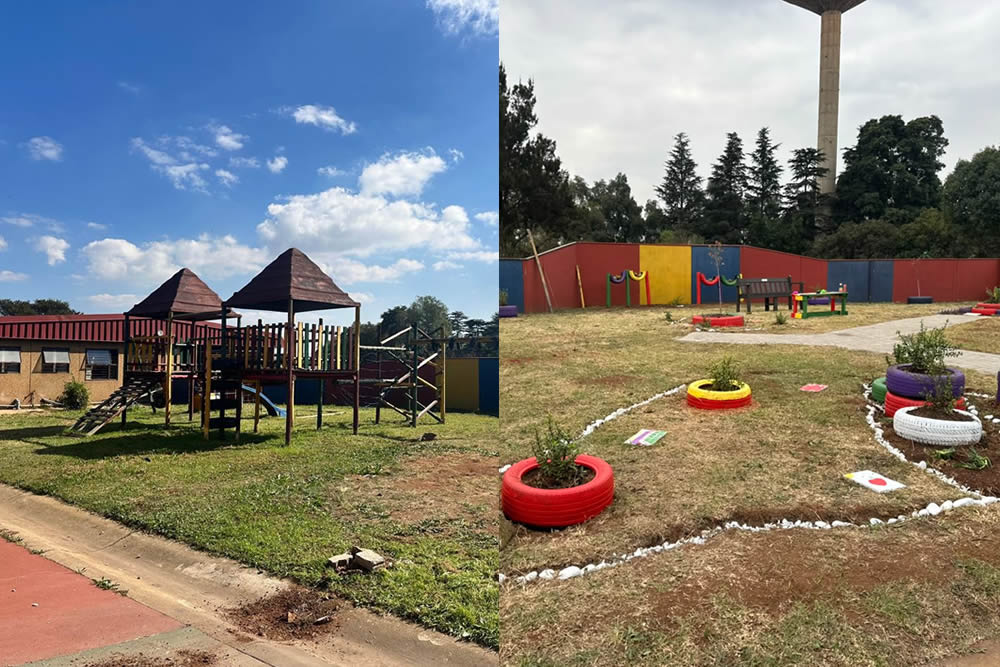
On 18 June 2026, WESSA and Wispeco Aluminium proudly unveiled the Sensory Garden at Ezibeleni Orthopaedic Home and School for the Physically Disabled, breathing new life into an unused outdoor space and transforming it into a welcoming, inclusive environment where learning and nature meet.
Thoughtfully designed to awaken all five senses, the garden invites learners to play, explore, discover, and grow in a space that supports both their well-being and development.
With indigenous plants, sensory experiences, interactive games, building blocks, and accessible seating, the garden is far more than a beautified space. It is a living classroom filled with possibility. It is a place where young minds are stimulated, confidence is nurtured, and every learner is given the chance to connect meaningfully with the natural world.

Pictured above: Learners painted tyres under the guidance of Wispeco staff
Through this powerful partnership, WESSA and Wispeco Aluminium have created a space that not only restores the environment but also touches lives in lasting and meaningful ways.
The day began with an overview of the project’s objectives, presented by the WESSA Project Manager, who introduced learners, educators, and Wispeco volunteers to the vision behind the initiative: to create an outdoor learning space that promotes environmental stewardship while supporting the diverse sensory and educational needs of learners with physical disabilities.
Before the practical activities began, participants took part in an interactive environmental education session facilitated by WESSA. The session explored the importance of biodiversity, the value of sensory gardens, and how accessible green spaces contribute to learner wellbeing, environmental awareness, and inclusive education.
Learners discovered how indigenous and pollinator-friendly plants provide habitat for wildlife while offering rich sensory experiences through colour, texture, fragrance, sound, and even taste.
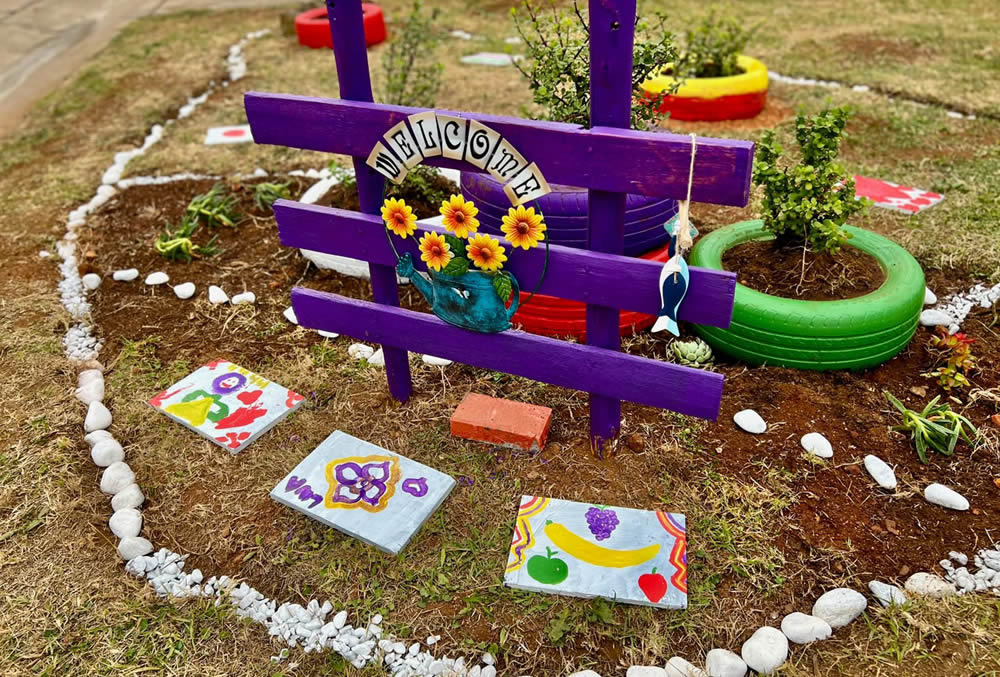
The garden was further enhanced with a dedicated corner featuring a table, games, and building blocks, designed to support play, cognitive development, and interactive learning. These additions ensure that all five senses are engaged, making the space more than a garden. It is a living, inclusive classroom where learners can see, hear, touch, smell, and taste while also strengthening creativity, problem-solving, and social interaction.
The environmental session was followed by collaborative garden activation activities, with participants divided into four teams to help bring the vision to life. A key feature of the project was the installation of an accessible outdoor seating area, providing learners and educators with a comfortable space for environmental lessons, quiet reflection, and sensory engagement.
The benches were engraved with the Wispeco Aluminium logo in recognition of the company’s generous sponsorship and its commitment to sustainability, community development, and inclusive education.
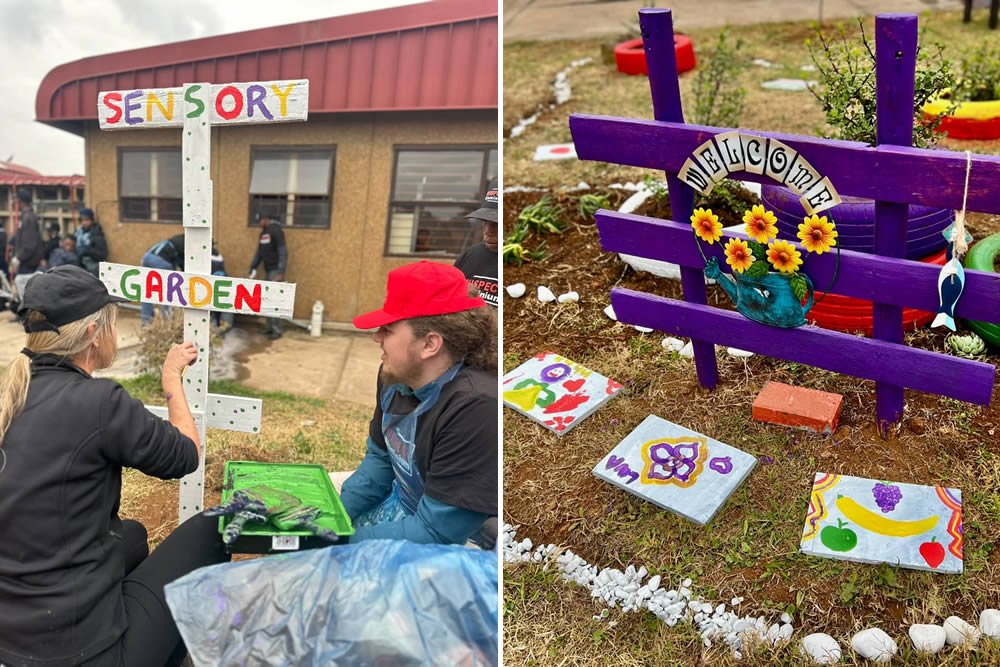
The Sensory Garden is more than a once-off greening initiative, it is a living classroom where learners can engage with biodiversity through hands-on experiences that support learning, wellbeing, and environmental responsibility. By combining inclusive design with biodiversity conservation, WESSA and Wispeco Aluminium have shown how meaningful partnerships can create spaces where every learner has the opportunity to experience, appreciate, and care for the natural world.