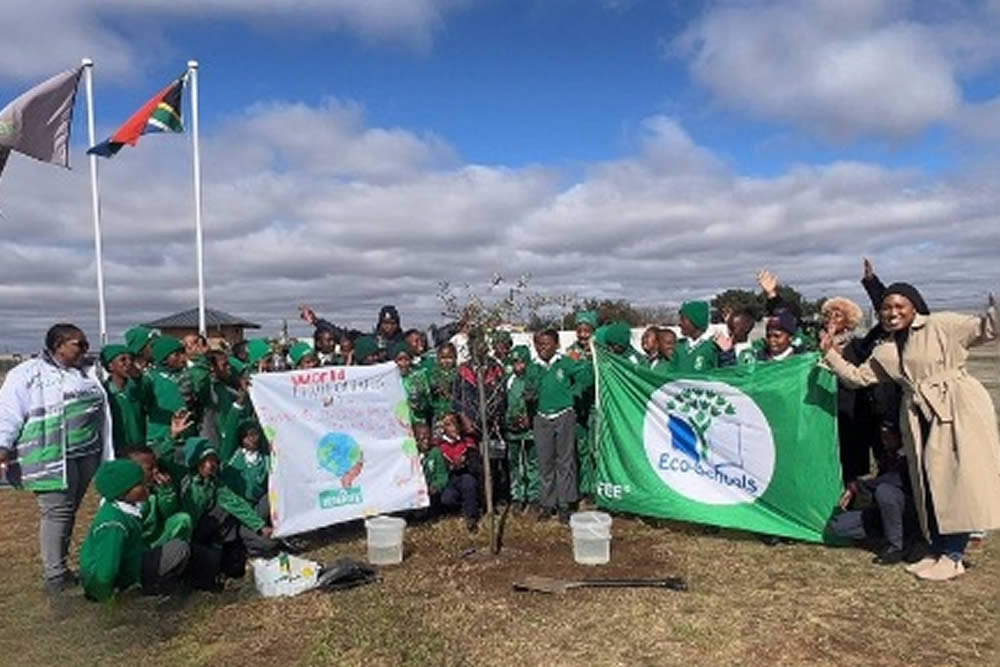
Pictured: Bekezela Primary School and Nelson Mandela Primary School – World Environment Day group photo
For over 70 learners across three schools, World Environment Day became more than an opportunity to learn about the environmental challenges facing their communities. It became a day to act.
“World Environment Day reminds us that creating a sustainable future starts with the choices we make today. Through the Nedbank Eco-Schools Circular Economy Project, learners are not only learning about environmental challenges but are actively becoming part of the solution,” says Nomfundo Ndlovu, Schools & Youth Senior Project Manager, of WESSA.
On 5 June 2026, learners from Bekezela Primary School and Nelson Mandela Primary School in Sasolburg, as well as Keledi High School in the Northwest Province, participated in hands-on environmental activities as part of the Nedbank Eco-Schools Circular Economy Project.
The broader Nedbank Eco-Schools Circular Economy Project currently reaches 10 schools, with five schools participating in the Free State and five in the North West Province.
Planting the seeds of change in Sasolburg
At Bekezela Primary School and Nelson Mandela Primary School, learners explored the connection between biodiversity conservation, climate resilience and sustainable living.
The learners created and painted environmental pledge posters, publicly committing to actions that reduce waste, protect natural resources and improve their school and community environments.
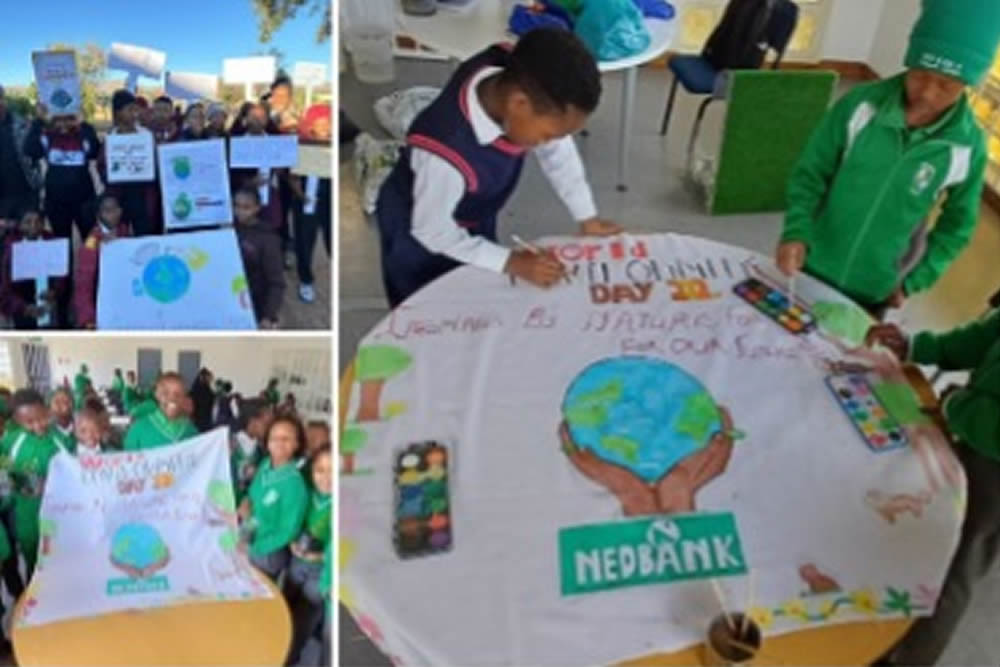
Pictured above: Top left – Keledi High School showcasing their pledges; right and bottom left: Bekezela Primary School learners creating pledges
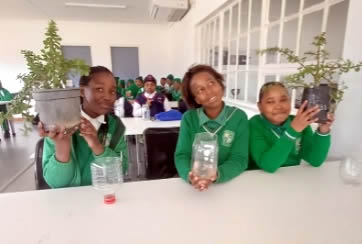
Learners from Bekezela Primary School propagating Spekboom
They also propagated 30 Spekboom cuttings, gaining practical skills while learning about the role this indigenous plant can play in supporting biodiversity, storing carbon and contributing to climate-change mitigation.
The planting of an indigenous tree added another lasting element to the day’s activities. As the tree grows, it will contribute to a greener learning environment while serving as a visible reminder of the learners’ commitment to caring for the planet.
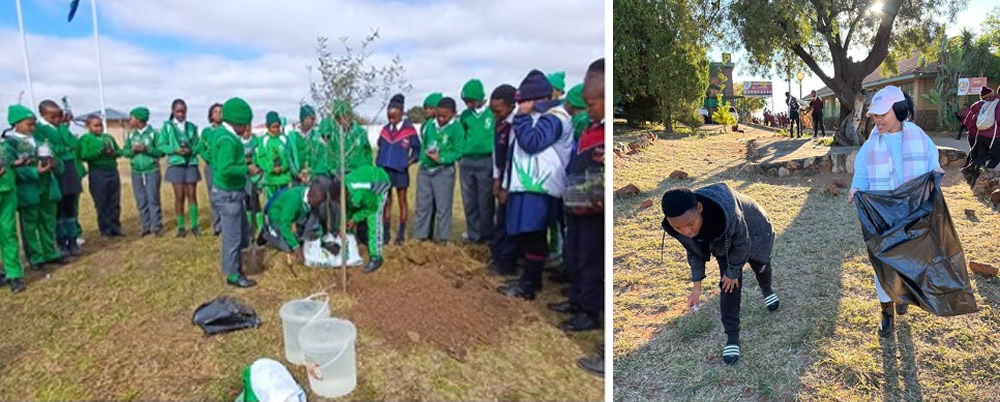
Pictured above (left): Tree planting with learners from Bekezela Primary School and Nelson Mandela Primary School
(right): School clean up at Keledi High School
Turning a clean-up into a lesson in collective responsibility
At Keledi High School in the Northwest Province, learners marked the day by making environmental pledges and participating in a school clean-up campaign, collecting a total of 10 big bags of waste.
The activity encouraged learners to take ownership of their surroundings while learning about responsible waste management and pollution prevention.
By working together to improve their school environment, the learners saw first-hand how individual choices can contribute to cleaner, healthier communities.
Building practical skills for a circular economy
The World Environment Day activities formed part of the broader Nedbank Eco-Schools Circular Economy Project, which connects environmental education with practical action.
Through the project, learners are encouraged to rethink waste, reduce consumption, reuse resources, promote recycling and protect biodiversity. Importantly, they are also learning that waste can be viewed as a resource rather than something to discard.
By collecting recyclable materials, reducing the amount of waste sent to landfill and exploring opportunities for income generation through recycling, learners are building skills that can support both environmental and social benefits.
“To date, eight school-based enterprises have been established through the project. Across our eight Nedbank Eco-Schools, learners have collected over 3800 kg of waste for recycling and generated just over R 5000 in income, demonstrating how environmental action can create practical opportunities while contributing to a more circular economy,” adds Senior Programme Manager, Nomfundo Ndlovu.
Small actions with lasting impact
The activities may have taken place on a single day, but their impact extends beyond World Environment Day.
Each Spekboom cutting propagated, each pledge made and each piece of waste removed represents a practical step towards more sustainable schools and communities.
“Through their participation in the WESSA Eco-Schools programme, the learners are developing the knowledge, skills and values needed to become environmental leaders. Their actions are a reminder that building a healthier planet does not always begin with a grand gesture. It often begins with a group of young people choosing to care for the spaces around them – and inspiring others to do the same,” concludes Ndlovu.