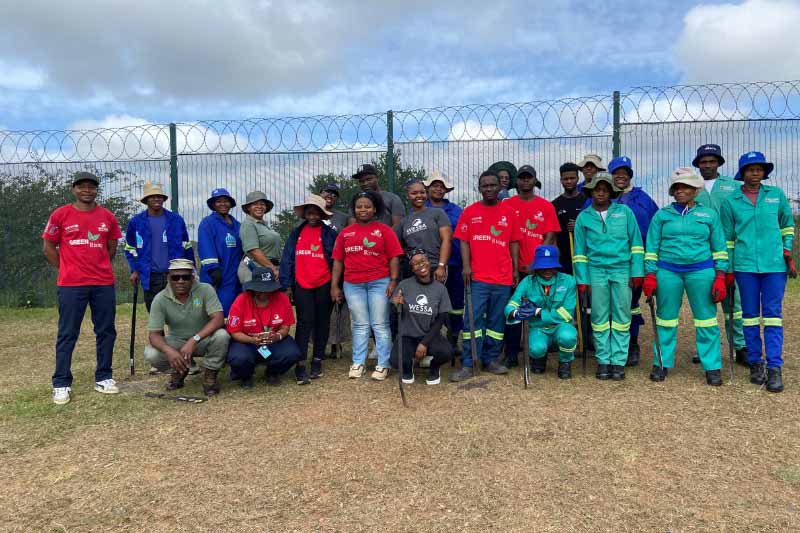
Pictured above: The team that rolled up their sleeves to conduct an alien invasive clearing event at New Germany Nature Reserve
From restoring natural ecosystems to planting food gardens and investigating river health, learners, families, volunteers and partners took part in a series of practical environmental activities across KwaZulu-Natal during May 2026.
Implemented through the UNICEF Green Rising project, the four activities demonstrated how environmental learning can move beyond the classroom and into farms, nature reserves, school grounds and local waterways. Together, they encouraged active participation in biodiversity conservation, food security, water stewardship and community-led environmental action.
Growing partnerships through sustainable agriculture
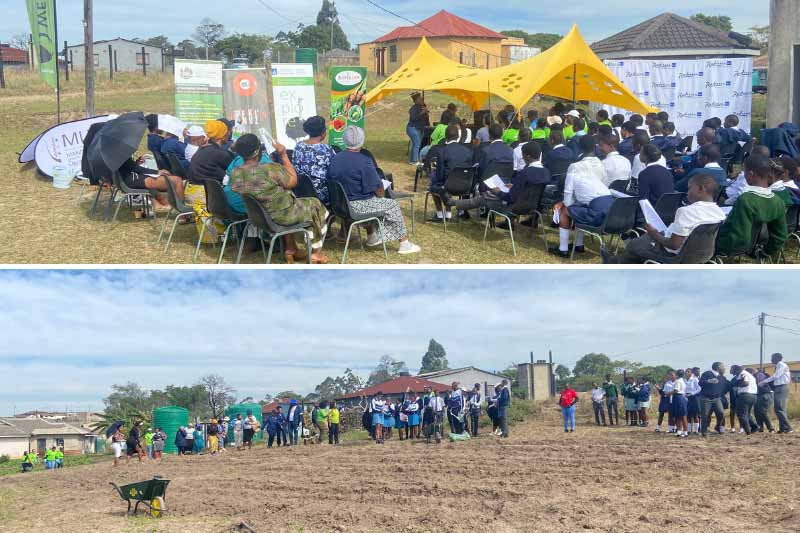
Pictured above: AgriGLAM Planting Day Programme held at AgriGLAM Farm in Engonyameni, Durban
On 12 May 2026, WESSA joined the AgriGLAM Planting Day Programme at AgriGLAM Farm in Engonyameni, Durban.
Held under the theme “Growing more than crops – Growing Partnerships,” the programme brought together stakeholders, educational institutions, community organisations and private-sector partners to promote sustainable agriculture, environmental stewardship and collaborative community development.
The day included discussions on sustainable agriculture, food security and alignment with the Sustainable Development Goals, particularly SDG 1: No Poverty and SDG 2: Zero Hunger.
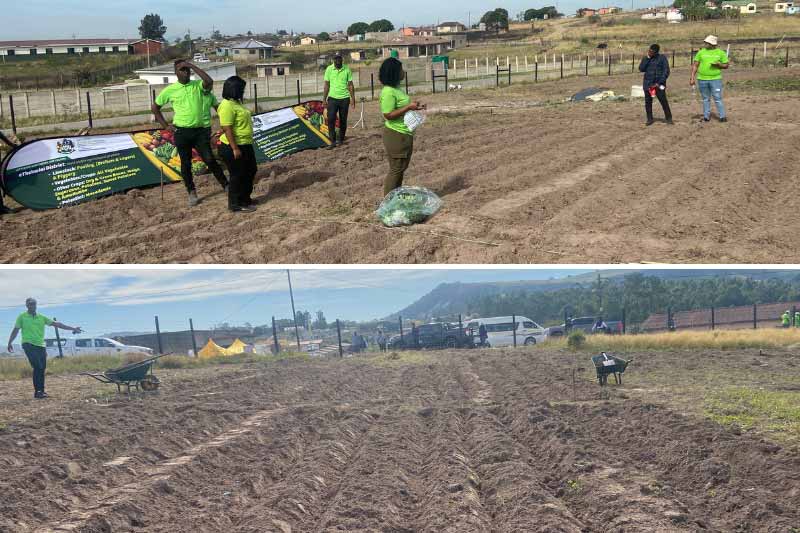
Pictured above: Preparing the land for 4000 seedlings – AgriGLAM Farm in Engonyameni, Durban
WESSA was represented by Project Coordinator Mrs Nomfundo Ngidi, alongside participants from the Durban Natural Science Museum, Mangosuthu University of Technology, Ithuba Agribusiness, the Department of Agriculture, Radisson Blu Hotel Umhlanga, the Social Economic Systems Institute, local schools and community representatives.
The programme culminated in a practical planting session, where participants collectively planted 4,000 seedlings to support food-security efforts and encourage community participation in sustainable agricultural practices.
Restoring biodiversity at New Germany Nature Reserve
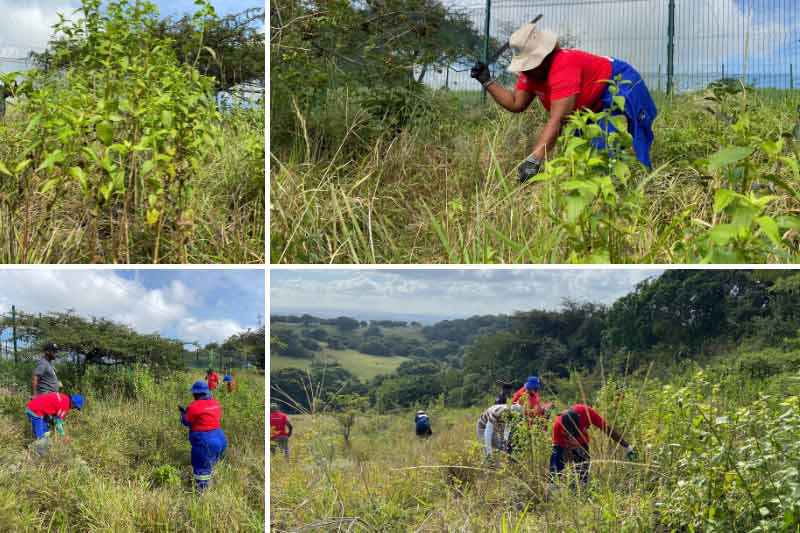
On 13 May 2026, WESSA partnered with the eThekwini Municipality Natural Resource Division to conduct an alien invasive clearing event at New Germany Nature Reserve.
The operation covered approximately 0.9 hectares and focused on removing invasive alien plant species, particularly Lantana camara, which poses a threat to indigenous vegetation and ecosystem health.
Through the combined efforts of WESSA volunteers and eThekwini Municipality workers, the activity contributed to biodiversity conservation, ecosystem restoration and sustainable environmental management within the reserve.
The event also strengthened collaboration between environmental stakeholders while encouraging active environmental stewardship.
Young citizen scientists investigate the Illovo River
On 18 May 2026, 18 learners from Amanzimtoti Primary School, together with their families, investigated the health of the Illovo River at the Toti Canoe Club site.
Taking on the role of citizen scientists, learners used the MiniSASS scoring system to assess aquatic ecosystem health. They identified macro-invertebrates in the water and tested the river’s pH levels and water clarity.
The activity encouraged hands-on learning while helping learners understand the importance of healthy river systems and responsible water stewardship.
By participating alongside their families, the learners extended environmental learning beyond the classroom and contributed to a shared understanding of local water resources.
Bringing biodiversity learning into the school grounds
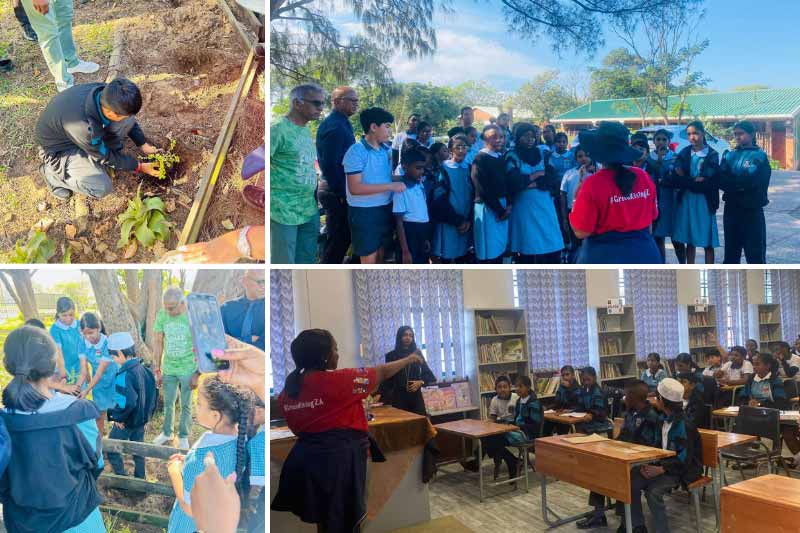
On 22 May 2026, WESSA partnered with the Waste Management Department Education to celebrate Biodiversity Month with learners at Fulcon Park Primary School in Chatsworth.
Learners conducted a biodiversity index within their school grounds, giving them an opportunity to explore the variety of life present in their immediate environment. The activity formed part of broader environmental education efforts to build ecological awareness and integrate biodiversity conservation into school learning.
Fulcon Park Primary School also marked an important milestone as the first school in the Chatsworth Catchment to register as an Eco-School.
The activity was supported by WESSA, the Waste Management Department Education and Mr Pat Reddy from the Association of Clean Communities, helping to equip learners with practical tools to observe and appreciate local biodiversity.
Practical action with lasting impact
Across the four activities, Green Rising created opportunities for communities to learn, participate and take meaningful environmental action.
Whether planting seedlings, clearing invasive plants, assessing biodiversity or investigating river health, each activity showed how practical learning can strengthen environmental responsibility and build more connected, resilient communities.