WESSA Annual Awards 2025 honour South Africa’s environmental champions

WESSA Annual Awards 2025 honour South Africa’s environmental champions


WESSA (The Wildlife and Environment Society of South Africa) is proud to announce the recipients of the 2025 WESSA Annual Awards, celebrating individuals, organisations, educators, youth and community groups whose work is advancing environmental conservation and education across South Africa.

“These prestigious annual awards recognise exceptional and sustained contributions that go beyond expectation. WESSA aims to recognise those who are not only protecting the environment but actively shaping a more sustainable and inclusive future,” says WESSA’s Chief Executive Officer, Cindy-Lee Cloete.

The awards also serve as a platform to elevate environmental action, inspire broader public awareness, and reinforce the critical role of collective responsibility in caring for the Earth.


A lifetime dedicated to ocean conservation and environmental education


Leading this year’s honours, the WESSA Lifetime Achievement Award 2025 has been awarded to Dr Judy Mann-Lang of the Two Oceans Aquarium Foundation.


Dr Mann-Lang is recognised for her outstanding lifetime contribution to marine research, conservation and environmental education at both national and international levels. Her decades of work – spanning the South African Association for Marine Biological Research and the Two Oceans Aquarium Foundation – have played a pivotal role in advancing marine conservation awareness and education.

She has also co-founded influential platforms such as the South African Marine and Coastal Educators Network and Marine Protected Areas Day, helping to shape both public understanding and policy engagement around ocean conservation. Her leadership across multiple scientific and conservation bodies has contributed to transforming the relationship between people and the sea, inspiring long-term behavioural change in favour of protecting marine ecosystems.


WESSA also commends Mr Katot Meyer for his decades-long dedication to clearing invasive alien plants and restoring water flows within the Pietersrivier Nature Reserve, a powerful example of sustained, hands-on environmental stewardship.


Honouring individuals driving national environmental impact


WESSA’s premier individual award for 2025 has been awarded to Dr Crispin Hemson, founder of the Friends of Pigeon Valley Nature Reserve and a long-standing WESSA member.


Dr Hemson is recognised for decades of leadership in environmental stewardship, particularly in mobilising community participation in the rehabilitation and conservation of the Pigeon Valley Nature Reserve. His influence extends into policy, having played a key role in initiating biodiversity conservation commitments within the Durban City Council, contributing to the development of the Durban Metropolitan Open Space System Plan. He is also recognised for his leadership in creating the nexus of environmentalism and non-violent conflict resolution.

WESSA also commends:

  • Mr Tshepang Motaung, co-founder of Clean Environment NPO, for advancing waste reduction initiatives in Thembisa.


  • Ms Michèle Merrifield, for her dedication to wildlife rehabilitation through the DAKTARI Bush School & Wildlife Orphanage.


Youth leadership inspiring a new generation of eco-guardians


The 2025 Youth Award has been awarded to Ethan Fourie, a 9-year-old learner from Kabega Primary School in Gqeberha, widely known as “The Recycling Kid”.


Ethan has demonstrated extraordinary ability to mobilise both corporates and communities around recycling initiatives, inspiring behavioural change and environmental awareness across the Eastern Cape. His work exemplifies the growing power of youth leadership in driving national environmental action.

WESSA further recognises:

  • Mr Lumko Mboyi, for community conservation efforts along the Wild Coast


  • Ms Selomina Phekelela for impactful environmental journalism that translates complex issues into public understanding.


Championing environmental education through teaching excellence


The WESSA Teacher of the Year Award 2025 has been awarded to Mr Simangaliso Dhlamini of Shea O’Conner Combined School.


An Eco-Schools leader, Mr Dhlamini is recognised for transforming environmental education into practical, learner-led initiatives that integrate sustainability, entrepreneurship, and food security. His approach demonstrates how education can move beyond theory to real-world application, equipping learners with critical thinking skills and environmental action competence.

WESSA commends Ms Sascha van der Merwe of Waterberg Academy for her outstanding contributions to environmental education and community initiatives.


Corporate leadership advancing sustainable practices


The WESSA Corporate Award 2025 has been awarded to Tenthouse Structures, recognised for embedding sustainability and social responsibility into its operations.

The company’s holistic approach includes reducing carbon emissions, recycling production waste for community benefit, and fostering environmental stewardship through its Made Better Together Foundation and employee volunteer initiatives.


WESSA also commends:

Fatyela Enviro Works, for environmental education and socio-ecological initiatives.


  • Love Africa Marketing, for storytelling that amplifies conservation and community impact.


Community groups restoring ecosystems and livelihoods


The WESSA Group Award 2025 has been awarded to Thumela Makhado Adopt a River NPO, based in the Thohoyandou villages in Venda.

Over 15 years, this grassroots organisation has led 45 projects focused on restoring rivers, wetlands and springs – tackling pollution, erosion, invasive species and unsustainable practices. Their work has restored critical water systems while strengthening community participation and demonstrating the power of combining indigenous knowledge with modern conservation methods.


WESSA also recognises the Mosselbank River Conservation Team for their community-driven environmental restoration efforts in Fisantekraal, integrating environmental care with socio-economic upliftment.


Celebrating a collective movement for environmental action


“The 2025 WESSA Annual Awards highlight the breadth and depth of environmental action taking place across South Africa – from grassroots community initiatives to national policy influence, from youth activism to corporate leadership,” adds Cloete.

Together, these awardees represent a powerful collective of people caring for the Earth, demonstrating that meaningful environmental change is driven not by one sector alone, but through collaboration, commitment, and sustained action.

As WESSA continues its mission to Educate, Advocate, Act, the Annual Awards remain a vital platform for recognising those who are leading the way and inspiring others to follow.

Join us in celebrating and supporting these changemakers by sharing their stories, championing environmental action in your own spaces, and becoming part of the growing movement of #PeopleCaringForTheEarth.
 
 
Look out for the 2026 WESSA Annual Awards call for nominations later this year as we mark our centenary year.


[ADvTECH Schools] Wishing WESSA a happy 100th

[ADvTECH Schools] Wishing WESSA a happy 100th

As WESSA marks its 100th year of educating, advocating and acting for the environment, schools across the ADvTECH network kicked off celebrations with creativity, reflection and meaningful action – demonstrating how environmental education continues to shape responsible, engaged citizens from a young age.

Learners embraced the milestone not only as a celebration, but as an opportunity to deepen their understanding of the natural world and their role in protecting it.

At Abbotts High School Pretoria East, learners reflected on the power of everyday actions through a collective initiative titled “100 Small Ways Our Students Help the Planet.”

From recycling and saving water to planting and picking up litter, learners highlighted how small, consistent behaviours contribute to a healthier planet – reinforcing a key principle of WESSA’s work over the past century: that meaningful environmental change often begins with individual action.

At The Bridge Morningside, the celebration took an interactive and exploratory approach, with learners engaging in a range of activities designed to connect them more deeply to nature.

Learners were introduced to WESSA’s role in environmental protection before taking part in hands-on activities, including creating a birthday cake and artwork from recyclable materials. They also explored their school environment, observing insects, birds, trees and plant life, and discussing the importance of each within broader ecosystems.

A standout moment was the “My Promise to Nature” activity, where learners created posters using fingerprint “leaves” to symbolise their personal commitment to caring for the environment.

Through these activities, learners not only gained knowledge but also developed a sense of ownership and responsibility for the natural world around them.

At Maragon Olympus, the WESSA 100 celebration brought together learners across all phases in a vibrant, multi-dimensional tribute.

Preschool learners explored environmental care through hands-on play with recyclable materials, learning early lessons about reuse and sustainability. In the Foundation Phase, learners combined creativity with digital skills by designing EdTech birthday cards for WESSA, and the Senior Phase learners added a personal touch by recording heartfelt birthday messages and performing a special tribute, highlighting both their awareness and emotional connection to environmental stewardship.

The celebrations were shared across the school’s social platforms, extending the impact beyond the classroom and inviting the broader community to participate in recognising WESSA’s milestone.

A centenary shaped by education, action and hope

By engaging learners through creativity, exploration and action, these schools are not only celebrating WESSA’s legacy but actively contributing to it.

As WESSA enters its next century, it is this generation of informed, inspired young people who will carry forward the work of protecting South Africa’s natural heritage – proving that when education leads, meaningful environmental action follows.

[N3TC Schools] Bringing biodiversity to life in Free State classrooms

[N3TC Schools] Bringing biodiversity to life in Free State classrooms

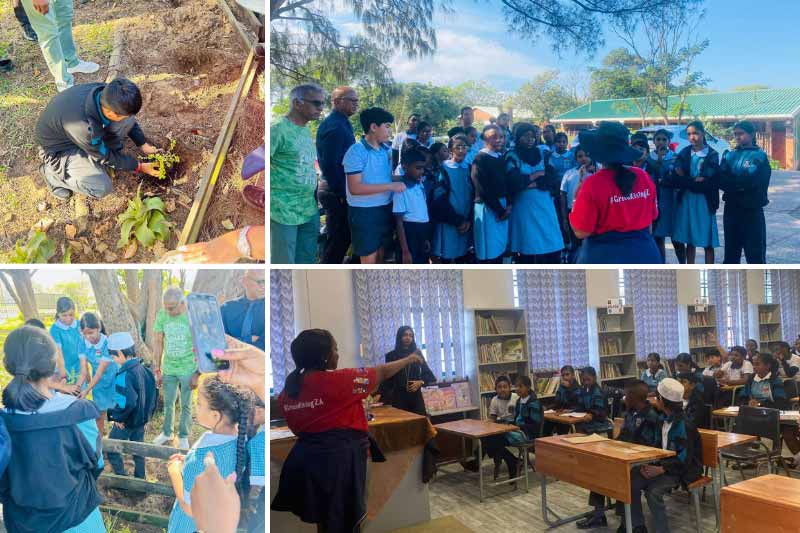
Pictured above: left – Thuto Ke Lesedi Educare Centre learners in their garden; top middle – Teachers shared their innovative ideas of how they will use their gardens for teaching; right top – Qalabotjha Creche learner marking a spot for their biodiversity garden; bottom middle – Learner at Zenzeleni Educare Centre during the garden walk; Learners colouring various food items they will plant in their garden

From 23 to 25 March 2026, WESSA launched its first implementation sessions with N3TC schools in Villiers, Free State – marking a strong step forward in embedding biodiversity and outdoor learning into school environments.


Equipping educators for outdoor learning


The visit began with a dynamic teachers’ workshop centred on this year’s focus: biodiversity and outdoor learning.

The workshop aimed to equip educators with practical knowledge and tools to transform biodiversity gardens into living classrooms that support experiential learning. Key discussions explored the critical link between biodiversity, climate resilience, and water conservation – highlighting the role schools can play in building environmentally responsible communities.

A standout moment was the collaborative design session, where teachers developed tailored plans for their own school biodiversity gardens. Educators shared innovative ideas on how these spaces will be integrated into teaching and learning, demonstrating a strong commitment to hands-on, nature-based education.


From classroom to living ecosystem


Following the workshop, the programme continued with two days of engaging learner sessions, bringing biodiversity concepts to life in practical and relatable ways.

Learners were introduced to the importance of biodiversity and its role in supporting healthy ecosystems and resilient communities, laying the foundation for deeper environmental understanding.

A key highlight was the interactive garden walk, where learners explored their school environment and guided by their teachers, participated in designing their own biodiversity gardens. This hands-on approach deepened their understanding while fostering a sense of ownership and responsibility towards their natural surroundings.


Strengthening the link between knowledge and action


Together, these sessions strengthened the connection between knowledge and action, enabling both teachers and learners to actively contribute to sustainable, biodiversity-rich school environments.

Through initiatives like this, WESSA continues to advance its mission to Educate, Advocate, Act, enabling schools to become spaces where environmental awareness is not only taught, but lived.

Empowering learners through circular economy thinking (Nedbank X WESSA)

Empowering learners through circular economy thinking (Nedbank X WESSA)

Pictured above: Bekezela Learners compressing their Waste tins and sorting recyclables

WESSA’s partnership with Nedbank continues to bring the principles of the circular economy to life in classrooms, equipping learners with practical knowledge and real-world skills to address waste challenges while unlocking economic opportunity.


From awareness to action


The March rollout of the Nedbank Circular Economy Project focused on introducing learners to the concept of waste and its environmental impact, building on the foundation laid during the educator workshop.

Teachers piloted their lesson plans by guiding learners through the fundamentals of the circular economy, including how the 7R’s framework can be applied to reduce waste and rethink resource use.

Importantly, learners were encouraged to think beyond theory, engaging in discussions on how waste can be repurposed into income-generating opportunities through creative, small-scale business ideas.


Learning through upcycling


Hands-on learning formed a central part of the programme, with learners participating in upcycling activities that demonstrated how everyday waste materials can be reused in practical ways.


Pictured above: Lehutso Primary School learners engaging in the session on the reuse of waste

From repurposing paper packaging to cover books, to transforming plastic bottles into functional containers, learners explored how simple interventions can extend the life cycle of materials while reducing environmental impact.

These sessions were further strengthened through a presentation by Indalo Yami Recyclers, who shared insights into how recycling contributes to both environmental protection and income generation. Learners were also introduced to key health and safety considerations, including the risks associated with handling contaminated or hazardous waste.


Pictured above: Bekezela Primary School learners reusing 2lt bottles to make containers


Building a culture of recycling


The second phase of the project deepened learners’ understanding of recycling systems and the finite nature of natural resources.

Learners explored how waste materials are categorised into reclaimable and non-reclaimable streams, and why sorting waste at source is critical to improving recycling efficiency and reducing contamination.


Pictured above: Nelson Mandela P.S learners learning about recycling and sorting waste

Across participating schools, learners are now actively collecting and sorting recyclable materials including beverage cans, paper, cardboard, and plastic – turning environmental responsibility into measurable action.


Turning waste into opportunity


A key outcome of the project has been the ability of schools to begin generating income through their recycling initiatives, demonstrating the tangible value of circular economy principles in action.

Looking ahead, the next phase will integrate Economic and Management Sciences (EMS) into the programme, enabling learners to manage and grow the income generated through their recycling and upcycling activities.

This progression ensures that learners not only understand sustainability concepts but also develop the financial literacy and entrepreneurial skills needed to sustain and scale their initiatives.


Educating for a circular future


Through this project, WESSA and Nedbank are demonstrating how environmental education can move beyond awareness to meaningful, learner-led action.

By linking sustainability with economic opportunity, the initiative is helping to shape a generation of young people who are not only environmentally conscious, but also enabled to innovate, lead, and contribute to a more circular and resilient future.

46 KwaZulu-Natal schools recognised by WESSA for driving environmental action

46 KwaZulu-Natal schools recognised by WESSA for driving environmental action

Pictured above: Recipients of Eco-School awards in KZN with WESSA Schools & Youth team, and CEO.

Durban, South Africa – 29 March 2026: KwaZulu-Natal’s commitment to environmental education and youth-led action was celebrated at the 2025 Eco-Schools Awards Ceremony, held on 21 March 2026 (Human Rights Day) at the Willow Way Manor in Durban. The event brought together educators, learners, government representatives, and environmental partners in the province to recognise schools that are not only learning about sustainability but actively shaping it within their communities.

The Eco-Schools programme, implemented by WESSA (The Wildlife and Environment Society of South Africa), continues to empower young people to move from awareness to meaningful action, embedding environmental responsibility into schools across the province.

Recognising schools that turn learning into action

This year’s awards recognised schools across KwaZulu-Natal for their commitment to environmental learning, practical action, and community impact. From waste management and water conservation to biodiversity protection and climate awareness, participating schools demonstrated how education can drive real change.

The ceremony highlighted the strength of the Eco-Schools model – where learners are not passive recipients of information, but active participants in solving environmental challenges within their schools and communities.

A number of Eco-Schools were recognised for their long-term, consistent commitment, including the Emerald Award (20 years) awarded to Pitlochry Primary School and Shea O’Connor Combined School, and the Arum Lily Award (22 years) awarded to Epworth School and The Birches – marking over two decades of sustained environmental excellence.

A centenary year for WESSA and a future led by youth

As WESSA marks its 100th year, WESSA CEO, Cindy-Lee Cloete, reflected on the enduring power of environmental education to shape a more sustainable future.

“For 100 years, WESSA has believed in the power of education to change lives and protect our planet. The Eco-Schools programme is one of the clearest examples of this in action – where knowledge is transformed into meaningful, community-driven change,” adds Cloete.

She added that the programme’s impact lies in its ability to move learners beyond awareness, “We are not just teaching learners about environmental challenges – we are equipping them to respond to those challenges with confidence, creativity, and purpose. These young people are not the leaders of tomorrow; they are leading change today.”

Rethinking sustainability for the next generation

Delivering the keynote address, Thobekile Gambu, Environmental Scientist and United Nations Global Compact Coordinator for uMgeni-uThukela Water South Africa, challenged attendees to rethink how sustainability is approached in education, particularly in the face of growing environmental pressures.

keynote speaker

Pictured above: Keynote speaker, Thobekile Gambu

“We cannot afford to treat sustainability as a future concern. The decisions we take and actions we make today will define the kind of world young people inherit,” she said.

Emphasising the importance of agency and action, she shares that, “Young people must be equipped not only with knowledge, but with the ability to act. When learners understand their role in protecting natural systems – especially water – they become powerful drivers of change within their communities.”

She further highlighted the need for a shift in mindset: “Sustainability education must move beyond awareness. It must inspire responsibility, innovation, and action – because the challenges we face require more than understanding; they require solutions.”

Learner-led innovation and impact on display

A powerful highlight of the ceremony was the showcase presentations by learners, demonstrating the tangible impact of Eco-Schools projects on the ground.

A Grade 7 learner from Highbury Preparatory School shared how their Eco Club has driven initiatives such as recycling programmes, school gardening, and biodiversity awareness, while also extending their impact through community engagement and conservation fundraising efforts.

Meanwhile, Dingeka Technical High School presented their work focused on water, sanitation, and hygiene (WASH), alongside recycling initiatives and environmental awareness campaigns. Their work reflects a strong commitment to addressing both environmental and social challenges within their community.

These showcases reinforced a key message: when learners are enabled, they become powerful agents of change.

Building a generation of environmental leaders

The KwaZulu-Natal Eco-Schools Awards once again demonstrated the programme’s role in developing environmentally conscious, action-oriented young leaders.

Through hands-on learning, collaboration, and community engagement, Eco-Schools continues to nurture a generation that understands not only the challenges facing the planet – but their role in solving them.

As WESSA celebrates its centenary year, the work of these schools stands as a powerful reminder that the future of environmental sustainability is already being shaped in classrooms across South Africa.

Top honours recognise excellence in environmental leadership

Among the many schools recognised, several stood out for their exceptional leadership and impact through the programme’s special awards, which celebrate excellence across key environmental themes.

  • The WESSA Eco-Schools Biodiversity Stewardship Award was awarded to Amanzimtoti Primary School, recognising its long-standing commitment to protecting and restoring biodiversity through initiatives such as beach clean-ups, wetland adoption, and environmental awareness campaigns.
  • The WESSA Eco-Schools Circular Economy Champion Award was presented to Hillgrove Primary School, which has demonstrated outstanding leadership in waste reduction and recycling, including collecting over 1 400 kg of recyclables and promoting a culture of resource efficiency.
  • The WESSA Eco-Schools Water Wise Warriors Award went to Buhlebemfundo High School, whose learners developed an innovative water conservation app and represented South Africa on the global stage, while also leading water stewardship initiatives within their community.
  • The WESSA Eco-Schools Ubuntu for Nature Award was awarded to Epworth School, in recognition of its strong community engagement, including clean-up campaigns, tree planting, food gardens, and environmental awareness initiatives that embody collective action for people and the planet.

In addition to the special awards, several schools were recognised for their long-term commitment to the Eco-Schools programme, achieving milestone “decade” awards that reflect sustained environmental action over many years.

Additional notable achievements:

  • 15 years: Cowan House, Amanzimtoti Primary School, Kainon Primary School, and Tree Tops School received the International Flag Decade Award
  • 17 years: Eden College and Virginia Preparatory School were awarded the Platinum 2 Decade Award

Eco-Schools Awards Progression

Participation award

  • Hillcrest High School

Bronze award (Year 1)

  • Inkanyezi Creche and Community Care Centre
  • Dingeka High School

Silver award (Year 2):

  • Atholl Heights Primary School
  • Crawford International La Lucia
  • Crawford International North Coast
  • Umlazi ComTech High School
  • E. Ndlovu Secondary School
  • JL Dube Secondary School
  • Marklands Secondary School
  • Nkosinathi Secondary School
  • Mzuvele Secondary School

Green Flag award (Year 3):

  • Athlone Park Primary School
  • Carter High School
  • Injabulo Senior Primary School

Sun International Eco-Schools Project

Gold award (Year 4):

  • Glenhaven Secondary School
  • Palmview Secondary School
  • Sterngrove Primary School
  • Phoenix Secondary School
  • Waterloo Secondary School

Gold award (Year 4):

  • Longmarket Girls’ School
  • Thembimfundo Special School
  • Buhlebemfundo Secondary School

International Flag award (Year 5):

  • Kloof High school
  • Ogwini Comprehensive Technical High School

Platinum 2 award (Year 7)

  • Wembley College
  • Hermannsburg School
  • The Browns School

Silver Decade award (Year 12):

  • Deutsche Schule Durban
  • Winston Park Primary School
  • Highbury Preparatory School

Green Flag Decade award (Year 13):

  • Hilton Montessori

Gold Decade award (Year 14):

  • Umbogintwini Primary School
  • Stanger Training Centre
  • Laddsworth Primary School

International Flag Decade award (Year 15):

  • Cowan House
  • Amanzimtoti Primary School
  • Kainon Primary School
  • Tree Tops School

Platinum 2 Decade award (Year 17):

  • Eden College
  • Virginia Preparatory School
  • Hillgrove Primary School

Emerald award (Year 20):

  • Pitlochry Primary school
  • Shea O’Connor Combined School

Arum Lily award (Year 22):

  • Epworth School
  • The Birches

Partner and Funder Recognition

  • Sun International Sibaya
  • eThekwini Municipality – Cleansing and Solid Waste Unit
17 Mpumalanga schools recognised for environmental leadership at WESSA Eco-Schools Awards 2025

17 Mpumalanga schools recognised for environmental leadership at WESSA Eco-Schools Awards 2025

Pictured above: Mpumalanga Province educators receiving award certificates)

eMalahleni, Mpumalanga – 27 March 2026: A total of 17 schools from across Mpumalanga were recognised for their commitment to environmental education and action at the WESSA Eco-Schools Awards 2025, hosted recently at Anew Hotel in eMalahleni.

The awards brought together educators, learners, government representatives, and partners to celebrate how schools are transforming environmental awareness into meaningful, community-driven action – reinforcing the growing impact of environmental education across the province.

Opening the event, WESSA Schools and Youth Senior Programme Manager, Nomfundo Ndlovu, commended schools for their dedication to environmental stewardship: “What we are seeing across Mpumalanga is a powerful shift from environmental awareness to meaningful action. These schools are not only teaching sustainability, but they are also living it. When learners are given the tools, space and support to engage with real-world challenges, they don’t just participate, they lead. This is how we build a generation of environmentally conscious citizens who are equipped to drive change in their communities and beyond.”

Schools driving local environmental impact

Participating schools were recognised for implementing practical projects aligned to key Eco-Schools themes, including water conservation, waste management, biodiversity, health and wellbeing, and community and heritage.

New entrant schools, including Mehlwane Secondary School, Impilo Primary School, Amandla Primary School and Lehlaka Combined School, achieved Silver status, reflecting strong foundational efforts in embedding environmental learning within their school communities.

Several established schools were awarded the prestigious Platinum 3 level, recognising sustained excellence, long-term commitment, and leadership in environmental practice.

Pictured above: Mpumalanga Province educators receiving award certificates

Innovation, circular economy and community collaboration

Stakeholders at the event highlighted the growing importance of integrating environmental education with real-world outcomes, particularly through recycling initiatives that not only address environmental challenges but also create opportunities for income generation within communities.

The keynote address by Rebotile Rachuene of Sediba Sa Metse underscored the value of community-led conservation, sharing insights into efforts to protect owl populations in the Middelburg area and demonstrating how local action contributes to broader ecosystem resilience.

The event was further enriched by learner performances and a powerful poetry piece centred on the principles of reduce, reuse and recycle, reinforcing the role of young people in shaping more sustainable communities.

Pictured above: Mpumalanga Province Eco-Schools Awards 2025 Guest speakers

A growing movement in WESSA’s centenary year

The Mpumalanga Eco-Schools Awards form part of WESSA’s broader mission to Educate, Advocate, Act, and carry added significance in 2026 as the organisation marks its centenary celebrating 100 years of environmental leadership in South Africa.

As one of the country’s leading environmental education programmes, Eco-Schools continues to empower young people to take ownership of their environment, driving measurable change at both school and community level.

Pictured above: Mpumalanga Province Eco-Schools Awards 2025 group photo)

Funded Schools

Silver

  • Mehlwane Secondary School
  • Impilo Primary School
  • Amandla Primary School
  • Mabande Secondary School
  • Lehlaka Combined School

Platinum 3

  • Makause Combined School
  • Hlanguphala Primary School
  • Sukumani Primary School
  • Thuthukani Primary School
  • Ogies Combined School

Independent Registered Schools

Platinum 3

  • Penryn College
  • Nancy Shiba Primary School
  • Maloma Primary School
  • Kananda Primary School
  • Edward Matyeka Primary School
  • KwaGuqa Primary School
  • Siyathokoza Primary School