Hyde Johannesburg Rosebank achieves Green Key Certification, setting a new standard for Sustainable Urban Hospitality

Hyde Johannesburg Rosebank achieves Green Key Certification, setting a new standard for Sustainable Urban Hospitality

Pictured left to right: Jessica Redinger: General Manager, Hyde Johannesburg Rosebank; Charity Mabuza: Rooms Divisions Manager, Hyde Johannesburg Rosebank; Cindy-Lee Cloete: WESSA CEO; Karel Mienie: Facilities Manager, Hyde Johannesburg Rosebank

Hyde Johannesburg Rosebank has officially been awarded Green Key certification, an internationally recognised eco-label for tourism establishments committed to responsible and sustainable practices. Managed in South Africa by WESSA (The Wildlife & Environment Society of South Africa), the programme includes independent audits and annual verification, ensuring that certification reflects sustained performance rather than a once-off achievement.

Speaking at the official handover, WESSA CEO Cindy-Lee Cloete emphasised that Green Key certification represents more than compliance: “Green Key certification reflects a real commitment to sustainability, responsible tourism, and continuously improving how we operate as a hospitality establishment. This achievement is not just about receiving a certificate – it is about recognising the journey, the effort, and the people behind it.”

Sustainability engineered into the building

At the core of Hyde Rosebank’s sustainability journey is a design-led approach, where environmental performance is embedded into the building itself – not retrofitted.

The property operates with solar panels, a gas generator system, heat recovery for hot water, and a borehole supplying approximately 40% of its water needs, significantly reducing reliance on municipal infrastructure.

These systems are complemented by energy-efficient LED lighting, an Energy Performance Certificate, and water-saving aerators across guest rooms and operational areas, ensuring resource efficiency is maintained across all touchpoints.

“These aren’t cosmetic changes; they’re engineered into how the building runs every day. Sustainability is part of the infrastructure, and it shapes how we operate across every level of the hotel,” explains Jessica Redinger, General Manager of Hyde Johannesburg Rosebank.

Operational change embedded into systems

Beyond infrastructure, the hotel has embedded sustainability into daily operational practices and team behaviour, a critical factor in achieving Green Key certification.

Housekeeping and maintenance teams actively monitor energy usage, water consumption, and air conditioning systems, with daily checks ensuring unused rooms are not consuming unnecessary resources.

“We’ve already seen measurable reductions in energy and water consumption through daily monitoring and team accountability. It’s about turning awareness into action at every level of the operation,” adds Redinger.

Efforts to reduce waste are equally embedded. The hotel has eliminated single-use plastic water bottles, replacing them with a reusable glass bottle system supported by on-site purification and washing infrastructure, alongside broader waste reduction initiatives.

Hyde Park

Pictured above: Hyde Johannesburg building exterior and interior. Source via establishment

Embedding sustainability into experience, culture and community

A defining feature of Hyde Johannesburg Rosebank’s approach is the seamless integration of sustainability across guest experience, team culture, and community impact – without compromising comfort or design.

  • From digital in-room systems and bamboo key cards to reusable glass water bottles and initiatives such as “Skip the Clean”, which reduces water, energy, and chemical use, guests can participate in more responsible practices without disruption.
  • Beyond the property, Hyde Rosebank maintains a strong focus on local community engagement, with ongoing support for New Jerusalem Children’s Home through food, clothing donations, and regular visits, alongside participation in Rosebank clean-up initiatives and wellness-driven community partnerships.
  • Internally, this approach is underpinned by a culture-driven model, where sustainability is embedded into daily operations. A cross-departmental ESG committee, supported by leadership and operational teams, ensures accountability through daily briefings, monitoring, and continuous reinforcement.

Redinger shares that, “The highest compliment is that guests often don’t notice because sustainability is built into the experience from the start. Where guests do have a choice, it’s positioned as a benefit, not a sacrifice.”

Green Key certification is recognised in over 90 countries and forms part of a global network of tourism establishments committed to sustainability.

For Hyde Johannesburg Rosebank, this milestone marks not an endpoint, but the beginning of a deeper commitment. “Sustainability does not sit in a file or a policy. It lives in daily actions, in how teams use resources, engage with guests, and contribute to a culture of responsibility. It’s about asking what more can be done and how we keep improving, and based on what we’ve seen here, this team is well positioned to lead in this space,” concludes Cloete.

WESSA Eco-Schools Awards celebrate 130+ Free State schools leading sustainability from the classroom

WESSA Eco-Schools Awards celebrate 130+ Free State schools leading sustainability from the classroom

From water and waste to biodiversity and community action, Free State schools demonstrate the power of education to drive real environmental impact

Pictured above: Recipients of the Gold and International Flag awards; speaker Mrs. Ralepedi from Department of Basic Education giving word of support to the Eco-Schools programme

Bloemfontein, South Africa – 25 March 2026: WESSA (Wildlife and Environment Society of South Africa) has recognised s for their measurable environmental action and sustainability leadership at the 2025 Eco-Schools Awards, held on 12 March 2026 at Windmill Casino in Bloemfontein.

Part of the world’s largest education for sustainable development programme, Eco-Schools equips learners and educators to move beyond awareness and into meaningful, school-wide environmental action. In the Free State, these awards reflect not only participation in the programme, but tangible impact across communities and ecosystems.

The ceremony brought together key stakeholders including the Department of Education, the Department of Water and Sanitation, and the Department of Economic, Small Business Development, Tourism and Environmental Affairs (DESTEA), alongside educators and eco-committee representatives from schools across the province.

DESTEA and WESSA share a long-standing partnership of over 10 years, through which environmental education has been successfully delivered to more than 100 Eco-Schools across the Free State Province. This collaboration demonstrates the how sustained partnerships can advance education for sustainable development.

From learning to action across key environmental themes

Throughout 2025, participating schools implemented practical environmental projects across core Eco-Schools themes including health and wellbeing, water, waste, nature and biodiversity, and community and heritage. These projects enabled schools to progress through the programme’s award levels, demonstrating a clear commitment to sustainability in action.

From improving waste management practices to protecting biodiversity and strengthening community engagement, learners and educators continue to show that environmental education is most powerful when it leads to real-world change.

Recognising long-term commitment and excellence

The awards ceremony celebrated achievements across multiple levels, from Bronze through to the prestigious International Green Flag, with several schools also recognised for long-term commitment to the programme – including Batjha Primary School from Botshabelo in Mangaung Metro and Nthuthuzelo Primary School from Bultfontein Lejweleputswa District, each receiving the Diamond Award for participating for 10 years in the programme.

Pictured above: Diamond Award and Eco Flag recipients. Image source: DESTEA

These milestones reflect sustained environmental leadership and the embedding of sustainability into school culture over time.

In her closing remarks, Ms Nozi Nkoe, Chief Director for Environmental Management at DESTEA, acknowledged the collective effort behind the programme, highlighting the critical role of educators in driving environmental action within schools and communities.

Pictured above: Ms Nozi Nkoe, Chief Director for Environmental Management at DESTEA. Image source: DESTEA

Strengthening partnerships for impact

When government departments join hands with WESSA as an implementation partner, it strengthens coordination, optimises resources, and enhances impact at grassroots level, enabling schools and communities to benefit from integrated support. This ensures that environmental education is not only taught but actively practiced, fostering responsible citizenship and sustainable livelihoods.

As the Eco-Schools Programme continues to grow, it remains a powerful platform for equipping young people with the knowledge, skills and agency to respond to environmental challenges – and to lead change within their communities.

[KZN region] Youth-led action through the Green Rising Project

[KZN region] Youth-led action through the Green Rising Project

Across KwaZulu-Natal, WESSA’s work under the UNICEF Green Rising Project continues to enable young people and communities to take meaningful environmental action – from restoring coastal ecosystems to transforming school spaces into thriving hubs of biodiversity.

We spotlight these initiatives as it reflects a meaningful shift from awareness to action, where learners, volunteers and local partners are working together to protect and restore the environments they depend on.

Restoring coastal ecosystems at Beachwood Mangroves

On the last Saturday in February, the Beachwood Mangroves became the focus of a large-scale clean-up led by WESSA in partnership with Tri-Eco and volunteers from Umlazi.

An estimated 1000–1200 kg of waste was removed from this fragile ecosystem, helping to protect critical breeding habitats and safeguard local biodiversity. Beyond the immediate environmental impact, the initiative highlighted the importance of community-led action in addressing pollution and restoring coastal ecosystems.

Inspiring ocean stewardship through marine education

On 3 March 2026, learners from six schools gathered at Bluff Brighton Beach for a World Marine Biodiversity Workshop hosted in collaboration with the South Durban Community Environmental Alliance and Durban Solid Waste.

The workshop engaged 90 participants, combining environmental education with hands-on activities. Learners deepened their understanding of marine ecosystems before participating in a beach clean-up, collecting over 70 bags of waste and demonstrating their role as active ocean stewards.

Transforming school spaces through biodiversity gardens

WESSA’s Green Rising interventions also focused on restoring and enhancing school environments through the establishment of biodiversity gardens, delivered in partnership with key local stakeholders.

At Ukukhanya Kwelanga Primary School, WESSA worked alongside Cleansing and Solid Waste Durban (CSW) and Expanded Public Works Programme (EPWP) volunteers to clear invasive alien plants and reintroduce indigenous species to improve both the ecological value and visual appeal of the school grounds.

At Fulton School for the Deaf, WESSA volunteers partnered with the school community to plant a variety of indigenous species, creating a more vibrant, inclusive and environmentally supportive learning space.

From learning to leadership

Across each of these initiatives, a common thread emerges: Young people are not only learning about environmental challenges, but they are also actively contributing to solutions.

Through the Green Rising Project, WESSA continues to enable learners and communities to take ownership of their environments, building the knowledge, skills and confidence needed to drive long-term, sustainable change.

As WESSA marks its 100th year, the Green Rising Project stands as a powerful example of how education, when combined with opportunity and support, can translate into tangible impact.

Youth-led actions are helping to shape a more resilient and environmentally conscious future.

29 Northern Cape Schools Recognised for Environmental Action at Eco-Schools Awards

29 Northern Cape Schools Recognised for Environmental Action at Eco-Schools Awards

Pictured above: Award recipients, WESSA and DAERL representatives)

Schools across the province demonstrate how education is driving real environmental impact

Kimberley, South Africa – 24 March 2026: WESSA (The Wildlife and Environment Society of South Africa), in partnership with the Northern Cape Department of Agriculture, Environmental Affairs, Rural Development and Land Reform (DAERL), has recognised 29 schools for their environmental leadership at the Northern Cape Eco-Schools Awards Ceremony, held at Eden Lodge in Kimberley.

Part of the world’s largest education for sustainable development programme, Eco-Schools empowers learners and educators to move beyond awareness into meaningful environmental action. In the Northern Cape – where water scarcity, land management, and climate pressures remain critical – these awards reflect schools that are actively responding to environmental challenges within their communities.

The provincial awards, coordinated by DAERL, highlight not only participation in the Eco-Schools programme, but measurable impact through projects focused on sustainability, environmental stewardship and community engagement.

Representing WESSA at the event, Daniel Jackson, Junior Project Manager in the Schools and Youth Division, commended the schools for their commitment to embedding environmental learning into everyday practice.

Recognising excellence in environmental action

In addition to Eco-Schools recognition, DAERL honoured the top five performing schools in the province, celebrating outstanding project implementation and environmental impact:

  • 1st Place: Willie Theron Primary School
  • 2nd Place: Moedi Secondary School
  • 3rd Place: St Anna Private Secondary Girls School
  • 4th Place: Sedibeng Primary School
  • 5th Place: Delta Primary School

These schools were recognised for going beyond programme requirements, demonstrating innovation, leadership and tangible environmental outcomes within their school environments and surrounding communities.

A growing movement of environmental leadership

The Eco-Schools programme continues to play a critical role in shaping environmentally conscious citizens by linking curriculum-based learning with real-world action. Through initiatives such as water conservation, waste management, biodiversity protection and climate awareness, schools are becoming hubs of environmental change.

“These awards are a powerful reminder that environmental leadership is being shaped in our classrooms. The Northern Cape Eco-Schools are not just participating in a programme – they are driving real change in their schools and communities. Their work reflects the heart of WESSA’s mission: to educate, advocate and activate a generation that will care for the Earth,” adds WESSA CEO, Cindy-Lee Cloete.

The partnership between WESSA and DAERL reflects a shared commitment to strengthening environmental education across the province, ensuring that learners are equipped with the knowledge, skills and agency to respond to current and future environmental challenges.

Looking ahead

As WESSA marks its centenary year, the achievements of the Northern Cape Eco-Schools is a reminder that lasting environmental impact begins with education. By enabling young people to take action, the programme continues to build a generation that is informed, engaged and ready to lead.

Link to the full photo album available via our Facebook page

Full list of awarded schools and categories:

International Flag Decade (1): Dr Izak van Niekerk Primary

Gold Decade (2)

  • Ferdinand Brecher Primary
  • St Anna Private Secondary Girls School

International (1): Sedibeng Primary School

Platinum Level Four (2):

  • Reaipela Intermediate School
  • Rolihlahla Intermediate School

Platinum Level One (2):

  • St Patrick’s CBC
  • Thabane High School

Silver (5)

  • N Pressly Intermediate School
  • Elizabeth Conradie School
  • R Mocwaledi Intermediate School
  • Willie Theron Primary School
  • Delta Primary School

Bronze (16):

  • Reneilwe Primary School
  • Barkly-Wes Primêr
  • Olympic Primary School
  • Kimberley Boys’ High School
  • Stillwater Intermediate School
  • Pnielandgoed Primêre Skool
  • Greenpoint Primary School
  • Tadcaster Intermediate School
  • Adamantia High School
  • Technical High School
  • E.P. Lekhela High School
  • Retlameleng Special School
  • Taudiarora Primary School
  • Kareeville Primary School
  • Segwaneng Primary School
  • Moedi Secondary School


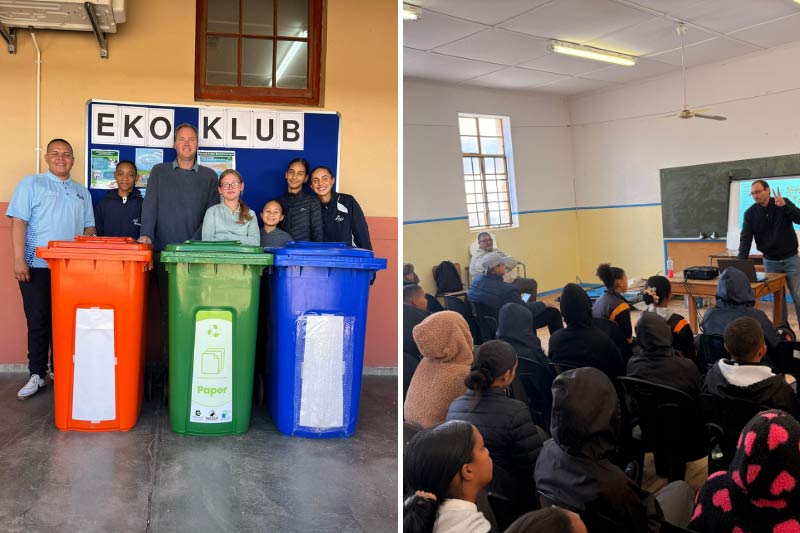
Schools, educators and youth enabled to drive waste action in KZN

Schools, educators and youth enabled to drive waste action in KZN

Across KwaZulu-Natal this March, WESSA and its partners consistently engaged in environmental action through a series of initiatives focused on waste management, recycling, and youth engagement.

From classrooms to communities, these efforts are equipping learners and educators with the tools, knowledge and motivation needed to drive meaningful impact for long-term benefits to their communities.


Mobilising youth for Global Recycling Day


On 18 March 2026, WESSA partnered with the Green Youth Network to mark Global Recycling Day through a community clean-up in Umlazi.

Young environmental enthusiasts actively participated, volunteering their time to take meaningful action in protecting their local environment. The initiative reminds us of the power of youth-led action in building a culture of environmental responsibility and collective care.


Educators equipped to strengthen recycling in schools


On 17 March 2026, Durban Solid Waste (DSW), in partnership with WESSA and various stakeholder organisations, hosted an Educators’ Workshop for the Schools Recycling Competition at the Stable Theatre.

The workshop engaged approximately 80 teachers from across the eThekwini Municipality, equipping them with practical tools and knowledge to strengthen recycling initiatives within schools.

The programme, directed by Mr S. Makhanya and Ms. L. Shabalala, featured contributions from key industry partners including MetPacSA, Fibre Circle, Polyco, WESSA, and Manaza Recycling, alongside interactive sessions led by the Waste Management Directorate.

The engagement created a platform for knowledge exchange and collaboration, reinforcing the critical role educators play in embedding sustainable waste practices within school communities.


Eco-Schools waste education


On 13 March 2026, WESSA facilitated an Eco-Schools workshop at Palmview Secondary School, supported by Sun International.

Learners and eco-teachers were equipped with practical guidance on implementing the Waste theme within their schools, alongside tools to establish strong and effective Eco-Committee structures aligned with the Eco-Schools Programme 7-step framework.

The session sparked strong enthusiasm among learners, reinforcing their role as active participants in driving sustainability initiatives within their school environments.


Building a culture of waste responsibility


Together, these initiatives demonstrate how WESSA and its partners are strengthening the link between education and action, ensuring that learners, educators and communities are equipped to address waste challenges in practical and impactful ways.

As WESSA marks its 100th year, this growing momentum reflects a collective commitment to shaping more sustainable, responsible and resilient communities across South Africa.

Limpopo schools recognised for environmental leadership at WESSA 2025 Eco-Schools Awards

Limpopo schools recognised for environmental leadership at WESSA 2025 Eco-Schools Awards

Pictured: Group photo – educators, learners and WESSA team at the Limpopo Eco-Schools Awards 2025.

Polokwane, South Africa – 13 March 2026: WESSA (The Wildlife and Environment Society of South Africa) has recognised 24 schools across Limpopo for their environmental leadership and measurable sustainability action at the 2025 Eco-Schools Awards, held on 6 March 2026 at the Garden Court Hotel in Polokwane.

Part of the world’s largest education for sustainable development programme, Eco-Schools enables learners and educators to move beyond environmental awareness and into practical, school-wide action. From water conservation and waste reduction to biodiversity protection and circular economy initiatives, participating schools are embedding sustainability into daily learning and leadership.

The Limpopo awards ceremony brought together educators, learners, partners and environmental champions to celebrate the role of schools in shaping environmentally responsible communities and future leaders.

Living legacy of WESSA

Opening the ceremony, Hazel Khoza, WESSA Project Manager, reflected on the significance of the programme in WESSA’s centenary year, “The Eco-Schools Awards represent the living legacy of WESSA. Each school recognised today embodies 100 years of commitment, turning environmental awareness into action, and action into measurable impact.”

The programme featured a showcase by PEPPS Polokwane, recognised for its long-standing participation in the programme, as well as a musical performance by learners from Toronto Primary School.

Farina Lindeque

Farina Lindeque, Department of Geography and Environmental Studies at the University of Limpopo

Delivering the keynote address, Farina Lindeque, from the Department of Geography and Environmental Studies at the University of Limpopo, highlighted the growing role of young people in driving environmental change.

Experiences that move learners

“Environmental education becomes powerful when we design experiences that move learners from noticing to caring to acting. Concern about environmental issues alone doesn’t automatically lead to change – but when learning connects evidence with creative expression and collaboration, young people develop the agency and confidence to turn that concern into meaningful action.”  

The awards were presented in partnership with Capricorn District Municipality, whose support has enabled schools across the region to strengthen environmental programmes and integrate sustainability into teaching and school management practices.

Outstanding leadership and innovation recognised

Beyond the core Eco-Schools awards, the ceremony also recognised outstanding leadership and innovation through a series of special awards. These included recognition for excellence in circular economy initiatives, biodiversity stewardship, water conservation, and eco-innovation.

Among the special recognitions were:

  • Maribe Primary School, awarded the Circular Economy Champion Award
  • Thoka Primary School, recognised with the Ubuntu for Nature Award
  • Pulamadibogo Primary School, honoured as Water Wise Warriors
  • Briershof Primary School, recipient of the Eco-innovation Award
  • Waterberg Academy, recognised for Biodiversity Stewardship

An Operational Excellence Award was presented to Mabusela Francinah Mpelehe for her commitment to advancing environmental education, while Capricorn District Municipality received a Funder Appreciation Award in recognition of its ongoing support of the Eco-Schools programme.

Value the process, not only the results

Since its introduction in South Africa in 2003, Eco-Schools has grown into one of the country’s most impactful environmental education initiatives, empowering thousands of schools to embed sustainability into everyday learning and action.

To educators, Lindeque adds: “Value the process, not only the results. The deepest learning happens while people work together, learn from each other, and transform how they do things.”

As WESSA celebrates 100 years of environmental leadership in 2026, the achievements of these schools demonstrate the continued power of education to inspire practical environmental stewardship and community impact.

24 Schools Recognised at the 2025 Limpopo Eco-Schools Awards

Capricorn District Municipality Schools (6)

  • Toronto Primary School — Platinum 4
  • Dikolobe Primary School — Platinum 2
  • Makgwadiba Primary School — Platinum 4
  • Motholo Primary School — Platinum 1
  • Pulamadibogo Primary School — Platinum 1 Decade
  • Maribe Primary School — Bronze Decade

Blouberg Schools (6)

  • Thoka Primary School — Bronze
  • Ramaahlo Primary School — Platinum 4
  • Makgafela Primary School — Platinum 1
  • Briershof Primary School — Platinum 1
  • Mama Primary School — Platinum 2
  • Mpebe Primary School — Platinum 1 Decade

Independent / IRS Schools (4)

  • PEPPS Ga-Ledwaba — International Flag
  • PEPPS Mokopane — International Flag
  • PEPPS Polokwane — Diamond (2024) and Bronze Decade (2025)
  • Waterberg Academy — Platinum 1 Decade

Special Awards (8)

  • Eco Schools Portfolio Excellence Award — PEPPS Schools
  • Circular Economy Champion Award — Maribe Primary School
  • Ubuntu for Nature Award — Thoka Primary School
  • Water Wise Warriors Award — Pulamadibogo Primary School
  • Eco-innovation Award — Briershof Primary School
  • Biodiversity Stewardship Award — Waterberg Academy
  • Operational Excellence Award — Mabusela Francinah Mpelehe
  • Funder Appreciation Award — Capricorn District Municipality

See all the award winners and the pictures of the event here