
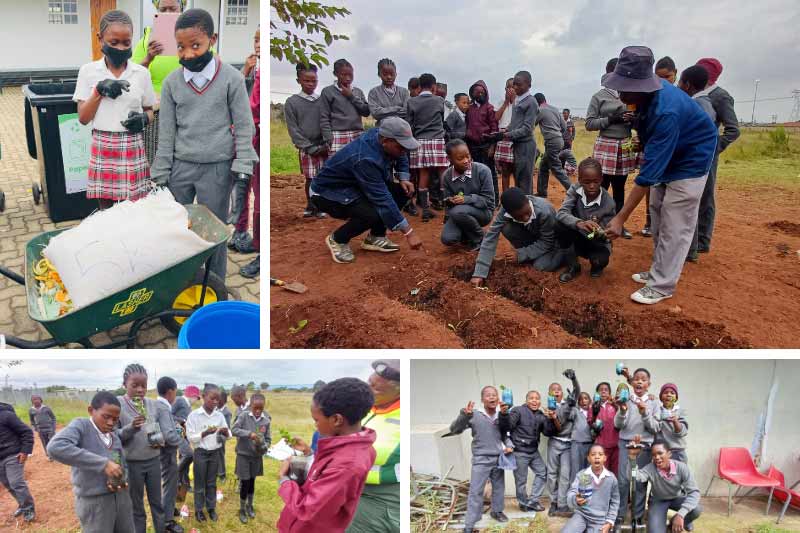
Pictured above: Tshepiso Primary School learners planting vegetable seedlings in the school garden, engaging in Spekboom propagation and practically learning about composting
On 15 April 2026, WESSA hosted a Clear Skies Eco-Schools support visit at Tshepiso Primary School, located just outside Vanderbijlpark in Gauteng.
This marked the second engagement with learners following the introductory session held in February, deepening understanding of air pollution and its impact on communities.
Building awareness through collaboration
The session brought together key stakeholders, including GroundWork, the Gauteng Department of Agriculture and Rural Development (GDARD), the South African Waste Pickers Association (SAWPA), and representatives from the local municipality.
Through a series of discussions, learners explored the realities of air pollution, and the role communities can play in addressing it. A strong message emerged: young people have a vital voice in shaping healthier environments.
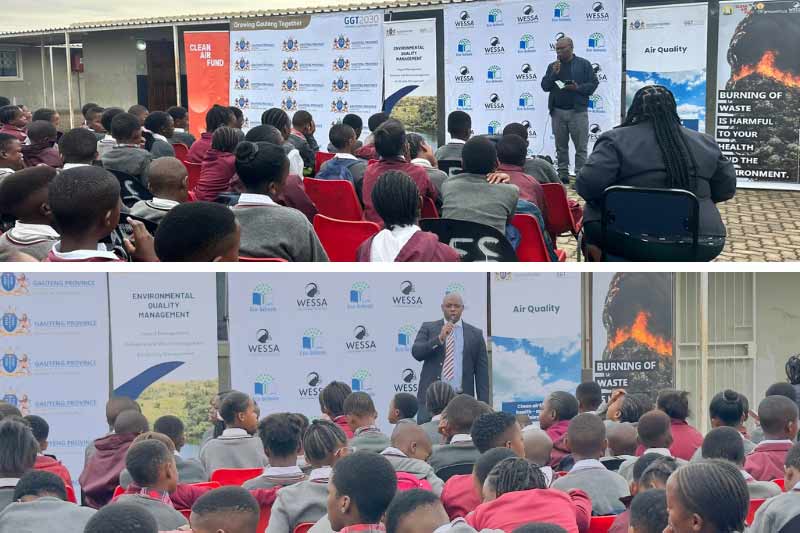
Pictured above: Tshepiso Primary School activity (top) Mr Khulu Mbongo from the local municipality sharing insights on air pollution; (bottom) Mr. Loyiso Mkwana, Chief Director for Sustainable Use of the Environment at the Gauteng Department of Agriculture and Rural Development (GDARD) inspiring learners & educators with his address.
From knowledge to action
A total of 183 Grade 6 learners participated in practical, hands-on activities focused on sustainable living.
The session covered:
- Recycling and the importance of sorting materials at source
- Food waste management using Bokashi to produce compost
- Spekboom propagation, highlighting its ability to absorb carbon dioxide
- Establishing a school vegetable garden using permaculture principles
These activities translated environmental concepts into tangible actions learners can apply at school and at home.
Growing future environmental leaders
By combining education with practical solutions, the visit enabled learners to take ownership of environmental challenges in their community.
Initiatives such as composting, recycling, and planting not only contribute to improved air quality, but also build long-term resilience and sustainability within the school environment.