WESSA unveils South Africa’s first Braille coastal environmental education signage

WESSA unveils South Africa’s first Braille coastal environmental education signage

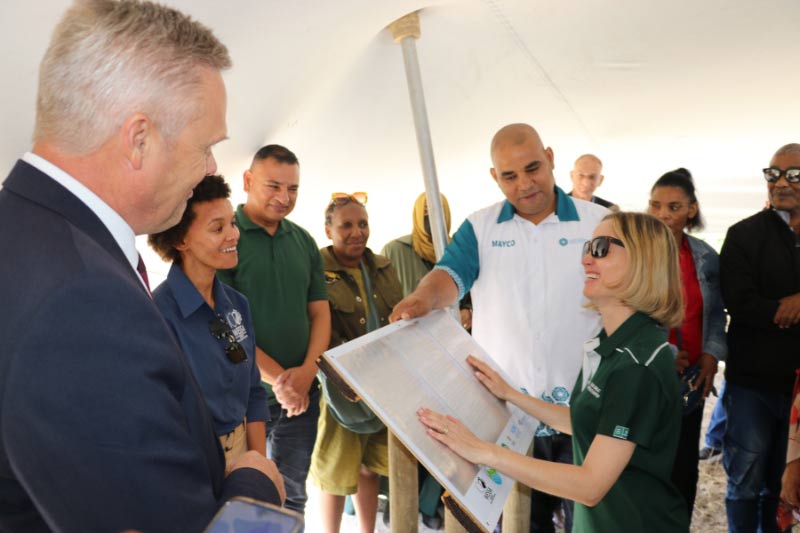
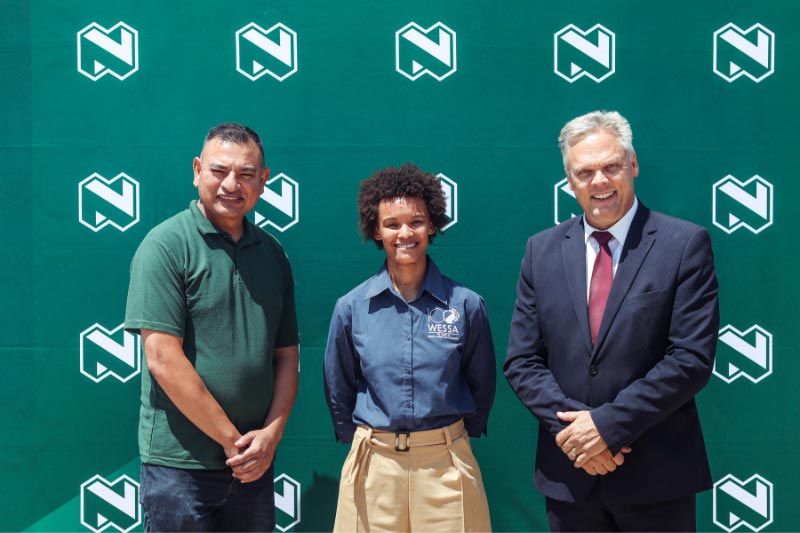
Pictured above: Speakers and guest surround Hanlie Stehli, Nedbank’s Wellness Administrator – Business and Commercial Banking

This pilot initiative is sponsored by Nedbank, and implemented in collaboration with Blind SA, the National Council of & for Persons with Disabilities (NCPD), and City of Cape Town, with support from the Ford Wildlife Foundation.

On 11 February 2026, WESSA (The Wildlife and Environment Society of South Africa) unveiled South Africa’s first Braille coastal environmental education signage at Blaauwberg Nature Reserve’s Eerste Steen, marking a significant step towards creating more inclusive coastal experiences for all. Blaauwberg Nature Reserve was selected as the launch site as it is the first WESSA Green Coast site in South Africa, making it a strategic location to pilot the initiative ahead of planned expansion to additional Green Coast and, in time, Blue Flag sites along the coastline.

“It is not just about signage. It is about access. It is about dignity. And it is about who gets to experience South Africa’s magnificent natural heritage – and how,” says Cindy-Lee Cloete, CEO of WESSA. “This is a national first, and an important one. Our beaches and nature reserves may be public spaces, but for blind and partially sighted people, meaningful engagement with these environments has largely remained out of reach. For WESSA, this project says: that gap is not acceptable. For a century, WESSA has worked to enable people to care for the earth. The next century asks something more of us. It asks that we ensure everyone can experience it.”

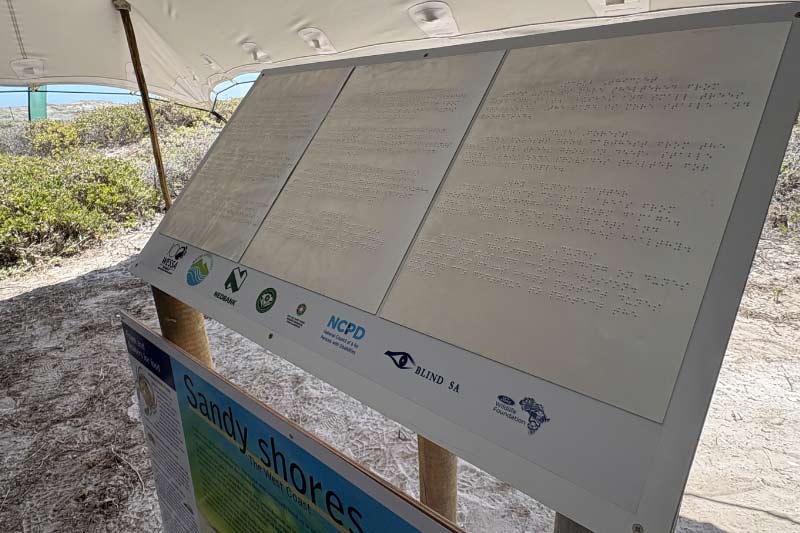
braille signage

In his keynote address, the Minister of Forestry, Fisheries and the Environment, Willie Aucamp, reminded guests that, “We are gathered here, not simply to unveil a set of signboards, but to mark a significant step forward in how we share South Africa’s natural heritage with all her people. This revitalisation is about more than just fresh paint or new timber – it is about inclusivity. We are moving from a philosophy of ‘look and read’ to one of ‘touch, listen, feel and experience.”

This pilot initiative, sponsored by Nedbank, is delivered through WESSA’s Green Coast programme and designed to enable blind and partially sighted visitors to engage independently and meaningfully with coastal ecosystems. Nedbank has a long-standing partnership with WESSA and supports a range of conservation, education and inclusion-focused initiatives nationwide. Pedro Rhode, Executive: CBC Business Unit at Nedbank shares that, “Our purpose is to use our financial expertise to do good. Critically, we know that a truly green economy cannot exist without inclusion. That’s why we are proud to be the funding partner for this initiative. These Braille signs are not just informational tools, it represents dignity, belonging and equal access. This initiative demonstrates what can be achieved when government, civil society and the private sector work together to ensure our natural heritage belongs equally to every citizen.”

Braille signage

Pictured above: Pedro Rhode, Executive: CBC Business Unit at Nedbank; Cindy-Lee Cloete – WESSA CEO and Willie Aucamp, Minister of Forestry, Fisheries and the Environment

While South Africa’s beaches and nature reserves are public spaces, environmental interpretation has historically remained inaccessible to people with visual impairments. This initiative directly addresses that gap through Braille-specific design, descriptive clarity and outdoor durability, with the signage co-developed alongside accessibility partners Blind SA and NCPD, to ensure authenticity and technical accuracy. These organisations played a critical role in shaping the project, contributing lived-experience insight and technical guidance to ensure the signage is genuinely usable and meaningful.

braille signage event

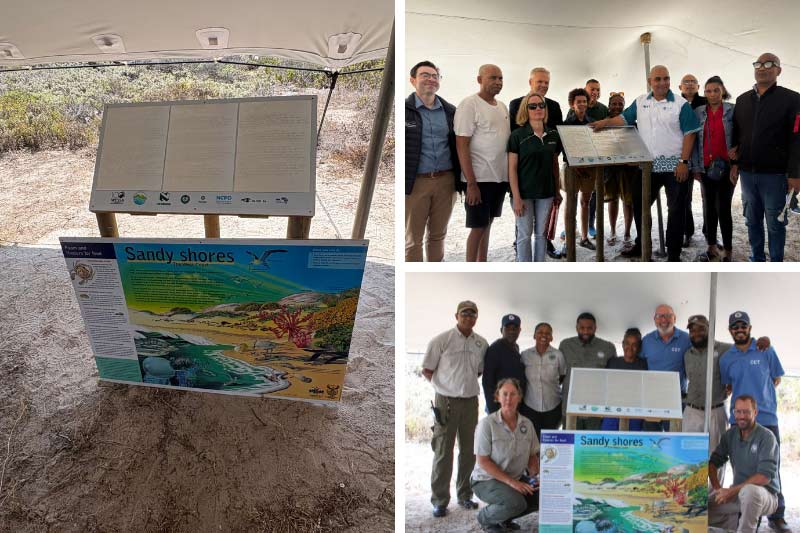
Pictured above: (left) Braille Signage; (top right) Ryan Peters (DFFE), Abrhamam Allies (BlindSA), Hanli Stehli (Nedbank), Minister Aucamp, WESSA CEO Cindy-Lee Cloete, Pedro Rhode (Nedbank), Alderman Eddie Andrews (CoCT Deputy Mayor), Guests and representatives Blind SA; (bottom right) CoCT and Blaauwberg Nature Reserve teams with signage

“In integrated coastal management, we often speak of the ‘public trust doctrine’, the principle that coastal resources are held in trust for all people, present and future. Today, we are honouring that doctrine in a new way. We are recognising that ‘all people’ must truly mean all people – regardless of ability, regardless of how we move through the world, regardless of how we perceive it,” adds Ryan Peter, Director of Coastal Development, Department of Forestry, Fisheries and the Environment.

Abraham Allies from Blind SA spoke about what today means for visually impaired persons, “For a visually impaired visitor, this means arriving at a coastal site and not having to rely entirely on another person to explain what the visual element is all about. It means being able to read with your own hands about the environment, the wildlife, the history and the significance of this place. It means being acknowledged as a person who belongs here. Looking ahead, we are excited about the possibilities for future collaboration. This launch should not be the end, but the beginning.”

Rather than a once-off intervention, the Braille coastal signage project forms part of a longer-term accessibility pathway within WESSA’s Coastal Programme, which integrates environmental protection, education and social inclusion.

Deputy Mayor, City of Cape Town, Alderman Eddie Andrews, adds that, “Inclusivity cannot remain a well‑intended concept that lives comfortably in our strategies, policies, and speeches. Protection without access is incomplete, and sustainability without dignity is insufficient. Our coastline is a shared asset that carries ecological value, cultural memory, and public meaning, but it can only truly belong to all of us when access is intentional, inclusive, and human‑centered. By bringing Braille signage to our coastal spaces, we’re proving that thoughtful design is one of the most powerful tools we have to restore dignity, independence, and a real sense of belonging for every person who comes to the shore,”

The goal is to establish a scalable model for inclusive environmental education infrastructure across South Africa’s coastline, reflecting WESSA’s commitment in its 100th year, to ensure South Africa’s natural heritage belongs equally to every citizen.

WESSA CEO coastal roadshow drives national action against ghost fishing gear

WESSA CEO coastal roadshow drives national action against ghost fishing gear

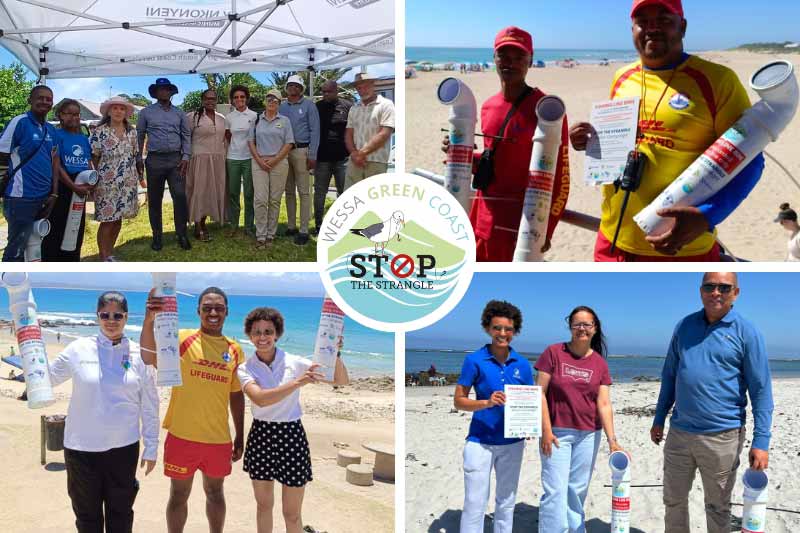
Top left: Mayor of Ray Nkonyeni, representatives from the Leisure Bay Conservancy and Mpenjati Conservancy. Top right: Jeffreys Bay Lifeguards Philani Yumatha and Keawane Hammond; Bottom left: De Bakke Beach in Mossel Bay – WESSA CEO, Cindy-Lee Cloete with lifeguard squad leader Je-Olyne Walters and municipal representative Mushfiqah Abrahams; Bottom right: McDougalls Bay, Port Nolloth – WESSA CEO, Lara Young, Municipal Support & Compliance Manager, Joseph G Cloete, Municipal Manager, Port Nolloth

Stop the Strangle action campaign scales frontline marine protection through municipal and community partnerships

WESSA is strengthening on-the-ground action against ghost fishing gear and marine entanglement through its ongoing CEO coastal roadshow, as part of Phase 2 of the Stop the Strangle (STS) action campaign.

The roadshow, led by WESSA CEO Cindy-Lee Cloete, kicked off in December 2025 and is focused on deepening collaboration with municipalities, conservancies, lifeguard services and coastal partners, while accelerating the national rollout of ghost fishing line collection and analysis bins across South Africa’s coastline.

This work forms part of the Ford 100-Bin Relay Project made possible through the support of the Ford Wildlife Foundation and aims to intercept discarded fishing line before it reaches the ocean, while generating data to support long-term, evidence-based marine conservation.

Turning coastal action into measurable impact

Ghost fishing gear, including lost or discarded fishing line, remains one of the most harmful forms of marine pollution, causing severe injury and death to seabirds, turtles, sharks and other marine species, often long after the gear has been abandoned.

Through Stop the Strangle, WESSA is combining practical infrastructure, community-led monitoring, and data collection to reduce this threat in high-traffic coastal areas.

As part of the CEO roadshow ghost fishing line collection and analysis bins have recently been formally handed over at multiple strategic coastal sites that are part of our Green Coast and Blue Flag network of partners.  New Stop the Strangle sites include Mossel Bay, Jeffreys Bay, McDougalls Bay (Port Nolloth), Leisure Bay and Mpenjati Conservancies in KwaZulu-Natal, and two of our Blue Flag marinas, namely Club Mykonos and the Royal Alfred Marina.

“These handovers are about more than infrastructure,” says Cindy-Lee Cloete, CEO of WESSA. “They represent a shared commitment between municipalities, coastal partners and communities to protect marine life and manage our coastlines responsibly. By working together, we can stop fishing line from becoming a silent killer in our oceans and turn local action into lasting conservation impact.”

Strengthening municipal and community partnerships

The handovers bring together key local stakeholders, including municipal representatives, conservancies, lifeguard services and coastal managers, highlighting the essential role of local leadership in marine litter prevention.

By prioritising Green Coast sites, Blue Flag beaches, marinas and boat facilities, the Ford 100-Bin Relay Project is designed to increase interception where pressure on the coastline is highest, while demonstrating a scalable model for integrated coastal management.

“The Stop the Strangle campaign is designed to turn hands-on coastal action into data-driven conservation outcomes,” adds Mike Denison, WESSA’s Coastal Programme Senior Manager. “The information gathered through these bins will help strengthen marine research, inform policy discussions and guide future interventions.”

A national campaign with local impact

Stop the Strangle operates within WESSA’s broader Green Coast programme, which supports coastal stewardship, environmental compliance and community participation along South Africa’s shoreline.

The CEO roadshow continues in early 2026, with further handovers and engagements planned with strategic partners as the campaign scales nationally.

Long-term coastal protection depends on strong partnerships and practical action. With the support of the Ford Wildlife Foundation, WESSA’s Coastal Programme is strengthening frontline coastal conservation and working alongside communities to deliver real, measurable impact.

We are proud to have our Coastal Programme powered by Ford.

Want to get involved?

Learn more about Stop the Strangle and how to support the campaign here: https://www.wessa.org.za/stop-the-strangle/. Reach out to Mike Denison, WESSA’s Coastal Programme Senior Manager via greencoast@wessa.co.za.

[WESSA Eco-Schools Programme] Six Schools awarded Bronze across Zambia and Zimbabwe

[WESSA Eco-Schools Programme] Six Schools awarded Bronze across Zambia and Zimbabwe

On 28 November 2025, WESSA Eco-Schools in partnership with Children in the Wilderness (CITW) proudly hosted the 2025 Eco-Schools Awards Ceremony at Bridge Café, located on the Victoria Falls Bridge along the Zambezi River and connects Zimbabwe and Zambia. The Awards recognised six exceptional Southern African schools that achieved their Bronze Award for their commitment to environmental education and sustainability.

Each of the six Eco Clubs showcased their year-long projects and the positive changes they are driving within their communities.

Strengthening food security through health & wellbeing

All six schools successfully implemented the Health & Wellbeing theme, focusing on strengthening food security through sustainable food gardening. Their work highlights how environmental education can directly improve nutrition, resilience, and community wellbeing.

To further support their learning, each school received a hydroponic system, enabling them to expand food production while integrating innovation, science, and practical environmental learning into the curriculum.

Awarded schools

  • Zambia: Lupani Primary School and Twabuka Primary School 
  • Zimbabwe: Mizpah Primary School, Chamabondo Primary School, Ngamo Primary School and Ziga Primary School

A regional partnership strengthening environmental education

This celebration also reflects the growing impact of WESSA’s Eco-Schools programme across Southern Africa. In Zimbabwe, the programme strengthened significantly following a three-day WESSA-led training with the CITW team, conducted by Nomfundo Ndlovu, WESSA Senior Manager, Schools & Youth Programmes. During this engagement, she also visited multiple schools across the country to understand their unique challenges and opportunities.

Ndlovu shared her insights, “These six schools have shown what is possible when environmental learning becomes hands-on, purposeful, and rooted in the realities of their communities. Their commitment to the Health & Wellbeing theme, from food gardens to hydroponic systems, demonstrates how young people can lead transformative change when they are empowered with the right tools and guidance. We are incredibly proud of the teachers, learners, and CITW mentors who have embraced Eco-Schools with such passion and determination. Their successes are not just school achievements; they are seeds of hope for a more resilient and sustainable Southern Africa.”

“The integration of the FEE programme through WESSA has significantly strengthened our existing initiatives, enabling CITW to more effectively educate Africa’s children on the importance of environmental stewardship and caring for our planet,” adds Susan Goatley, the CITW programme coordinator.

Celebrating a shared mission for sustainability

The partnership between WESSA and Children in the Wilderness is helping cultivate a new generation of young environmental leaders in Zambia and Zimbabwe. By nurturing environmental awareness, strengthening food security, and encouraging innovation, these schools are laying the foundation for healthier, more sustainable communities.

About Children in the Wilderness

Children in the Wilderness is the non-profit trust of Wilderness, established to support rural communities living alongside protected areas in Africa. The programme focuses on educating and empowering children through long-term environmental education, life skills development, and access to learning opportunities. By investing in education and community development, Children in the Wilderness helps reduce pressure on wildlife and natural resources while nurturing the next generation of conservation leaders. The programme reflects Wilderness’ belief that conservation and community well-being must go hand in hand. To learn more visit https://www.childreninthewilderness.com/

Communities Unite to Tackle Open Waste Burning in South Africa’s Air Pollution Priority Areas

Communities Unite to Tackle Open Waste Burning in South Africa’s Air Pollution Priority Areas

Open waste burning is one of South Africa’s most overlooked environmental and public-health challenges. In many communities, especially low-income areas where waste removal services are inconsistent or unavailable, burning becomes a default method of getting rid of household waste. Yet this practice has devastating health, climate, and environmental consequences.

To address this urgent issue, the South African Waste Pickers Association (SAWPA), the Clean Air Fund (CAF), groundwork (gW), and WESSA have launched a collaborative community initiative focused on awareness, education, and data collection. The project is being rolled out across the Vaal Triangle, Highveld, and Watergate-Bojanala air quality priority areas.

Why open waste burning must be stopped

The scale of the problem is far bigger than many realise. According to the 2022 CSIR SA Pathways report:

  • 37% of households in South Africa do not receive weekly waste collection
  • As a result, 29% or 196 kilotons of household waste goes uncollected
  • This waste often ends up in illegal dumping sites or is burned in the open

These fires release toxic pollutants into the air, affecting the health of millions and contributing to respiratory diseases, poor air quality, and climate-changing emissions.

Waste pickers as champions for change

One of the strengths of the initiative is the central role played by waste pickers. Often undervalued despite the essential environmental services they provide, waste pickers will be trained, supported, and recognised as leaders in sustainable community waste management.

By strengthening recycling networks and raising community awareness, waste pickers will help reduce the dependence on open burning while improving their own livelihoods.

Schools and communities at the heart of the project

Education is a powerful tool, and this project puts it front and centre. Schools, households, and community groups will participate in awareness sessions, activities, and practical guidance on how to manage waste responsibly.

The initiative also supports Education for Sustainable Development, empowering learners to understand environmental challenges and take meaningful action.

WESSA CEO Cindy-Lee Cloete highlights the role of young leaders, “Our Eco Schools learners and teachers are powerful agents of change; together we can reverse the harmful cycle of open waste burning and create a more sustainable future for all.”

Gathering data to influence policy

In addition to raising awareness, the project will collect community-level data through door-to-door surveys. This research will help map the patterns, reasons, and impacts of open waste burning, information that is critically needed for shaping effective policy interventions.

By combining real-life data with community-driven insights, the initiative aims to strengthen the national response to waste mismanagement and air pollution.

What the initiative will achieve over two years

The project aims to:

  • Build widespread awareness about the health and climate impacts of open burning
  • Reduce burning incidents through improved waste practices and increased recycling
  • Support waste pickers and residents as active partners in air quality and waste management initiatives
  • Provide evidence to inform policy and practical, effective interventions
  • Help build healthier communities with cleaner air and more sustainable waste management

A pathway to cleaner, healthier communities

This initiative is more than an awareness campaign, it is a step toward building a more just, sustainable, and community-driven approach to waste management. By empowering residents and recognising waste pickers as environmental leaders, the project hopes to shift behaviours, influence policy, and ultimately reduce open waste burning across South Africa.

WESSA wins Gold and Bronze at the 2025 Eco-Logic Awards for Eco-Hospitality & Tourism

WESSA wins Gold and Bronze at the 2025 Eco-Logic Awards for Eco-Hospitality & Tourism

Pictured above: [left] Tevya Visser, WESSA’s Senior Sustainability manager leading the Green Key programme in South Africa accepting the Bronze award; [right] Kelly Alcock, WESSA’s Head of Education & Sustainability accepted the Gold Award on behalf of the Coastal Programme team.

We’re thrilled to share that WESSA walked away with two top honours at this year’s Eco-Logic Awards, hosted by The Enviropaedia! Our Coastal Programme proudly won Gold, and our Green Key Programme received Bronze in the Eco-Hospitality and Tourism category, a recognition of our long-standing commitment to sustainability and responsible tourism in South Africa.

Now in its 14th year, the Eco-Logic Awards celebrate the people and organisations driving meaningful change towards a sustainable future. We’re deeply honoured to be counted among them.

Our Coastal Programme win is a shared achievement. As Mike Denison, our Senior Manager for the Coastal Programme, puts it:

“We would like to recognise our diverse coastal partners, from local municipalities and state entities to civil society and community champions, who bring coastal conservation and sustainable tourism to life through the Blue Flag and Green Coast Programmes. Their collective efforts have also driven the growth of our Stop the Strangle action campaign addressing ghost gear and ghost fishing. We are proud to share this award with all of them. It reflects the spirit of Ubuntu, shared responsibility, and unity in protecting our natural heritage.”

Our Green Key Programme’s Bronze Award celebrates the commitment of South African tourism establishments that choose to operate responsibly and sustainably. As Tevya Visser, our Green Key Sustainability Manager, explains:

“This award acknowledges the dedication of our certified establishments and WESSA’s work in driving measurable environmental action within the tourism sector. We look forward to reaching many more establishments across South Africa and creating an even greater positive impact for people and the planet.”

For us, these awards are about more than recognition, they’re a celebration of the partnerships, teamwork, and passion that drive everything we do. As our CEO Cindy-Lee Cloete says:

“This recognition is a tribute to the people and partnerships that make WESSA’s work possible. From our dedicated teams and programme managers to our coastal communities and sustainable tourism partners, these awards reflect the collective impact of individuals who believe that caring for the Earth is everyone’s responsibility.”

As we approach our 100-year milestone in 2026, we remain as committed as ever to inspiring environmental stewardship and enabling real, tangible action that protects our natural heritage while empowering communities across South Africa.

Through our Blue Flag, Green Coast, and Green Key programmes, along with action campaigns like Stop the Strangle, we continue to show that responsible tourism can protect ecosystems, support livelihoods, and foster a deep connection with nature.

These Eco-Logic Awards remind us why we do what we do, and inspire us to keep building a future where people truly care for the Earth.

WESSA Eco-Schools Awards Celebrate 20 Years of environmental action

WESSA Eco-Schools Awards Celebrate 20 Years of environmental action

In a landmark celebration of two decades of environmental education, WESSA proudly hosted the Eco-Schools Awards, honouring the transformative impact of the Eco-Schools programme across the nation.

For the past 20 years, the Eco-Schools initiative has been instrumental in promoting sustainability and conservation practices within schools and communities. WESSA Eco-Schools have taken the lead in environmental education, equipping students, teachers, and local communities with the knowledge and tools to champion environmental stewardship, encouraging a culture of environmental awareness and responsibility.

Over 2,300 schools have registered for the Eco-Schools programme, engaging more than 1.3 million learners and 32,000 teachers in direct and indirect environmental education efforts. These outstanding statistics highlight the significant impact of the Eco-Schools initiative in shaping environmental consciousness of South Africa’s youth.

The recent annual WESSA Eco-Schools Awards ceremonies, held across six regions, serve as a platform to commend schools, teachers, and learners for their exceptional commitment and achievements in promoting environmental stewardship. Through partnerships with organisations such as Sun International, eWASA, Nedbank, and others, WESSA has been able to amplify the reach and impact of the Eco-Schools programme, driving positive change in communities nationwide.

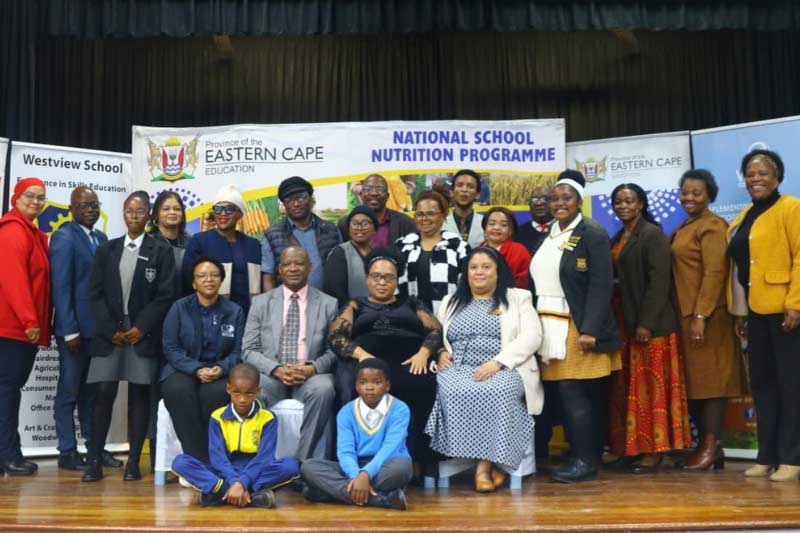
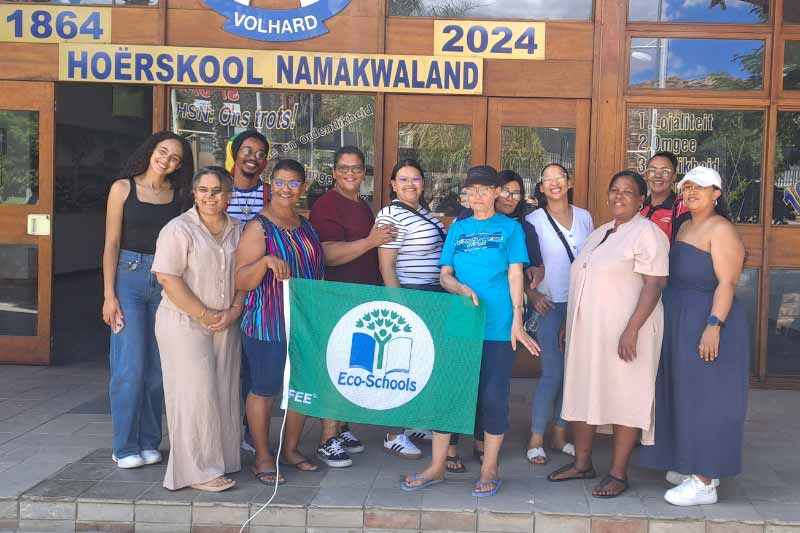
Among the notable recipients of this year’s awards are Epworth School and The Birches Pre-Primary School in KZN, honoured with Emerald awards for their sustained dedication to environmental action over 20 years. Additionally, 40 International Green Flags were awarded nationally, recognizing schools for their outstanding environmental efforts.

In a shining example of environmental leadership, Kabega Primary School in Gqeberha received a prestigious Diamond award for their decade-long commitment to sustainability. Through initiatives like a comprehensive recycling programme and integrated environmental curriculum, Kabega Primary has emerged as a model of promoting active citizens of environmental stewardship, inspiring change within their school and beyond.

The Department of Basic Education has identified local teacher support as a key objective for achieving educational quality.

Busi Dladla, Director for Curriculum General Education and Training, outlined that by incorporating WESSA Eco-Schools activities into the curriculum, educators provide students with practical experiences that enhance their learning outcomes while nurturing a culture of sustainability.

Dladla’s emphasis on the synergy between Eco-Schools and CAPS curriculum highlights the programme’s significance in shaping holistic education that prepares learners for the challenges of the 21st century. Through project-based learning initiatives, WESSA Eco-Schools empower students to become active participants in their education, encouraging critical thinking, problem-solving skills, and environmental awareness.

Nomfundo Ndlovu, WESSA’s Schools Programme Manager, expressed her pride in the accomplishments of participating schools and the enduring impact of the Eco-Schools programme. “These awards reflect the dedication and passion of our educators and learners towards environmental awareness and action,” she remarked.

For more information about the WESSA Eco-Schools programme and the awards ceremony, please contact Nomfundo Ndlovu at nomfundo.ndlovu@wessa.co.za.