Clean Air Fund Project: Practical Solutions Take Root in eMalahleni, Mpumalanga

Clean Air Fund Project: Practical Solutions Take Root in eMalahleni, Mpumalanga

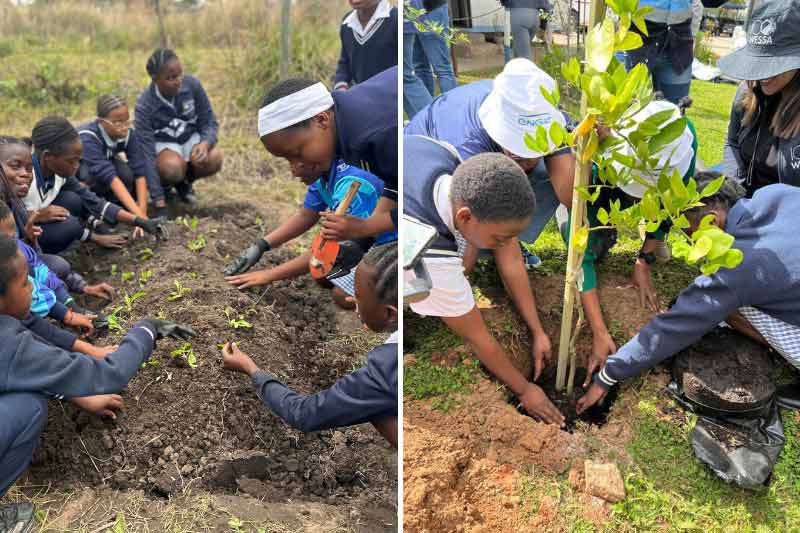
Pictured above: Nkonjane Primary School learners planting in the school vegetable garde & a WESSA Coordinator demonstrating best practice to plant

On 17 April 2026, WESSA continued its Clear Skies Eco-Schools support visits at Nkonjane Primary School in KwaGuqa township, eMalahleni, Mpumalanga.

This session built on earlier engagements, reinforcing key lessons through hands-on environmental activities.

Learning by doing

Approximately 200 learners from Grades 6 and 7 took part in the session.

Activities included:

  • Recycling education focused on sorting waste at source
  • Introduction to Bokashi for composting food waste
  • Spekboom planting to support carbon sequestration
  • Establishment of a school vegetable garden using environmentally friendly methods

These practical exercises helped learners connect environmental issues to everyday behaviours.


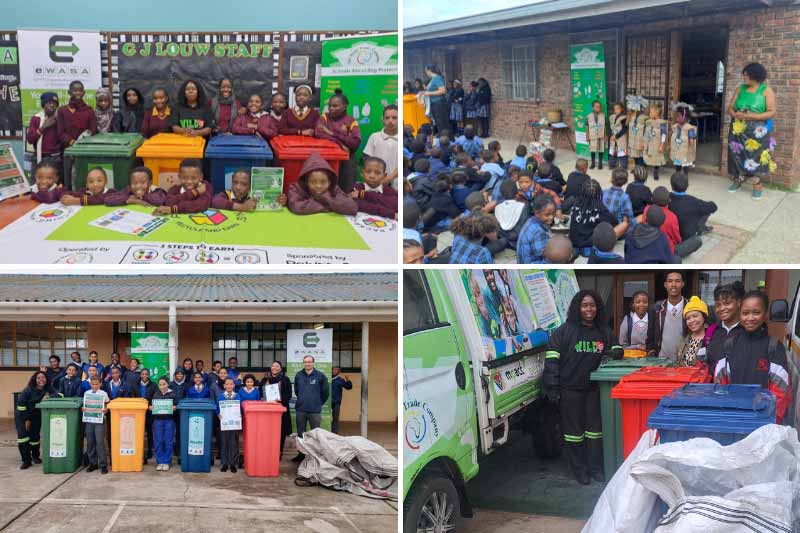
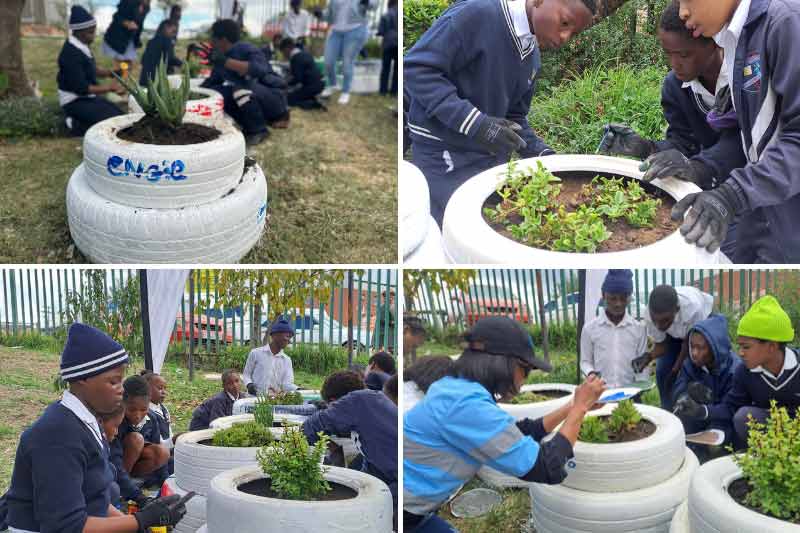
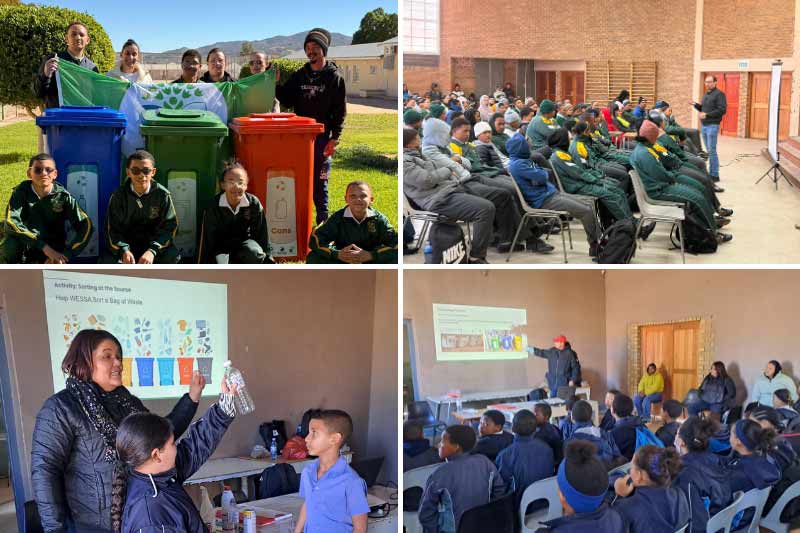
Pictured above: Nkonjane Primary School learners engaging in the Spekboom propagation activity, a WESSA Coordinator engaging with learners and sharing best practice; Learners pasting recycling stickers on funded recycling bins)

Multi-stakeholder support for cleaner communities

The visit brought together partners on the day including representatives from GroundWork, the Department of Water and Sanitation, Gauteng Department of Agriculture and Rural Development (GDARD), South African Waste Pickers Association (SAWPA), and local municipal representatives.

Together, they guided learners through discussions on air pollution, waste management, and the importance of collective action.

Sustaining impact beyond the classroom

By linking waste management to air quality, the session reinforced how small actions can contribute to broader environmental outcomes.

Through continued engagement and stakeholder collaboration, the project is supporting schools to become active hubs of sustainability within their communities.


Clean Air Fund Project: Connecting Waste and Air Pollution in Marapong, Limpopo

Clean Air Fund Project: Connecting Waste and Air Pollution in Marapong, Limpopo

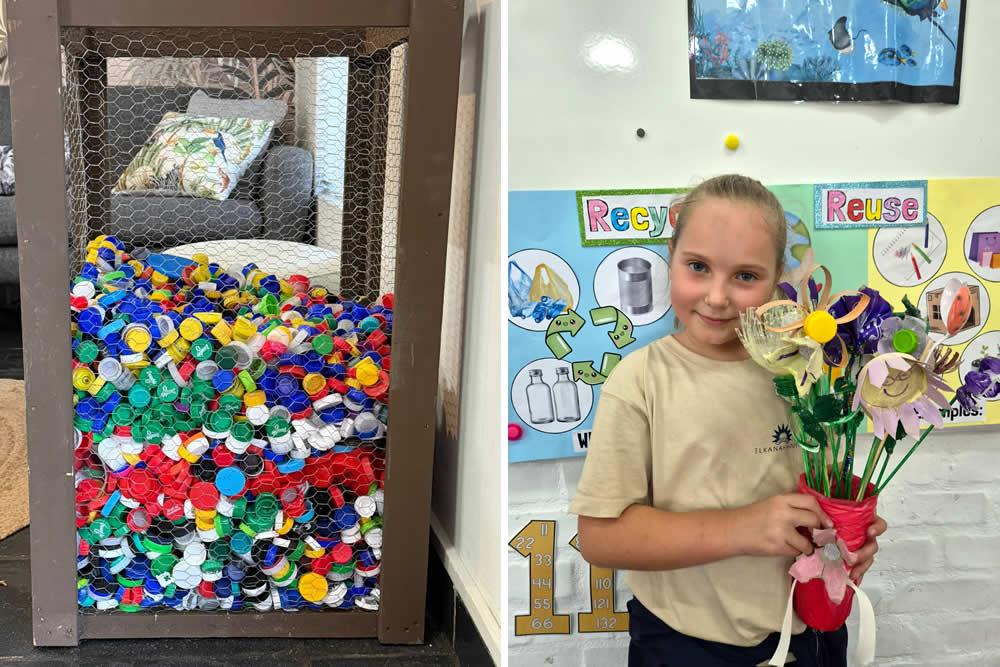
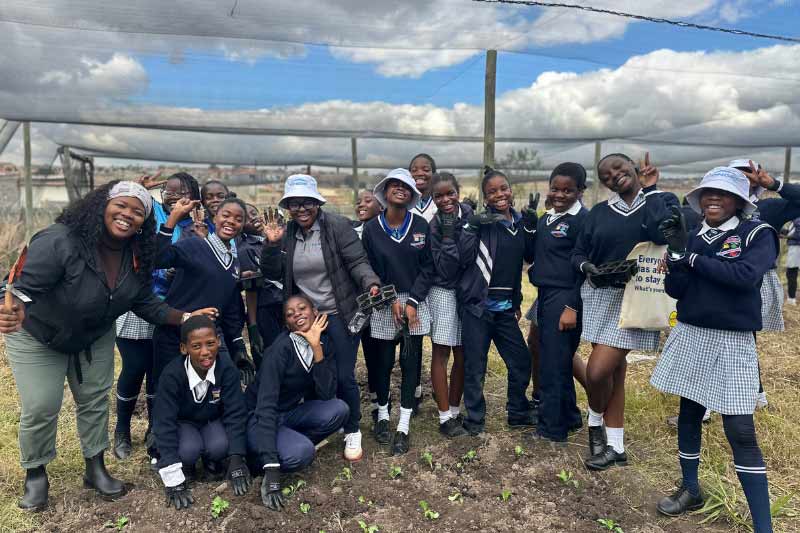
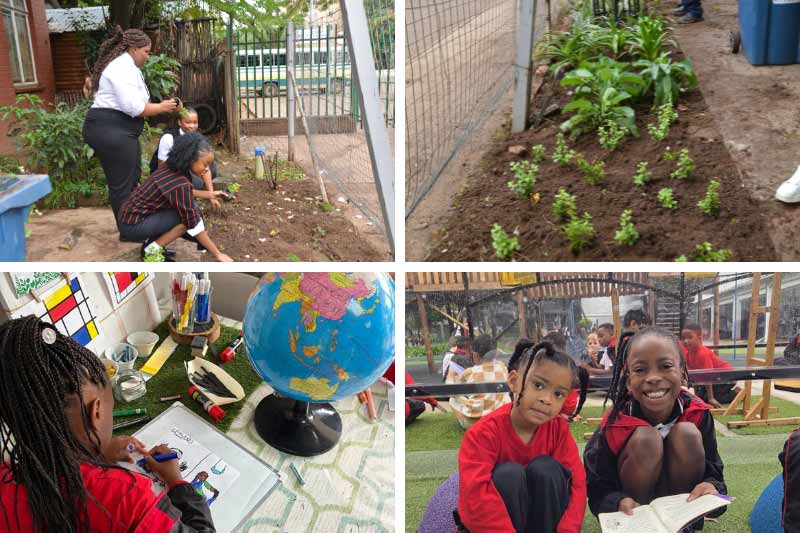
Pictured above: Ditheku Primary School learner’s planting vegetables in the school garden; participating in food waste management practice using Bokashi, and learning about waste sorting at the source labelling their bins

On 17 April 2026, WESSA conducted a second Clear Skies Eco-Schools implementation visit at Ditheku Primary School in Marapong, Lephalale, Limpopo.

The visit focused on strengthening environmental stewardship among learners and the wider school community.

Connecting the dots on pollution

More than 40 learners, along with ground staff, the Eco Committee, and members of SAWPA, participated in an interactive session exploring the link between waste management and air pollution.

Under the theme “Connecting the Dots,” learners unpacked how practices such as illegal dumping, open burning, and littering directly contribute to environmental degradation.

These discussions were grounded in real challenges facing their school and surrounding community.

Hands-on environmental solutions

The day’s activities focused on practical interventions that support long-term change.

Highlights included:

  • Establishing a recycling station
  • Setting up a food garden
  • Introducing composting using Bokashi to reduce food waste and produce nutrient-rich soil

Learners also explored the impact of food waste on pollution and methane emissions, gaining a deeper understanding of sustainable waste practices.

Strengthening local partnerships


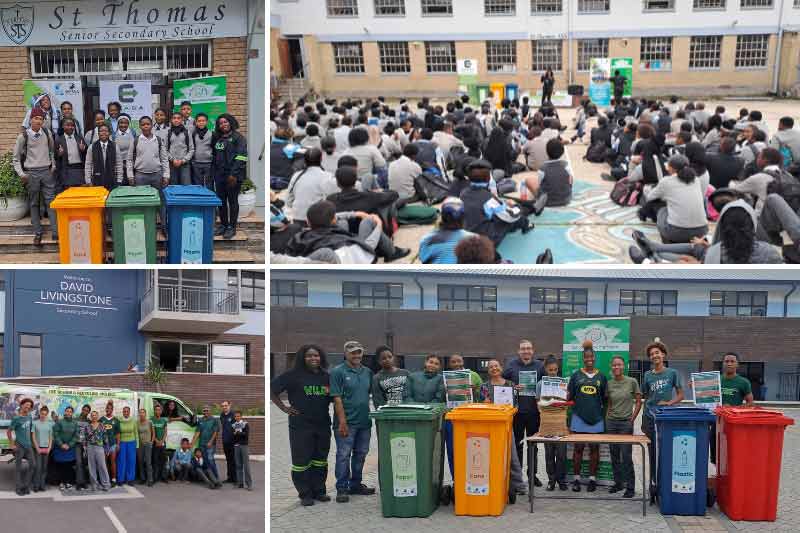
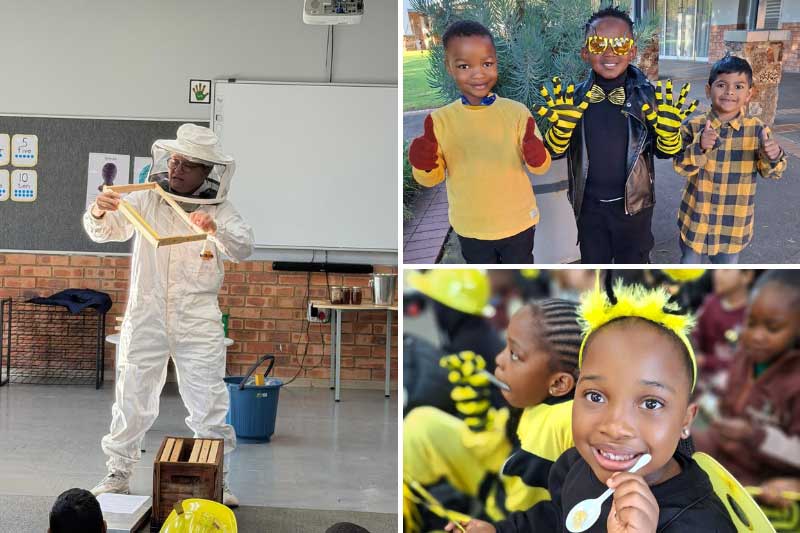
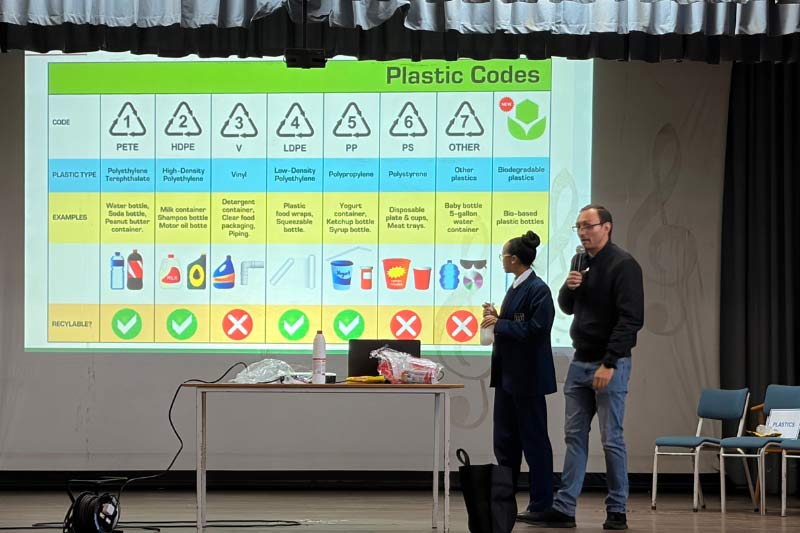
Pictured above: Top – Mr Matsaba, a Local Recycler Coordinator of the Radical Recycling Group and member of SAWPA engaging with learners; Miss Malebohang, an upcycling xpert presenting on the work she does with waste & in the background, Mr Matsaba is holding a mat made from plastic

A key milestone was the signing of a Memorandum of Understanding with Radical Recycling Group, coordinated by Mr Glen Matsaba.

This partnership will support ongoing recycling efforts and strengthen the school’s environmental initiatives.

The visit also featured an inspiring upcycling presentation by Miss Malebohang, showcasing how waste can be transformed into useful products.

Building a cleaner, healthier future

Through collaboration, education, and practical action, the Clear Skies Project continues to enable learners to become environmental champions – driving change within their schools and communities.


Clean Air Fund Project: Learners in Gauteng step up for cleaner air in Tshepiso

Clean Air Fund Project: Learners in Gauteng step up for cleaner air in Tshepiso

Pictured above: Tshepiso Primary School learners planting vegetable seedlings in the school garden, engaging in Spekboom propagation and practically learning about composting

On 15 April 2026, WESSA hosted a Clear Skies Eco-Schools support visit at Tshepiso Primary School, located just outside Vanderbijlpark in Gauteng.

This marked the second engagement with learners following the introductory session held in February, deepening understanding of air pollution and its impact on communities.

Building awareness through collaboration

The session brought together key stakeholders, including GroundWork, the Gauteng Department of Agriculture and Rural Development (GDARD), the South African Waste Pickers Association (SAWPA), and representatives from the local municipality.

Through a series of discussions, learners explored the realities of air pollution, and the role communities can play in addressing it. A strong message emerged: young people have a vital voice in shaping healthier environments.

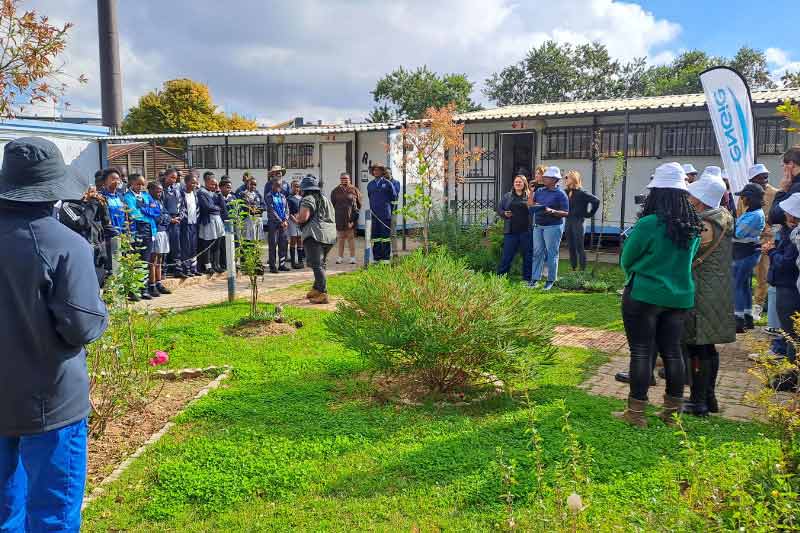
Pictured above: Tshepiso Primary School activity (top) Mr Khulu Mbongo from the local municipality sharing insights on air pollution; (bottom) Mr. Loyiso Mkwana, Chief Director for Sustainable Use of the Environment at the Gauteng Department of Agriculture and Rural Development (GDARD) inspiring learners & educators with his address.

From knowledge to action

A total of 183 Grade 6 learners participated in practical, hands-on activities focused on sustainable living.

The session covered:

  • Recycling and the importance of sorting materials at source
  • Food waste management using Bokashi to produce compost
  • Spekboom propagation, highlighting its ability to absorb carbon dioxide
  • Establishing a school vegetable garden using permaculture principles

These activities translated environmental concepts into tangible actions learners can apply at school and at home.

Growing future environmental leaders

By combining education with practical solutions, the visit enabled learners to take ownership of environmental challenges in their community.

Initiatives such as composting, recycling, and planting not only contribute to improved air quality, but also build long-term resilience and sustainability within the school environment.

31 Eastern Cape Eco-Schools recognised at WESSA 2025 Eco-School Awards

31 Eastern Cape Eco-Schools recognised at WESSA 2025 Eco-School Awards

Pictured above: Eastern Cape award recipients, educators, learners, WESSA team and guests

Eastern Cape, South Africa – 2 April 2026: Schools across the Eastern Cape have once again demonstrated the power of education to drive meaningful environmental change, as learners and educators were recognised at the WESSA Eco-Schools Awards 2025.

The awards celebrate schools participating in WESSA’s Eco-Schools and Young Reporters for the Environment (YRE) programmes, recognising their commitment to sustainability, environmental learning, and community impact.

This year, 31 schools from across the province were acknowledged for their efforts, spanning participation levels through to prestigious long-term achievement awards.

Pumla Gxuluwe, Deputy Chief Education Specialist at the Department of Education in the Eastern Cape, delivered an address and shared that, “Being part of the WESSA Eastern Cape Awards has reawakened something in me. It took me back to my early days as a young biology teacher where we planted trees and taught learners about the simple miracle of gas exchange – that plants give us oxygen, and we give them carbon dioxide. Back then our trees were stolen and our yards were unfenced, but today I see a new generation of schools and partners who are determined to protect and grow these living classrooms.”

A strong cohort of schools participated in the Young Reporters for the Environment (YRE) programme, including Douglas Mbopa High School, Ogwini Comprehensive Technical High School, and Walmer Secondary School, highlighting the role of youth voice in environmental storytelling and advocacy.

At foundational levels, schools such as Emafini Primary School, Cape Recife High School, and Qumbu Village Primary School achieved Bronze Awards, marking their growing commitment to embedding sustainability into school life.

Top-performing schools were recognised at the highest levels of the programme, with:

  • Mboniselo Public Primary School achieving International Flag status
  • Motherwell High School and Mdengentonga Public Primary School earning Platinum Awards

These achievements reflect sustained action, leadership, and measurable environmental impact within school communities.


Celebrating long-term commitment to sustainability


Several schools were honoured for their long-standing participation and consistent excellence in the programme.

Notably:

  • Lilyfontein School received the prestigious Emerald Award
  • Schools such as Kabega Primary School and Khulile Primary School achieved Silver Decade Awards
  • St Francis College reached the milestone of a Platinum 4 Decade Award, marking exceptional long-term commitment

These recognitions highlight the sustained culture of environmental responsibility being built within schools over many years.


Special awards recognise innovation and leadership


In addition to the core awards, several schools were recognised for going beyond programme expectations:

  • Woodridge College & Preparatory School received the Ocean Guardian Award (Marine & Coasts) for outstanding marine conservation efforts
  • Lilyfontein School was awarded the Clean Commute Award (Transport) for innovative approaches to sustainable transport and environmental awareness
  • Qumbu Village Primary School earned the Green Start Award 2025, recognising exceptional progress in its first year, including establishing an eco-club and a food garden supporting the school nutrition programme


Building a generation that leads change


Through Eco-Schools, WESSA continues to support schools across South Africa in embedding sustainability into everyday learning, while building environmental leadership among learners and educators.

“This programme shows our learners that environmental education is not just a subject in a textbook, it is a way of life that demands commitment, creativity, and community. I leave this event inspired, grateful, and more convinced than ever that when we invest in young people and the environment together, we are planting the strongest roots for the Eastern Cape’s future,” adds Gxuluwe.

As WESSA celebrates its 100th year, the work of these schools reflects a growing national movement – one where education is not only shaping awareness but driving measurable environmental action.


Full list of awarded schools and categories (Top achievements first)


Emerald Award: Lilyfontein School

Decade Awards (Long-term commitment)

  • Platinum 4 Decade: St Francis College
  • Platinum 2 Decade: Dumani Public Primary School
  • Platinum 1 Decade: Seyisi Primary School
  • Silver Decade
    • Kabega Primary School
    • Khulile Primary School
  • Bronze Decade
    • Woodridge Preparatory & College
    • Vukanibantu Primary School


Platinum Awards

  • Platinum 4: Collegiate Junior School for Girls
  • Platinum 3
    • St Colmcille Secondary School
    • Empumalanga Primary School
    • Elufefeni Primary School
  • Platinum 2: Canzibe Primary School
  • Platinum 1
    • Motherwell High School
    • Mdengentonga Public Primary School

International Flag: Mboniselo Public Primary School

Green Flag: Enkwenkwezini Primary School

Bronze Awards:

  • Emafini Primary School
  • Cape Recife High School
  • Qumbu Village Primary School


Participation – Eco-Schools

  • Carinus Primary School
  • Woolhope Secondary School


Participation – Young Reporters for the Environment (YRE)

  • Douglas Mbopa High School
  • Ogwini Comprehensive Technical High School
  • Coselelani Secondary School
  • Cowan High School
  • James Jolobe Secondary School
  • Khumbulanei High School
  • Lungiso Secondary School
  • Masiphathisane Senior Secondary School
  • Walmer Secondary School
46 KwaZulu-Natal schools recognised by WESSA for driving environmental action

46 KwaZulu-Natal schools recognised by WESSA for driving environmental action

Pictured above: Recipients of Eco-School awards in KZN with WESSA Schools & Youth team, and CEO.

Durban, South Africa – 29 March 2026: KwaZulu-Natal’s commitment to environmental education and youth-led action was celebrated at the 2025 Eco-Schools Awards Ceremony, held on 21 March 2026 (Human Rights Day) at the Willow Way Manor in Durban. The event brought together educators, learners, government representatives, and environmental partners in the province to recognise schools that are not only learning about sustainability but actively shaping it within their communities.

The Eco-Schools programme, implemented by WESSA (The Wildlife and Environment Society of South Africa), continues to empower young people to move from awareness to meaningful action, embedding environmental responsibility into schools across the province.

Recognising schools that turn learning into action

This year’s awards recognised schools across KwaZulu-Natal for their commitment to environmental learning, practical action, and community impact. From waste management and water conservation to biodiversity protection and climate awareness, participating schools demonstrated how education can drive real change.

The ceremony highlighted the strength of the Eco-Schools model – where learners are not passive recipients of information, but active participants in solving environmental challenges within their schools and communities.

A number of Eco-Schools were recognised for their long-term, consistent commitment, including the Emerald Award (20 years) awarded to Pitlochry Primary School and Shea O’Connor Combined School, and the Arum Lily Award (22 years) awarded to Epworth School and The Birches – marking over two decades of sustained environmental excellence.

A centenary year for WESSA and a future led by youth

As WESSA marks its 100th year, WESSA CEO, Cindy-Lee Cloete, reflected on the enduring power of environmental education to shape a more sustainable future.

“For 100 years, WESSA has believed in the power of education to change lives and protect our planet. The Eco-Schools programme is one of the clearest examples of this in action – where knowledge is transformed into meaningful, community-driven change,” adds Cloete.

She added that the programme’s impact lies in its ability to move learners beyond awareness, “We are not just teaching learners about environmental challenges – we are equipping them to respond to those challenges with confidence, creativity, and purpose. These young people are not the leaders of tomorrow; they are leading change today.”

Rethinking sustainability for the next generation

Delivering the keynote address, Thobekile Gambu, Environmental Scientist and United Nations Global Compact Coordinator for uMgeni-uThukela Water South Africa, challenged attendees to rethink how sustainability is approached in education, particularly in the face of growing environmental pressures.

keynote speaker

Pictured above: Keynote speaker, Thobekile Gambu

“We cannot afford to treat sustainability as a future concern. The decisions we take and actions we make today will define the kind of world young people inherit,” she said.

Emphasising the importance of agency and action, she shares that, “Young people must be equipped not only with knowledge, but with the ability to act. When learners understand their role in protecting natural systems – especially water – they become powerful drivers of change within their communities.”

She further highlighted the need for a shift in mindset: “Sustainability education must move beyond awareness. It must inspire responsibility, innovation, and action – because the challenges we face require more than understanding; they require solutions.”

Learner-led innovation and impact on display

A powerful highlight of the ceremony was the showcase presentations by learners, demonstrating the tangible impact of Eco-Schools projects on the ground.

A Grade 7 learner from Highbury Preparatory School shared how their Eco Club has driven initiatives such as recycling programmes, school gardening, and biodiversity awareness, while also extending their impact through community engagement and conservation fundraising efforts.

Meanwhile, Dingeka Technical High School presented their work focused on water, sanitation, and hygiene (WASH), alongside recycling initiatives and environmental awareness campaigns. Their work reflects a strong commitment to addressing both environmental and social challenges within their community.

These showcases reinforced a key message: when learners are enabled, they become powerful agents of change.

Building a generation of environmental leaders

The KwaZulu-Natal Eco-Schools Awards once again demonstrated the programme’s role in developing environmentally conscious, action-oriented young leaders.

Through hands-on learning, collaboration, and community engagement, Eco-Schools continues to nurture a generation that understands not only the challenges facing the planet – but their role in solving them.

As WESSA celebrates its centenary year, the work of these schools stands as a powerful reminder that the future of environmental sustainability is already being shaped in classrooms across South Africa.

Top honours recognise excellence in environmental leadership

Among the many schools recognised, several stood out for their exceptional leadership and impact through the programme’s special awards, which celebrate excellence across key environmental themes.

  • The WESSA Eco-Schools Biodiversity Stewardship Award was awarded to Amanzimtoti Primary School, recognising its long-standing commitment to protecting and restoring biodiversity through initiatives such as beach clean-ups, wetland adoption, and environmental awareness campaigns.
  • The WESSA Eco-Schools Circular Economy Champion Award was presented to Hillgrove Primary School, which has demonstrated outstanding leadership in waste reduction and recycling, including collecting over 1 400 kg of recyclables and promoting a culture of resource efficiency.
  • The WESSA Eco-Schools Water Wise Warriors Award went to Buhlebemfundo High School, whose learners developed an innovative water conservation app and represented South Africa on the global stage, while also leading water stewardship initiatives within their community.
  • The WESSA Eco-Schools Ubuntu for Nature Award was awarded to Epworth School, in recognition of its strong community engagement, including clean-up campaigns, tree planting, food gardens, and environmental awareness initiatives that embody collective action for people and the planet.

In addition to the special awards, several schools were recognised for their long-term commitment to the Eco-Schools programme, achieving milestone “decade” awards that reflect sustained environmental action over many years.

Additional notable achievements:

  • 15 years: Cowan House, Amanzimtoti Primary School, Kainon Primary School, and Tree Tops School received the International Flag Decade Award
  • 17 years: Eden College and Virginia Preparatory School were awarded the Platinum 2 Decade Award

Eco-Schools Awards Progression

Participation award

  • Hillcrest High School

Bronze award (Year 1)

  • Inkanyezi Creche and Community Care Centre
  • Dingeka High School

Silver award (Year 2):

  • Atholl Heights Primary School
  • Crawford International La Lucia
  • Crawford International North Coast
  • Umlazi ComTech High School
  • E. Ndlovu Secondary School
  • JL Dube Secondary School
  • Marklands Secondary School
  • Nkosinathi Secondary School
  • Mzuvele Secondary School

Green Flag award (Year 3):

  • Athlone Park Primary School
  • Carter High School
  • Injabulo Senior Primary School

Sun International Eco-Schools Project

Gold award (Year 4):

  • Glenhaven Secondary School
  • Palmview Secondary School
  • Sterngrove Primary School
  • Phoenix Secondary School
  • Waterloo Secondary School

Gold award (Year 4):

  • Longmarket Girls’ School
  • Thembimfundo Special School
  • Buhlebemfundo Secondary School

International Flag award (Year 5):

  • Kloof High school
  • Ogwini Comprehensive Technical High School

Platinum 2 award (Year 7)

  • Wembley College
  • Hermannsburg School
  • The Browns School

Silver Decade award (Year 12):

  • Deutsche Schule Durban
  • Winston Park Primary School
  • Highbury Preparatory School

Green Flag Decade award (Year 13):

  • Hilton Montessori

Gold Decade award (Year 14):

  • Umbogintwini Primary School
  • Stanger Training Centre
  • Laddsworth Primary School

International Flag Decade award (Year 15):

  • Cowan House
  • Amanzimtoti Primary School
  • Kainon Primary School
  • Tree Tops School

Platinum 2 Decade award (Year 17):

  • Eden College
  • Virginia Preparatory School
  • Hillgrove Primary School

Emerald award (Year 20):

  • Pitlochry Primary school
  • Shea O’Connor Combined School

Arum Lily award (Year 22):

  • Epworth School
  • The Birches

Partner and Funder Recognition

  • Sun International Sibaya
  • eThekwini Municipality – Cleansing and Solid Waste Unit
17 Mpumalanga schools recognised for environmental leadership at WESSA Eco-Schools Awards 2025

17 Mpumalanga schools recognised for environmental leadership at WESSA Eco-Schools Awards 2025

Pictured above: Mpumalanga Province educators receiving award certificates)

eMalahleni, Mpumalanga – 27 March 2026: A total of 17 schools from across Mpumalanga were recognised for their commitment to environmental education and action at the WESSA Eco-Schools Awards 2025, hosted recently at Anew Hotel in eMalahleni.

The awards brought together educators, learners, government representatives, and partners to celebrate how schools are transforming environmental awareness into meaningful, community-driven action – reinforcing the growing impact of environmental education across the province.

Opening the event, WESSA Schools and Youth Senior Programme Manager, Nomfundo Ndlovu, commended schools for their dedication to environmental stewardship: “What we are seeing across Mpumalanga is a powerful shift from environmental awareness to meaningful action. These schools are not only teaching sustainability, but they are also living it. When learners are given the tools, space and support to engage with real-world challenges, they don’t just participate, they lead. This is how we build a generation of environmentally conscious citizens who are equipped to drive change in their communities and beyond.”

Schools driving local environmental impact

Participating schools were recognised for implementing practical projects aligned to key Eco-Schools themes, including water conservation, waste management, biodiversity, health and wellbeing, and community and heritage.

New entrant schools, including Mehlwane Secondary School, Impilo Primary School, Amandla Primary School and Lehlaka Combined School, achieved Silver status, reflecting strong foundational efforts in embedding environmental learning within their school communities.

Several established schools were awarded the prestigious Platinum 3 level, recognising sustained excellence, long-term commitment, and leadership in environmental practice.

Pictured above: Mpumalanga Province educators receiving award certificates

Innovation, circular economy and community collaboration

Stakeholders at the event highlighted the growing importance of integrating environmental education with real-world outcomes, particularly through recycling initiatives that not only address environmental challenges but also create opportunities for income generation within communities.

The keynote address by Rebotile Rachuene of Sediba Sa Metse underscored the value of community-led conservation, sharing insights into efforts to protect owl populations in the Middelburg area and demonstrating how local action contributes to broader ecosystem resilience.

The event was further enriched by learner performances and a powerful poetry piece centred on the principles of reduce, reuse and recycle, reinforcing the role of young people in shaping more sustainable communities.

Pictured above: Mpumalanga Province Eco-Schools Awards 2025 Guest speakers

A growing movement in WESSA’s centenary year

The Mpumalanga Eco-Schools Awards form part of WESSA’s broader mission to Educate, Advocate, Act, and carry added significance in 2026 as the organisation marks its centenary celebrating 100 years of environmental leadership in South Africa.

As one of the country’s leading environmental education programmes, Eco-Schools continues to empower young people to take ownership of their environment, driving measurable change at both school and community level.

Pictured above: Mpumalanga Province Eco-Schools Awards 2025 group photo)

Funded Schools

Silver

  • Mehlwane Secondary School
  • Impilo Primary School
  • Amandla Primary School
  • Mabande Secondary School
  • Lehlaka Combined School

Platinum 3

  • Makause Combined School
  • Hlanguphala Primary School
  • Sukumani Primary School
  • Thuthukani Primary School
  • Ogies Combined School

Independent Registered Schools

Platinum 3

  • Penryn College
  • Nancy Shiba Primary School
  • Maloma Primary School
  • Kananda Primary School
  • Edward Matyeka Primary School
  • KwaGuqa Primary School
  • Siyathokoza Primary School