Glencore Circular Economy Project: Teachers reflect, reset and expand Impact

Glencore Circular Economy Project: Teachers reflect, reset and expand Impact

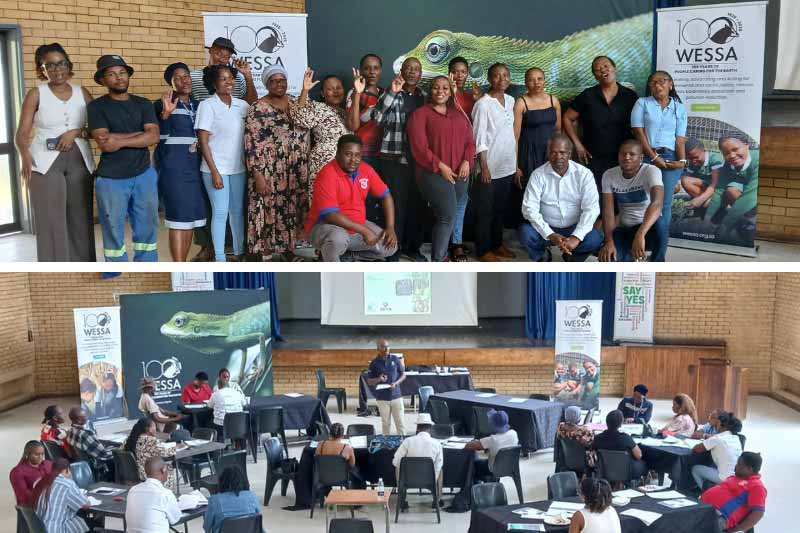
Pictured above: group photo; Below: Presentation on the circular economy by the WESSA project coordinator

On 27 January 2026, educators from Glencore-funded and independently registered schools gathered at Ogies Combined School in Mpumalanga for a dedicated teachers’ workshop under the Glencore Circular Economy Project.

The workshop marked an important moment of reflection and renewal, creating space to look back at 2025 project activities, assess progress on the ground, and identify practical ways to strengthen and grow school-based circular economy initiatives in the year ahead.

Building on what works

A core focus of the session was supporting schools to consolidate what they have already achieved. Educators reflected on recycling and waste-management activities implemented during 2025, sharing what has worked well in their school environments and where additional support is needed.

These conversations helped surface common challenges and opportunities, ensuring that the project remains responsive to the realities faced by teachers and learners in the classroom and schoolyard.

Expanding the circular economy conversation

Looking ahead, the workshop introduced opportunities to expand circular economy activities beyond recycling, with a new emphasis on upcycling.

By exploring ways to transform waste materials into usable or artistic products, the project aims to:

  • deepen learners’ understanding of resource value
  • encourage creativity and problem-solving
  • expose learners to the idea that waste can be a resource, not just something to be discarded

This approach opens up space for learners to express artistic skills while reinforcing key sustainability principles in a hands-on, accessible way.

Strengthening local partnerships

The workshop also created a platform for two local buy-back centres to present their services and explain how they collaborate with schools. Their participation strengthened links between schools and local recycling economies, highlighting how partnerships can support consistent waste diversion and reinforce real-world learning.

In total, 30 educators from schools in the eMalahleni area took part, representing both funded schools and independently registered schools engaged in the project.
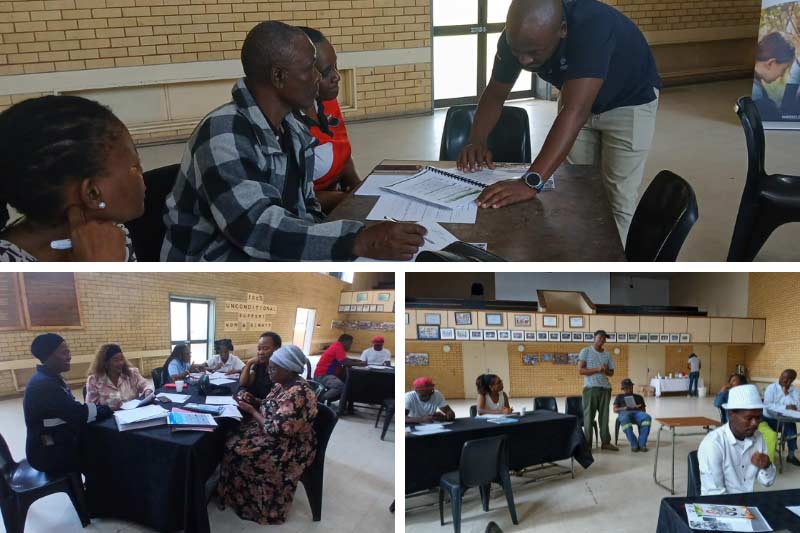
Pictured above: Group engagement sessions

Supporting accountability and progress

In addition to reflection and planning, the workshop played a practical role in ensuring project momentum. Time was set aside to:

  • complete outstanding registration documentation
  • support schools in compiling evidence required for assessment
  • address questions and gaps affecting progress against project activities

This structured support helps ensure that schools are well positioned to meet project requirements while continuing to build meaningful, learner-led environmental action.

Turning environmental education into everyday practice

By bringing educators together at the start of the year, the Glencore Circular Economy Project reinforced the role of teachers as drivers of sustained change within their schools and communities. The workshop not only strengthened existing initiatives but also laid the groundwork for deeper engagement with circular economy principles in 2026.

As schools continue to build on their achievements, the focus remains on practical action, collaboration and creativity, turning environmental education into everyday practice.
WESSA CEO coastal roadshow drives national action against ghost fishing gear

WESSA CEO coastal roadshow drives national action against ghost fishing gear

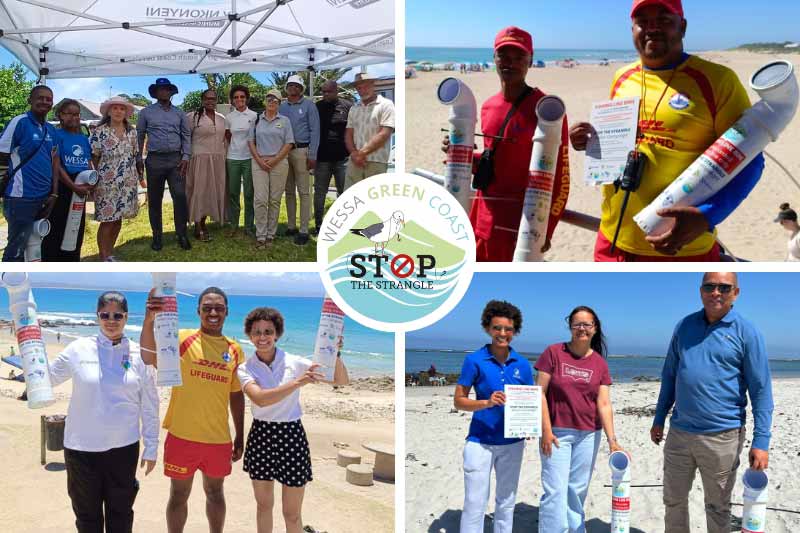
Top left: Mayor of Ray Nkonyeni, representatives from the Leisure Bay Conservancy and Mpenjati Conservancy. Top right: Jeffreys Bay Lifeguards Philani Yumatha and Keawane Hammond; Bottom left: De Bakke Beach in Mossel Bay – WESSA CEO, Cindy-Lee Cloete with lifeguard squad leader Je-Olyne Walters and municipal representative Mushfiqah Abrahams; Bottom right: McDougalls Bay, Port Nolloth – WESSA CEO, Lara Young, Municipal Support & Compliance Manager, Joseph G Cloete, Municipal Manager, Port Nolloth

Stop the Strangle action campaign scales frontline marine protection through municipal and community partnerships

WESSA is strengthening on-the-ground action against ghost fishing gear and marine entanglement through its ongoing CEO coastal roadshow, as part of Phase 2 of the Stop the Strangle (STS) action campaign.

The roadshow, led by WESSA CEO Cindy-Lee Cloete, kicked off in December 2025 and is focused on deepening collaboration with municipalities, conservancies, lifeguard services and coastal partners, while accelerating the national rollout of ghost fishing line collection and analysis bins across South Africa’s coastline.

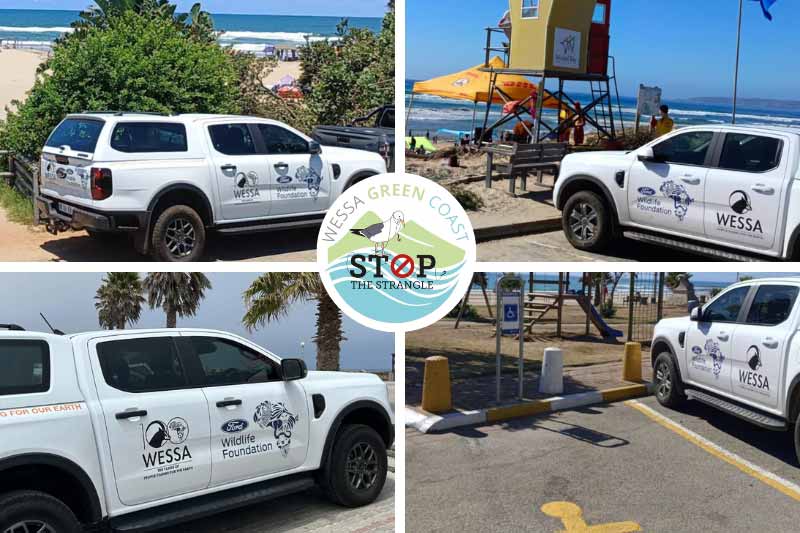
This work forms part of the Ford 100-Bin Relay Project made possible through the support of the Ford Wildlife Foundation and aims to intercept discarded fishing line before it reaches the ocean, while generating data to support long-term, evidence-based marine conservation.

Turning coastal action into measurable impact

Ghost fishing gear, including lost or discarded fishing line, remains one of the most harmful forms of marine pollution, causing severe injury and death to seabirds, turtles, sharks and other marine species, often long after the gear has been abandoned.

Through Stop the Strangle, WESSA is combining practical infrastructure, community-led monitoring, and data collection to reduce this threat in high-traffic coastal areas.

As part of the CEO roadshow ghost fishing line collection and analysis bins have recently been formally handed over at multiple strategic coastal sites that are part of our Green Coast and Blue Flag network of partners.  New Stop the Strangle sites include Mossel Bay, Jeffreys Bay, McDougalls Bay (Port Nolloth), Leisure Bay and Mpenjati Conservancies in KwaZulu-Natal, and two of our Blue Flag marinas, namely Club Mykonos and the Royal Alfred Marina.

“These handovers are about more than infrastructure,” says Cindy-Lee Cloete, CEO of WESSA. “They represent a shared commitment between municipalities, coastal partners and communities to protect marine life and manage our coastlines responsibly. By working together, we can stop fishing line from becoming a silent killer in our oceans and turn local action into lasting conservation impact.”

Strengthening municipal and community partnerships

The handovers bring together key local stakeholders, including municipal representatives, conservancies, lifeguard services and coastal managers, highlighting the essential role of local leadership in marine litter prevention.

By prioritising Green Coast sites, Blue Flag beaches, marinas and boat facilities, the Ford 100-Bin Relay Project is designed to increase interception where pressure on the coastline is highest, while demonstrating a scalable model for integrated coastal management.

“The Stop the Strangle campaign is designed to turn hands-on coastal action into data-driven conservation outcomes,” adds Mike Denison, WESSA’s Coastal Programme Senior Manager. “The information gathered through these bins will help strengthen marine research, inform policy discussions and guide future interventions.”

A national campaign with local impact

Stop the Strangle operates within WESSA’s broader Green Coast programme, which supports coastal stewardship, environmental compliance and community participation along South Africa’s shoreline.

The CEO roadshow continues in early 2026, with further handovers and engagements planned with strategic partners as the campaign scales nationally.

Long-term coastal protection depends on strong partnerships and practical action. With the support of the Ford Wildlife Foundation, WESSA’s Coastal Programme is strengthening frontline coastal conservation and working alongside communities to deliver real, measurable impact.

We are proud to have our Coastal Programme powered by Ford.

Want to get involved?

Learn more about Stop the Strangle and how to support the campaign here: https://www.wessa.org.za/stop-the-strangle/. Reach out to Mike Denison, WESSA’s Coastal Programme Senior Manager via greencoast@wessa.co.za.

WESSA responds to concerns about the Blue Flag programme and sewage pollution in Cape Town

WESSA responds to concerns about the Blue Flag programme and sewage pollution in Cape Town

The Wildlife and Environment Society of South Africa (WESSA), as the national operator in South Africa of the international Blue Flag programme, acknowledges and shares public concern regarding sewage pollution and marine outfalls along the Cape Town coastline. We also welcome robust, evidence-based debate about these issues.

However, recent commentary suggesting that WESSA has been “silent” on these matters, or that we show “little interest in holding municipalities to proper account”, misrepresents both the purpose of the Blue Flag programme and WESSA’s long-standing work in this space.

WESSA has not been silent

WESSA has engaged consistently and constructively with a wide range of stakeholders on the issue of sewage pollution and water quality.

WESSA Coastal Programme Manager, Mike Denison:

  • “We haven’t been silent on it. We’ve engaged with groups such as Bays of Sewage and individuals like Prof. Anthony Turton, Caroline Marx, Byron Herbert, Jamii Hamlin and others whom we regard as leading civil society stakeholders grappling with the challenges of water quality in the Cape Town metro. “
  • “We’ve been vocal and participated at the Permit Advisory Forum presenting for clarity around certain aspects linked to the Blue Flag programme.”

What Blue Flag measures, and what it does not

The Blue Flag is an internationally recognised eco-label awarded to beaches, marinas and tourism boats that meet a comprehensive set of environmental, educational, safety and accessibility criteria. It is not a general-purpose endorsement of all municipal infrastructure, nor is it a guarantee that no environmental challenges exist in a city or along a coastline.

WESSA Coastal Programme Manager, Mike Denison:

  • “Blue Flag is an award based on a defined set of 33 environmental and sustainability criteria set by the international body, and WESSA reviews and evaluates against those criteria.”
  • “From a Blue Flag perspective, based on the defined criteria, we get an indicator over time from water samples by independent accredited labs whether a particular section of our coastline falls within parameters that are deemed safe to swim. Those parameters include both Enterococci and E. Coli, although the World Health Organisation has said only Enterococci is necessary, we agree that E. Coli should also be considered, and hence we’ve kept it as one of our measures.

From our FAQs – what are the water quality requirements?

  • Blue Flag Beaches water quality sampling only takes place during the current season of the flag. Water quality sampling is done by an independent and accredited lab against a pre-determined schedule for the season. Results are shared directly with WESSA.
  • New beaches need 20 water quality samples to qualify. Once awarded, beaches must take a minimum of 5 samples per season evenly spread out, preferably every two weeks but not longer than 30 days between samples. Both E.coli and Enterococci must be tested for. E.coli limit is 250 cfu/100 ml and Enterococci is 100 cfu/100 ml.
  • WESSA posts the water quality results on the WESSA website for the duration of Blue Flag beach seasons. Should water quality fall outside the Blue Flag parameters, then the flag is lowered until a satisfactory sample, within a maximum of 10 days, is achieved.

Using Blue Flag to hold municipalities accountable

The Blue Flag programme is itself a key mechanism through which municipalities are held accountable for maintaining high standards.

WESSA Coastal Programme Manager, Mike Denison:

  • “With regards to the Blue Flag programme, WESSA uses the set global criteria to not only strengthen municipal services, but also hold municipalities accountable, and we understand that it is very important for the Blue Flag to fly for various reasons.”
  • “Through this past season, there’s been several occasions in which a Blue Flag was lowered while municipalities resolve a specific unmet criterion. Municipalities are therefore held accountable by the Blue Flag standards. They must remedy the issues on hand before a Blue Flag can fly again.”
  • “We’ve also had one beach that’s had its Blue Flag withdrawn for the remainder of the season, for not being able to sustain itself against the demands of the 33 criteria. Therefore, from a WESSA perspective, we believe that this is how using the Blue Flag holds the municipalities accountable.”

These actions demonstrate that Blue Flag status is continually reviewed and that municipalities are required to remedy issues before flags can be raised again.

Integrity, evidence and constructive engagement

For nearly a century, WESSA has worked to protect and conserve biodiversity in South Africa. That history and institutional knowledge underpin our role in the Blue Flag programme.

WESSA Coastal Programme Manager, Mike Denison:

  • “In our 100-year history, WESSA has always been open to suggestions and recommendations to strengthen protection and the conservation of our natural resources. Blue Flag is no different, and we do engage municipal partners, individuals and civil society organisations to help us improve the programme – and this goes for the sampling criteria too.

WESSA CEO, Cindy-Lee Cloete:

  • “WESSA recognises that trust between civil society, municipalities, laboratories, and independent programmes is essential. While critical scrutiny is healthy, a default of total distrust is corrosive.
  • We acknowledge and we respect the integrity of approved entities within our stakeholder network that work with the Blue Flag programme.
  • WESSA remains committed to constructive, evidence-based engagement, to continuously improve the Blue Flag programme, and to working with all good-faith stakeholders towards healthier oceans, safer bathing waters, and more accountable coastal management.”

To request an interview with WESSA’s Coastal Programme Manager, please contact Ronell Swartbooi via marketing@wessa.org.za.

Join our Team: Accounts Payable & Finance Administrator

Join our Team: Accounts Payable & Finance Administrator

Are you a detail-oriented finance administrator who takes pride in keeping systems accurate and running smoothly? WESSA is looking for an Accounts Payable & Finance Administrator to join its Finance team on a one-year fixed-term contract.

Based at WESSA’s Howick office in KwaZulu-Natal, this role plays a behind-the-scenes but essential part in supporting the organisation’s work across the country.

As part of the Finance team, you’ll play an active role in ensuring payments, reconciliations, and financial records are handled with care, accuracy, and consistency.

This position is well suited to someone who enjoys working with numbers, processes, and systems, and who understands the importance of compliance and attention to detail. Your work will support multiple programmes and business units, helping to keep WESSA’s operations running effectively.

If you’re looking to apply your finance administration skills in a values-driven organisation working for people and the environment, this role offers an opportunity to contribute meaningfully while growing your experience in the non-profit sector.

Click here to read the full role requirements and apply.

Apply by: 16h00 SAST, Monday, 12 January 2026

Send your CV and motivation letter to: applications@wessa.co.za

Subject line: Accounts Payable & Finance Administrator

Important to note: Please submit all documents (cover letter, CV, and supporting materials) in a single PDF document.

An Eco-Christmas to remember at Zizameleni Itekeleng Pre-School, thanks to Wispeco Aluminium

An Eco-Christmas to remember at Zizameleni Itekeleng Pre-School, thanks to Wispeco Aluminium

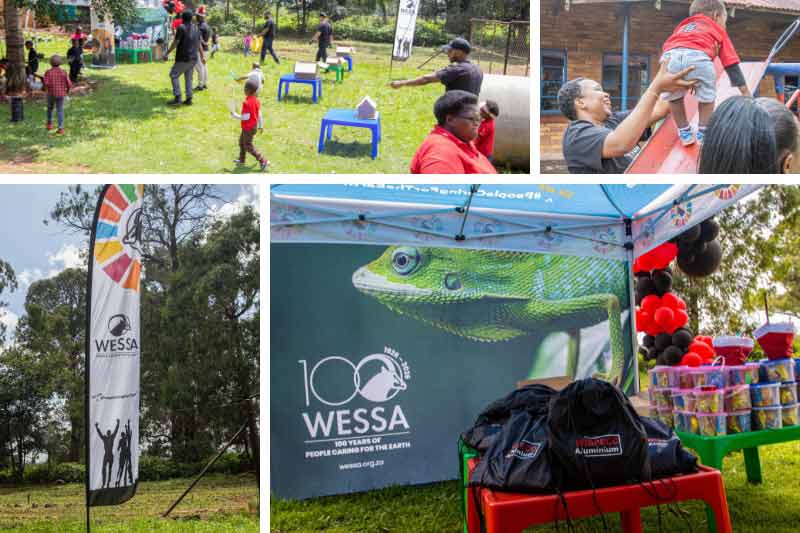
On 2 December 2025, WESSA wrapped up the year in the most heart-warming way with a joyful Eco-Christmas celebration at Zizameleni Itekeleng Pre-School. From laughter and learning to meaningful upgrades that will last well beyond the festive season, it was truly a magical day for the children, and everyone involved.

In partnership with Wispeco Aluminium, we transformed the school into a brighter, safer, and more welcoming space, reinforcing the belief that clean, cared-for environments help young learners thrive.

Creating a safe, happy learning space

Together, we rolled up our sleeves to make tangible improvements to the school environment. These refurbishments were designed not only to uplift the space, but to support the health, safety, and wellbeing of every child.

Key improvements included:

  • A colourful and cosy reading corner, designed to spark imagination and encourage a love for books and early literacy
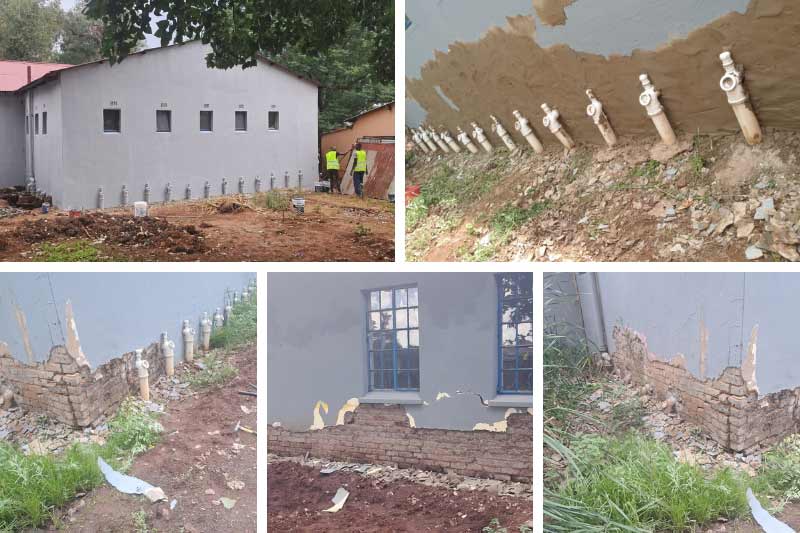
  • Repairs and fresh paint to the outside wall, creating a more welcoming school environment
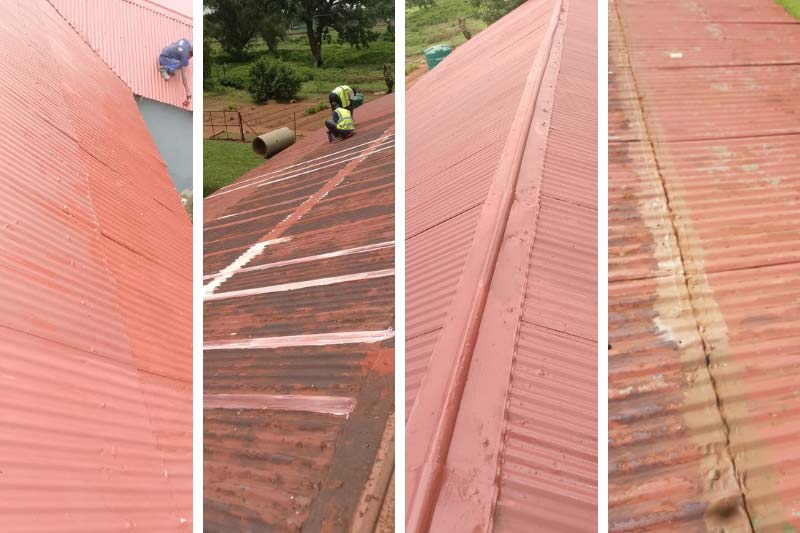
  • Toilet repairs and roof maintenance, ensuring safer, cleaner and healthier facilities for learners and staff

The transformation was immediate, and the smiles said it all.

Pictured above: Outside wall before and after.

Pictured above: Roof repairs before and after.

Learning through play

The celebration also placed environmental learning at the centre of the day, with children rotating through two fun and interactive eco-learning stations.

At the Recycling Challenge, learners:

  • Collected litter around the school grounds
  • Identified different types of waste
  • Sorted items into the correct recycling bins, learning why proper waste separation matters

In the Animal Rescue Zone, children:

  • Selected an animal figurine
  • Shared what each animal needs to stay healthy and safe
  • Placed animals in the correct habitats while learning how pollution and environmental damage affect living creatures

Through play, curiosity and conversation, learners were introduced to important environmental concepts in an age-appropriate and memorable way.

Festive joy with a green twist

The festive cheer continued as each child received eco-friendly gifts, including seed kits and green stationery, small items with a powerful message about caring for the environment. Every learner also took home a Christmas gift bucket, spreading joy well beyond the school gates and into the holiday season.

Thank you for making it possible

A heartfelt thank you to Wispeco Aluminium for partnering with WESSA on this impactful initiative, and to everyone who contributed their time, energy, and care to make the day so special.

As we closed off the year, this celebration served as a beautiful reminder that when communities come together, we can create environments where children feel safe, inspired, and excited to learn, today and into the future.

[WESSA Eco-Schools Programme] Six Schools awarded Bronze across Zambia and Zimbabwe

[WESSA Eco-Schools Programme] Six Schools awarded Bronze across Zambia and Zimbabwe

On 28 November 2025, WESSA Eco-Schools in partnership with Children in the Wilderness (CITW) proudly hosted the 2025 Eco-Schools Awards Ceremony at Bridge Café, located on the Victoria Falls Bridge along the Zambezi River and connects Zimbabwe and Zambia. The Awards recognised six exceptional Southern African schools that achieved their Bronze Award for their commitment to environmental education and sustainability.

Each of the six Eco Clubs showcased their year-long projects and the positive changes they are driving within their communities.

Strengthening food security through health & wellbeing

All six schools successfully implemented the Health & Wellbeing theme, focusing on strengthening food security through sustainable food gardening. Their work highlights how environmental education can directly improve nutrition, resilience, and community wellbeing.

To further support their learning, each school received a hydroponic system, enabling them to expand food production while integrating innovation, science, and practical environmental learning into the curriculum.

Awarded schools

  • Zambia: Lupani Primary School and Twabuka Primary School 
  • Zimbabwe: Mizpah Primary School, Chamabondo Primary School, Ngamo Primary School and Ziga Primary School

A regional partnership strengthening environmental education

This celebration also reflects the growing impact of WESSA’s Eco-Schools programme across Southern Africa. In Zimbabwe, the programme strengthened significantly following a three-day WESSA-led training with the CITW team, conducted by Nomfundo Ndlovu, WESSA Senior Manager, Schools & Youth Programmes. During this engagement, she also visited multiple schools across the country to understand their unique challenges and opportunities.

Ndlovu shared her insights, “These six schools have shown what is possible when environmental learning becomes hands-on, purposeful, and rooted in the realities of their communities. Their commitment to the Health & Wellbeing theme, from food gardens to hydroponic systems, demonstrates how young people can lead transformative change when they are empowered with the right tools and guidance. We are incredibly proud of the teachers, learners, and CITW mentors who have embraced Eco-Schools with such passion and determination. Their successes are not just school achievements; they are seeds of hope for a more resilient and sustainable Southern Africa.”

“The integration of the FEE programme through WESSA has significantly strengthened our existing initiatives, enabling CITW to more effectively educate Africa’s children on the importance of environmental stewardship and caring for our planet,” adds Susan Goatley, the CITW programme coordinator.

Celebrating a shared mission for sustainability

The partnership between WESSA and Children in the Wilderness is helping cultivate a new generation of young environmental leaders in Zambia and Zimbabwe. By nurturing environmental awareness, strengthening food security, and encouraging innovation, these schools are laying the foundation for healthier, more sustainable communities.

About Children in the Wilderness

Children in the Wilderness is the non-profit trust of Wilderness, established to support rural communities living alongside protected areas in Africa. The programme focuses on educating and empowering children through long-term environmental education, life skills development, and access to learning opportunities. By investing in education and community development, Children in the Wilderness helps reduce pressure on wildlife and natural resources while nurturing the next generation of conservation leaders. The programme reflects Wilderness’ belief that conservation and community well-being must go hand in hand. To learn more visit https://www.childreninthewilderness.com/