Glencore-funded schools take action on food waste and sustainability

Glencore-funded schools take action on food waste and sustainability

Pictured above: (top left) Thuthukani P.S engaging in an ice breaker activity; (top right) Mehlwane S.S celebrating receiving their waste project resources; (bottom right) Amandla P.S learners observing food waste using the microscope; and (bottom left) Impilo P.S learners observing food waste using the microscope.

During the week of 20–24 October 2025, WESSA conducted a support implementation session with Glencore-funded schools in the Ogies and Kriel areas of eMalahleni. The visit focused on helping schools address food waste management as part of the project’s circular economy focus, empowering learners to turn everyday waste into valuable resources.

The session began with a fun icebreaker activity that encouraged learners to reflect on the limited nature of natural resources and the importance of applying the 3Rs: Reduce, Reuse, and Recycle, to use materials more efficiently and reduce waste.

Learners were then introduced to Bokashi, a product that uses microorganisms to ferment food waste, creating nutrient-rich compost. Using microscopes, they observed the fungi and bacteria in action, an engaging hands-on experience that linked directly to their Natural Sciences curriculum and deepened their understanding of ecological processes.

Glencore

Pictured above: (top left) Lehlaka Combined School learners on an Ice Breaker activity and (top right) learners harvesting at their school garden; (bottom right) Sukumani P.S learners using bokashi to ferment food waste and (bottom left) celebrating a planting session at their extended garden.

In addition to the week’s activities, Sukumani Primary School and Lehlaka Combine School proudly showcased their ongoing food security projects, expanding their school gardens which continue to benefit their communities. To further support these initiatives, the schools received waste resources to enhance their composting and gardening efforts.

The week’s activities reflected the project’s core goal, to promote environmental responsibility, reduce waste, and strengthen food security within school communities through practical, science-based learning.

Western Cape: Eco-Clubs turn e-Waste into energy and innovation

Western Cape: Eco-Clubs turn e-Waste into energy and innovation

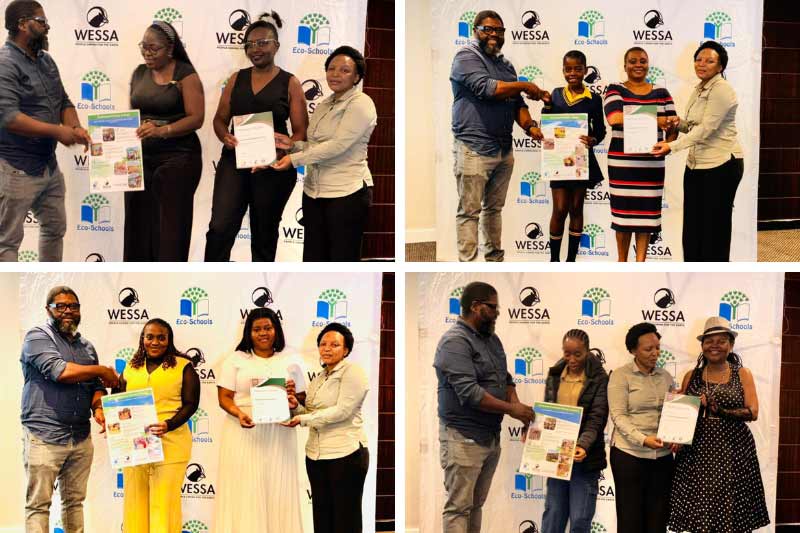
Pictured above: Learners from Bulumko High School (top left), Intsebenziswano Secondary School (top right), Langa High school (bottom right) and Ikamvalethu Secondary school (bottom left)

In celebration of International E-Waste Day 2025 that took place on 14 October 2025, eco-club learners from ten schools across the Western Cape, participating in the eWASA–WESSA Waste Management and Education Project, explored creative solutions to one of the fastest-growing environmental challenges of our time, electronic waste.

The week-long learning experience kicked off with an exciting excursion to 1 More Time, a company that transforms single-use vapes into sleek, functional tech and lifestyle products. The visit gave learners a first-hand look into how waste can be reimagined through innovation and design thinking.

Learners were taken behind the scenes to explore various departments, from production and mechanical engineering to e-commerce and social media. Staff members shared insights into their roles and answered questions about career pathways in sustainability, technology, and circular design, offering invaluable guidance to these future changemakers.

“Seeing how something as simple as a discarded vape can be transformed into a stylish, usable product opened our eyes to the potential of e-waste,” shared one of the participating learners.

Following the tour, WESSA hosted an engaging Design Think-Tank Challenge, where learners deconstructed e-waste into its various components before brainstorming and designing innovative new products. Participants disassembled old irons and microwaves, exploring how each component could be reused, repurposed, or reimagined into new products. Working in teams, they brainstormed and sketched innovative ideas, combining science, creativity, and environmental stewardship. This activity encouraged them to apply what they had learned, combining creativity, problem-solving, and environmental responsibility.

The challenge not only deepened their understanding of waste management and sustainability but also inspired them to think critically about the role they can play in building a more circular economy.

This initiative made possible through the eWASA–WESSA partnership, continues to empower young people to see waste differently, as a valuable resource and an opportunity for innovation.

Wispeco Aluminium workshop inspires water-wise teaching and climate action

Wispeco Aluminium workshop inspires water-wise teaching and climate action

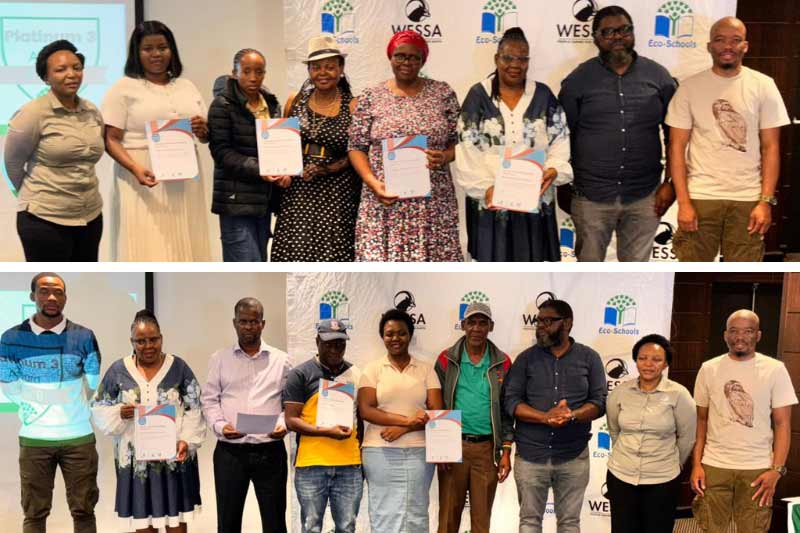
On 16 October 2025, the WESSA team hosted the final Eco-Schools teachers’ workshop under the Wispeco Aluminium Project, centred on two pressing themes 1) Water Conservation, and 2) Climate Change.

The workshop brought together 13 dedicated educators for a day of meaningful learning, reflection, and collaboration. The session aimed to deepen teachers’ understanding of sustainable resource use and environmental responsibility, both in their classrooms and within their wider school communities.

Through a mix of interactive discussions and practical activities, participants explored the real-world trade-offs involved in managing limited resources. These exercises encouraged critical thinking about how informed, balanced decision-making can drive sustainability in everyday contexts.

Hands-on learning activities allowed teachers to apply principles of resource allocation and water stewardship, demonstrating how these concepts can be integrated into school projects and lesson plans.

Wispeco

“Workshops like these remind us that sustainability starts with awareness, and teachers play a vital role in shaping that awareness among young people,” shared a WESSA facilitator.

By the end of the session, educators left inspired and equipped to lead climate-conscious initiatives within their schools, serving as catalysts for change in their communities.

This final workshop marked a meaningful close to the Wispeco Aluminium Project’s training series, reinforcing WESSA’s commitment to building environmental literacy and empowering teachers as changemakers for a more sustainable future.

Western Cape: Firgrove and Kwa-Faku Primary schools join the One Million Trees project

Western Cape: Firgrove and Kwa-Faku Primary schools join the One Million Trees project

In celebration of Arbor Week 2025, Firgrove Primary School and Kwa-Faku Primary School in the Western Cape proudly participated in the One Million Trees Project — a national greening initiative led by the Department of Forestry, Fisheries and the Environment (DFFE).

The project set an ambitious goal: to plant one million trees in a single day on 24 September 2025, as part of the broader National Greening Programme, which aims to plant ten million trees over the next five years. Beyond increasing green cover, the initiative is designed to enhance urban spaces, mitigate the effects of climate change, improve food security through fruit and indigenous trees, and inspire community participation in environmental care.

At both schools, groups of enthusiastic learners worked side by side to plant a variety of trees on their grounds. Their efforts contribute directly to the national target while also nurturing a sense of responsibility and awareness about the role trees play in creating a healthier, more resilient environment.

Through this initiative, learners not only planted trees but also planted the seeds of collective responsibility — a reminder that caring for our planet begins with small actions that grow into lasting impact.

FEE Global Teacher Award for Aziezah Essop

FEE Global Teacher Award for Aziezah Essop

We are incredibly proud to announce that Aziezah Essop of St Andrew’s School for Girls in Bedfordview, Johannesburg, was honoured with the prestigious Foundation of Environmental Education Global Teacher Award!

Aziezah is the only teacher from South Africa among 17 global winners and 46 shortlisted teachers from 16 countries. During her presentation, she highlighted their whole-school approach to embedding environmental stewardship and climate consciousness into their school curriculum and daily lives.

WESSA has worked closely with Aziezah over the years, and we salute her passion for actively driving environmental awareness and sustainability at her school. Through this award, FEE aims to recognise the efforts of outstanding teachers from the global network who promote and integrate Education for Sustainable Development (ESD) in their schools and communities. This award celebrates professional excellence, outstanding achievements, and spreads inspirational stories.

Congratulations, Aziezah, for this well-deserved recognition!

Adopting ecotherapy

Adopting ecotherapy

Navigating the challenges of high school can be overwhelming, with academic pressures and social dynamics often taking a toll on students’ mental well-being.

According to a recent UNICEF South Africa U-Report survey, 60% of young people reported needing mental health support in the past year. This represents a 15% decrease
from the previous year’s findings. However, the demand for mental health assistance remains unchanged for those aged 15-24, with 70% indicating a need for support. Female
respondents were 5% more likely than males to seek help for their mental wellbeing.

Ecotherapy Sanctuary at Palmview Secondary

Recognising the importance of emotional resilience, WESSA Eco-Schools with the support of Sun International embarked on a transformative journey at Palmview Secondary School in Phoenix, Durban. The vision was to create a sanctuary where learners and teachers could connect with nature, find solace, and nurture their inner peace. Inspired by the principles of ecotherapy, the Wellness Garden at Palmview Secondary School was born, embodying sustainability at its core. From adopting organic gardening practices to implementing water-saving techniques and utilising reclaimed waste materials, the garden became a living embodiment of environmental stewardship and holistic well-being. It provided a space for learners to unwind, engage in mindfulness practices, and develop practical skills through hands-on activities like composting and planting sessions.

The impact has been profound. Students have embraced the garden as their sanctuary and moments of reflection. Teachers have seamlessly integrated the garden into their curriculum, using it as a dynamic learning environment for lessons on ecology, sustainability, and wellness. Looking ahead, the project aims to expand, incorporating additional features like eco- benches for relaxation and contemplation.

Empowering students to thrive in mind and spirit

As we reflect on the success of the Wellness Garden, we extend our gratitude to all who contributed to its realisation, empowering students to thrive in both mind and spirit. In a time where mental health challenges among school-going children are on the rise in South Africa, initiatives like the Wellness Garden provide safe spaces for learners.

In 2022, the University of Cape Town’s Children’s Institute published the South African Child Gauge which focused specifically on children’s mental health. The report highlighted that South African children are exposed to extraordinarily high levels of adversity, which increases their risk of developing mental health challenges.

It’s not surprising that more than one in 10 children in South Africa have a diagnosable and treatable mental health disorder. This includes depression; anxiety; post-traumatic stress disorder; conduct, learning, and substance-use disorders; as well as neurodevelopmental disorders such as attention deficit hyperactivity disorder and autism.