ADvTECH Schools: February 2026 activities inspire young environmental stewards

ADvTECH Schools: February 2026 activities inspire young environmental stewards

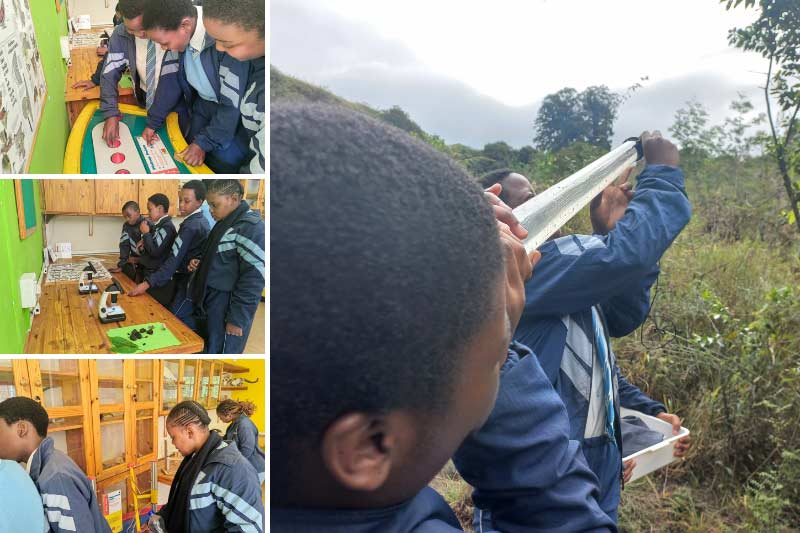
Pictured above: Learners presenting female scientists and conducting science experiments in the lab.

Across the ADvTECH school network, learners marked key environmental and science awareness moments during February through hands-on activities, creative exploration and peer-to-peer learning. From celebrating women in science, to learning about endangered wildlife and the importance of ocean health, these activities showed how environmental education can spark curiosity and empower learners of all ages to better understand the world around them.

Pecanwood College: Celebrating Women and Girls in Science

On 11 February, learners at Pecanwood College marked the global celebration of Women and Girls in Science with an engaging, learner-led event. Grade 11 science learners took the lead in teaching their peers about the achievements of influential female scientists and the groundbreaking discoveries they have contributed to the world.

Through a series of presentations and discussions, learners highlighted the inventions and scientific breakthroughs made by women across different fields. To make the experience interactive and inspiring, the group also conducted additional experiments outside of their normal classroom activities, demonstrating how science can be both accessible and exciting.

Learners further explored the topic by watching a video highlighting successful women in science and the difference their work has made globally. These activities encouraged discussion, curiosity and recognition of the role women continue to play in advancing scientific knowledge.

The event fostered peer-to-peer learning, with female learners confidently sharing their knowledge and enthusiasm for science with fellow students. Discussions also increased awareness of the important contributions women have made to scientific progress.

Pecanwood College Pre-Prep: World Whale Day sparks ocean curiosity

Pictured above: Classroom whale painting activity and learners with their whale artwork.

On 15 February, the Pecanwood College Pre-Prep celebrated World Whale Day through a series of creative and educational classroom activities designed to raise awareness about whales and their role in healthy oceans.

Each class approached the topic in different ways, blending science, storytelling, art and exploration to help learners understand marine life.

The youngest learners, the Grade 0000 class, explored whales through songs and stories and collaborated on a group art project where they used water and droppers to paint a large whale artwork.

In Grade 000, learners discussed the story of Jonah and the whale, exploring what type of whale it might have been and whether it would have had teeth or baleen. They then drew their own interpretations of the whale based on what they had learned.

The Grade 00 learners designed their own whales and presented them to the class, practising skills such as observation, questioning and sharing ideas. They also explored water, bubbles and ice while creating suncatcher artwork.

In Grade 0, learners examined how whales contribute to ocean health. Through discussion, observation and shared research, they expressed their understanding by drawing and painting their interpretations of these remarkable marine animals.

Together, these activities helped build awareness about whales and their importance in marine ecosystems, while also encouraging creativity, curiosity and early scientific thinking.

Junior Colleges Meyersdal: Young learners celebrate World Pangolin Day

Pictured above: Learners participating in pangolin artwork activity and showcasing their classroom Pangolin display.

At Junior Colleges Meyersdal, even the youngest learners took part in environmental learning by celebrating World Pangolin Day on 21 February 2026.

Learners aged two to six years old were introduced to the pangolin, one of the world’s most unique yet threatened animals. Teachers explained what pangolins are, why they are endangered, and why protecting wildlife is important for our planet.

The classes also explored ten interesting facts about pangolins, helping learners understand these fascinating animals in a way that was engaging and age appropriate.

Creativity played a central role in the learning process. Learners created colourful pangolin-inspired artwork using a variety of materials, turning their new knowledge into visual expressions of what they had learned about the species.

Through storytelling, discussion and creative activities, the young learners began developing an early appreciation for wildlife conservation and the importance of protecting endangered animals.

Learning that inspires action

Across these activities, ADvTECH schools demonstrated how environmental education can be brought to life through curiosity-driven learning. Whether exploring the achievements of women in science, discovering endangered wildlife like the pangolin, or learning about the vital role whales play in ocean ecosystems, learners engaged with real-world environmental themes in ways that were both meaningful and memorable.

By combining creativity, discussion and hands-on exploration, these initiatives help nurture a generation of learners who are not only informed but inspired to care for the natural world.

Green Rising Phase 2: From assembly halls to action

Green Rising Phase 2: From assembly halls to action

Environmental change often begins with a moment of realisation, a conversation, a story, or a simple question that makes young people see their surroundings differently.

Through the Green Rising Phase 2 School Challenge, WESSA is helping spark those moments across South African schools, enabling learners to understand their role in protecting the environment and shaping the future of their communities.

In the Western Cape Province, in partnership with the City of Cape Town’s Bingo Team, WESSA delivered a series of six high-impact environmental assemblies designed to bring environmental education directly to learners where they are –in their classrooms and school halls.

The initiative reached 4 570 learners across the city, creating a platform for environmental awareness, learning and action.

The assemblies took place at:

  • Bellville South High School

  • Firgrove Primary School

  • Fairdale Primary School

  • Intsebenziswano Senior Secondary School

  • Riverton Primary School

  • Seamount Primary School

A focus on environmental issues affecting local communities

Learners explored topics including responsible waste disposal, the reduction of littering, and the environmental and social consequences of illegal dumping. By connecting global environmental concerns to everyday local realities, the assemblies helped learners understand how individual actions contribute to the health of their neighbourhoods and natural ecosystems.

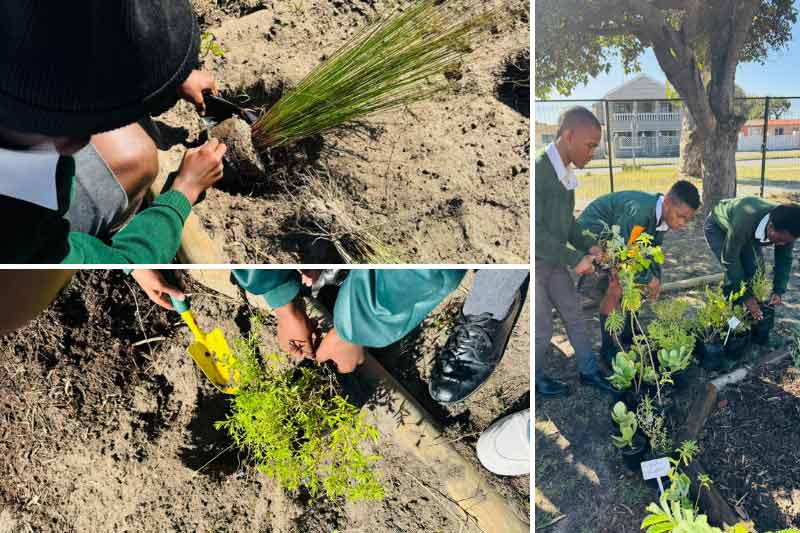
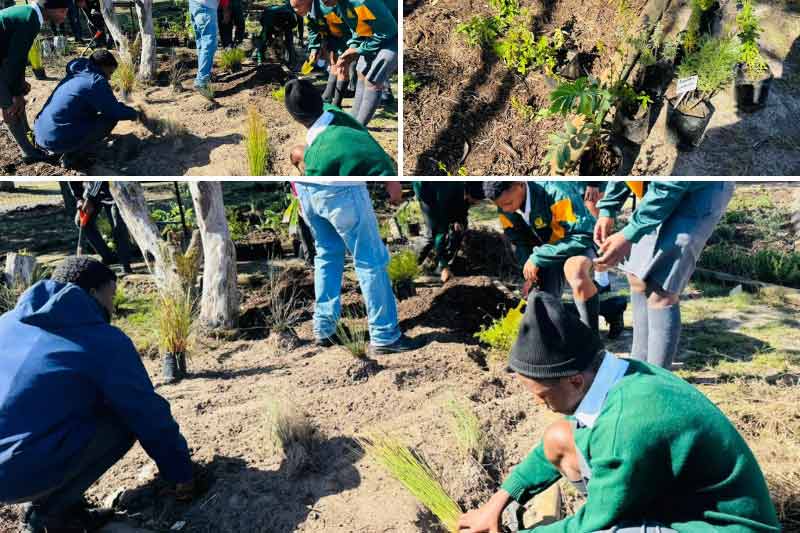
Importantly, the programme moved beyond awareness and into action. Tree planting activities formed part of the sessions, providing learners with a tangible way to contribute to environmental restoration while reinforcing the message that caring for the Earth requires both knowledge and participation.

One of the most memorable moments occurred at Bellville South High School, where a learner stepped forward to deliver a heartfelt motivational message to fellow students. Encouraging peers not to give up on their goals and to remain committed to creating positive change in their communities, the speech captured the spirit of the Green Rising initiative – that young people are not only learners, but leaders of environmental change.

Strengthening environmental literacy

Through these assemblies, thousands of learners gained new knowledge, inspiration and practical tools to become active environmental stewards. By strengthening environmental literacy and encouraging youth-led action, the Green Rising Phase 2 School Challenge continues to demonstrate how education can empower the next generation to build cleaner, safer and more sustainable communities.

At WESSA, this work reflects a simple but powerful belief: when young people are equipped with knowledge, inspiration and opportunity, they do not just learn about the environment – they rise to protect it.


WESSA and Century City Conference Centre mark milestone with first conference venue to achieve Green Key certification in Africa and Southern Hemisphere

WESSA and Century City Conference Centre mark milestone with first conference venue to achieve Green Key certification in Africa and Southern Hemisphere

Pictured from left to right: Alderman James Vos; Tevya Visser, WESSA Senior Sustainability Programme Manager; Cindy-Lee Cloete, WESSA CEO; Gary Koetser, Century City Conference Centre and Hotels, CEO.; Bernard Abrahams, Operations Manager at Century City Conference Centre; and Kelly Alcock, WESSA Head of Education and Sustainability

WESSA and Century City Conference Centre have marked a milestone moment for the global meetings and events industry, as the Cape Town venue becomes the first conference centre in Africa and the Southern Hemisphere to achieve Green Key certification – earning an exceptional 100% audit score in its first year of assessment. This achievement signals more than compliance. It signals leadership.

“For our team, the Green Key certificate together with a 100% audit score is a recognition of consistency and discipline,” says Gary Koetser, Chief Executive Officer of Century City Conference Centre and Hotels. “Being the first Conference Centre in Africa and the Southern Hemisphere to achieve this certificate matters, but what matters more is that it proves Cape Town venues can lead globally and set global benchmarks.”

The milestone positions the venue among an emerging group of global leaders demonstrating that sustainability, when embedded into infrastructure and governance, delivers measurable performance at scale.

A signal to the industry

The certification is achieved through Green Key, one of the world’s leading eco-certification programmes for tourism and hospitality. Managed in South Africa by WESSA, the programme includes independent audits and annual verification, ensuring that certification reflects sustained performance rather than a once-off achievement.

“This certification is a signal of intent and a signal of value – it shows what is possible when sustainability is not treated as a side project but woven into our everyday strategy and the decisions, we make in doing business,” says Cindy-Lee Cloete, CEO of WESSA. “What makes me most proud today is the leadership that invests in both systems and people, and that understands sustainability must sit at the heart of how we operate if we want to remain a successful, resilient organisation. This award is not a final destination; it is the start of a journey that demands ongoing commitment and real courage to go beyond basic compliance, and to keep pushing for better practice every single day.”

Sustainability built into systems, not added as an afterthought

Unlike initiatives that operate as stand-alone projects, sustainability at Century City Conference Centre has been embedded into the design and management of its operations.

From solar generation and effluent water reuse to advanced energy sub-metering and centralised building management systems, “environmental responsibility has been treated as a leadership imperative rather than a departmental function”, adds Koetser.

The Green Key audit confirmed full compliance across all imperative criteria, with several operational areas exceeding international requirements. Here are a few key highlights:

  • Rethinking waste, from disposal to design: Waste management emerged as a standout strength during the audit process. Structured separation systems are implemented across kitchens, back-of-house operations and event spaces, including organic and hazardous waste streams. Clear documentation, robust compliance procedures and strong staff engagement ensure responsible management at source. The shift has moved the operational mindset from asking “how do we dispose of waste?” to “why did we create it in the first place?” – placing the venue on a clear path towards future Net Zero Waste ambitions.
  • Water and energy stewardship in a resource-constrained context: In a country where water security remains a critical issue, the Centre has prioritised responsible water management through effluent reuse, dual-flush systems aligned with its 4-Star Green Star rating, formal leak detection protocols and continuous monitoring. Energy performance is managed through 100% LED lighting, solar generation, detailed sub-metering and centralised HVAC control via a Building Management System, enabling real-time optimisation without compromising guest comfort. The result is a venue that operates more efficiently, more predictably and with a reduced environmental footprint.
  • Responsible procurement and conscious consumption: A strong focus on responsible purchasing reinforces the Centre’s sustainability framework. Eco-labelled chemicals and consumables are used where possible throughout the facility, supported by documented compliance processes and visual verification. A structured Food Waste Reduction Plan guides procurement, menu planning, portion control and storage, while refill water stations reduce reliance on bottled water and encourage conscious guest participation.
  • Sustainability beyond the building: Sustainability at Century City Conference Centre extends beyond infrastructure to meaningful social impact. Ongoing partnerships with local organisations support youth development, community upliftment and inclusion initiatives, reinforcing the principle that responsible business must contribute to long-term wellbeing, not only operational efficiency.


For Century City Conference Centre, this milestone is not an endpoint but a foundation.

“Sustainability only becomes meaningful when it is replicated,” says Koetser. “Our focus now is on refining what we have built, scaling impact across our portfolio, and demonstrating that responsible conferencing can operate at the highest international standards.”

Attending the certification announcement, Alderman James Vos, Mayoral Committee Member for Economic Growth, welcomed the milestone as a win not only for the venue, but for Cape Town’s global competitiveness.

In a media statement issued on 22 February 2026, the City described the milestone as a significant moment for the destination’s global positioning, noting that sustainable conferencing is increasingly central to international event selection criteria and long-term economic competitiveness.

The City highlights that milestones of this nature reinforce Cape Town’s reputation as a responsible, future-focused meetings and events hub, strengthening the broader tourism, hospitality and investment ecosystem while demonstrating that local infrastructure can meet and exceed global sustainability expectations.

As global clients increasingly demand verified, measurable sustainability performance, this achievement sends a clear message: African venues are not merely participating in the global sustainability conversation, they are helping to lead it.

For all Green Key Programme queries, reach out to Tevya Visser, WESSA Senior Sustainable Programme Manager via e-mail at greenkey@wessa.co.za.

About Green Key
Coordinated internationally by the Foundation for Environmental Education (FEE), Green Key is the leading global eco-certification for the tourism and hospitality industry. The programme recognises establishments that uphold high environmental standards through an independent auditing process and continuous improvement. https://www.wessa.org.za/green-key/

About Century City Conference Centre:

Located in the heart of Cape Town, the Century City Conference Centre is one of Africa’s leading conference and events destinations, offering world-class facilities, advanced technology, and exceptional service for meetings, conventions, exhibitions, and special events. The award-winning venue features 21 versatile spaces accommodating up to 2,000 delegates and forms part of a vibrant mixed-use precinct in Century City, Cape Town.

Committed to responsible eventing, the Centre holds a 4-Star Green Star certification from the Green Building Council of South Africa and was the first Conference Centre in the Southern Hemisphere to receive the prestigious Green Key certification through the Wildlife and Environment Society of South Africa (WESSA). The Conference Centre has also received global recognition, including GOLD at the Eventex Awards for best Venue, reflecting its ongoing leadership in sustainability, innovation, and service excellence.

Century City Conference Centre and Hotels: Group Marketing Manager: Sue Faith Levy sue.l@ccconferencecentre.co.za +27 (82) 263 0233


eWASA and WESSA bring Waste Management Education to Northern Cape schools

eWASA and WESSA bring Waste Management Education to Northern Cape schools

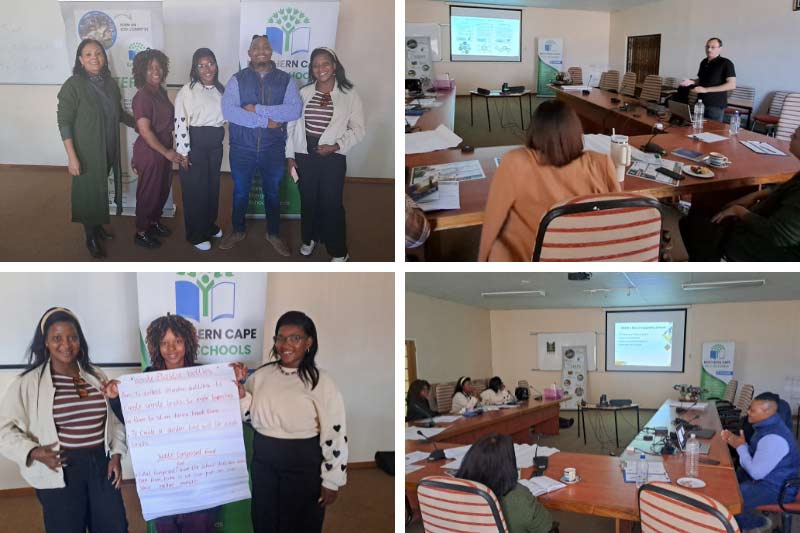
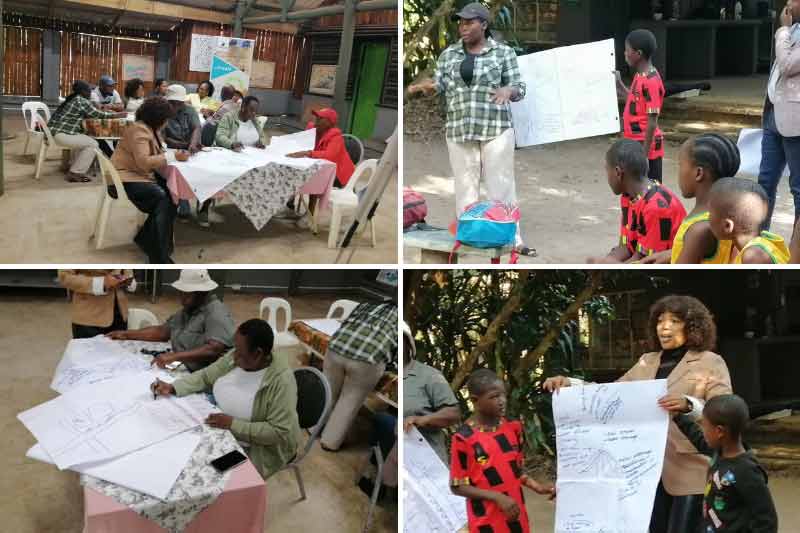
Pictured: Teachers representing 10 schools attending the eWASA & WESSA Waste Management and Education Project at Hoërskool Namakwaland

On 21 February 2026, educators from across the Northern Cape gathered in Springbok for the first eWASA and WESSA SA Schools Waste Management and Education Project workshop, hosted at Hoërskool Namakwaland.

The session brought together 24 teachers from 10 schools across Springbok and surrounding communities, marking an important step in equipping schools to address waste management challenges through environmental education and practical action.

The workshop forms part of a broader collaboration between WESSA and eWASA, aimed at strengthening environmental education while supporting schools to implement structured waste management initiatives aligned with the Eco-Schools Programme.

Building capacity through the Eco-Schools framework

A key focus of the workshop was to introduce educators to the Eco-Schools Programme and WESSA’s Seven Step Framework, a practical process designed to help schools move from environmental awareness to measurable action.

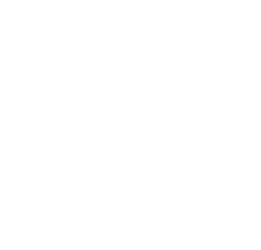
Pictured: Faciliated by Daniel Jackson, WESSA Project Manager in the Schools & Youth Unit

Through guided discussions and collaborative planning sessions, teachers explored how the framework can be applied within their own schools to support sustainability projects, strengthen environmental leadership among learners, and integrate environmental action into school activities throughout the year.

The workshop also introduced the objectives and implementation approach of the eWASA & WESSA SA Schools Waste Management and Education Project, ensuring participating educators understand how the initiative will unfold within their school communities.

Collaboration with provincial partners

The workshop was supported by representatives from the Northern Cape Department of Agriculture, Environmental Affairs, Rural Development and Land Reform, who participated in the session and assisted schools in developing their Eco-Schools action plans.

Their involvement helped ensure that schools are aligned with broader environmental priorities in the province while strengthening partnerships between education, government and environmental organisations.

Participating schools

The workshop brought together educators representing the following schools:

  1. Namaqualand High School
  2. Sacred Heart RC Primary School
  3. Ferdinand Brecher Primary
  4. Dr Izak van Niekerk Primary
  5. Okiep High School
  6. Concordia Primary School
  7. St Cyprians Primary
  8. Springbok Primary School
  9. Steinkopf High School
  10. Okiep Primary School

By participating in the project, these schools are committing to embedding environmental action within their school programmes and empowering learners to become active contributors to sustainable waste management solutions.

From planning to action

Pictured: Teachers presenting their Eco-Schools action plans

By the end of the workshop, educators had developed practical annual action plans aligned to key dates and project activities. These plans outline clear tasks, roles and responsibilities for implementing waste management initiatives within each school.

Teachers also gained a stronger understanding of how to implement, monitor and document environmental activities as part of their Eco-Schools journey, ensuring that progress can be tracked and shared across participating schools.

Just as importantly, the session created space for peer learning and collaboration, enabling educators from different schools to exchange ideas, experiences and practical approaches to environmental education.

Strengthening environmental leadership in schools

Workshops like this play a critical role in enabling educators to guide learners in addressing real environmental challenges. By focusing on practical implementation and collaboration, the eWASA and WESSA Schools Waste Management and Education Project is helping schools build the knowledge, structures and networks needed to turn environmental education into meaningful action.

As these schools begin implementing their plans throughout the year, the initiative will continue to support educators and learners in developing solutions that contribute to cleaner communities and a more sustainable future.


Clean Air Fund Project: Enabling schools in Marapong to understand air quality

Clean Air Fund Project: Enabling schools in Marapong to understand air quality

Pictured: Teachers and ground staff in attendance and that form part of the school Eco-Committee, committed to driving environmental awareness and action.

In February, WESSA took an important step in expanding environmental education around air quality through a two-day Clean Air Fund implementation visit to Ditheku Primary School in Lephalale, Marapong.

Held on 16–17 February, the sessions focused on building awareness of air pollution while equipping teachers and learners with practical knowledge and tools to understand how air quality affects their health, environment and everyday lives. More importantly, the visit laid the groundwork for long-term collaboration with participating schools, helping to embed clean air education into the broader school community.

By combining classroom learning with hands-on experimentation and real-world observation, the programme aimed to turn awareness into meaningful action.

Building knowledge through teacher development

The first day of the visit focused on teacher development, with 14 participants attending the workshop. The group included teachers from Grade R through to Grade 7, as well as members of the school’s ground staff who play an important role in maintaining the school environment.

During the session, the WESSA team introduced the Clean Air project and explored key topics including:

  • The basics of air quality
  • Sources of air pollution
  • The health impacts of polluted air
  • Practical mitigation strategies

The goal was to equip educators with the knowledge and confidence needed to integrate air quality education into everyday teaching and learning within the school.

To make the topic more relevant to the community, discussions focused on local air quality conditions and challenges experienced in the Marapong area. Participants also took part in a practical activity using an air pollution catcher experiment, allowing them to see how particulate matter can be collected and examined.

Pictured: Before the workshop commenced, the ground staff assisted with placing pollution catchers strategically around the school as part of the experiment.

Hands-on learning through experimentation

Following the setup of the air pollution catcher experiment, teachers participated in a practical session examining collected samples.

This activity allowed participants to observe and discuss particulate matter present in the air, helping them connect theoretical discussions with visible evidence from their own environment.

Through this exercise, teachers were able to reflect on what the findings might reveal about local air quality conditions and how these issues can be explored further with learners in the classroom.

Pictured: Teachers actively participating in the air pollution catcher activity, closely examining the collected samples to identify any particulate matter present in the air and discussing what the findings reveal about local air quality

Engaging learners in understanding air pollution

On the second day, the focus shifted to learners, with 60 students from Grade 2 to Grade 7 taking part in an interactive education session.

Pictured: WESSA facilitator engaging with learners during the education session.

The session began with a presentation introducing learners to:

  • What air pollution is
  • Common sources of pollution
  • The health impacts of polluted air
  • Possible solutions to reduce pollution

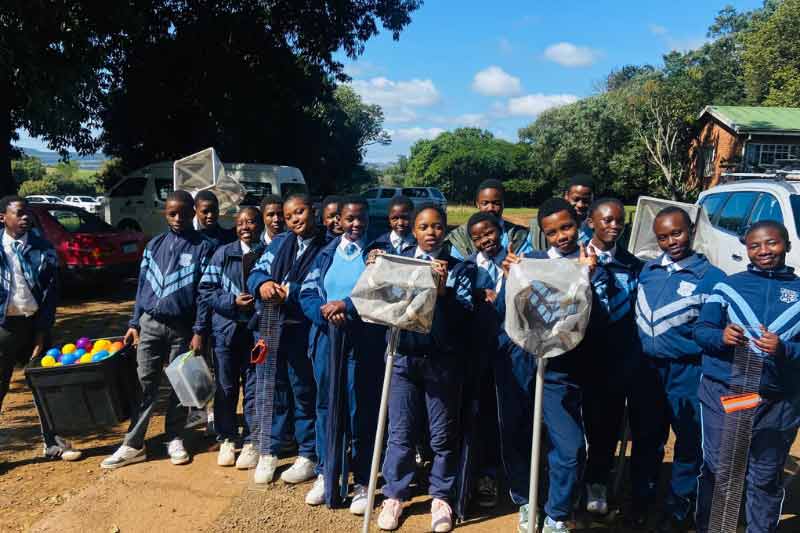
Rather than limiting the session to the classroom, the WESSA team encouraged learners to step outside and observe their surroundings more closely.

Connecting learning to local reality

To help learners understand how air pollution affects their community, the group visited an open field behind the school where open waste burning regularly takes place.

Standing in the environment where these practices occur created a powerful moment of connection between the lesson and the learners lived reality.

Together, the group discussed how open waste burning contributes to air pollution and why improving waste management practices is essential for protecting air quality and public health.

Pictured: Waste management practices in and around the school. Learners get to further understand the connection between waste burning and air pollution.

This discussion reinforced the message that everyday actions and community practices play a role in shaping air quality.

By linking classroom learning to real-world environmental challenges, learners gained a clearer understanding of their own role in protecting the air they breathe and supporting healthier communities.

Laying the foundation for long-term impact

The two-day implementation visit represents the beginning of a broader effort to support clean air awareness and environmental education within schools and communities.

By strengthening teacher capacity, engaging learners directly, and grounding discussions in local environmental realities, the programme is helping to build a generation that is better equipped to understand and address air quality challenges.

As the partnership with participating schools continues to grow, initiatives like these demonstrate how education can empower communities to take informed action for a healthier environment and a cleaner future.

Western Cape: Youth collaborate to clear alien invasive plants in Tokai Forest

Western Cape: Youth collaborate to clear alien invasive plants in Tokai Forest

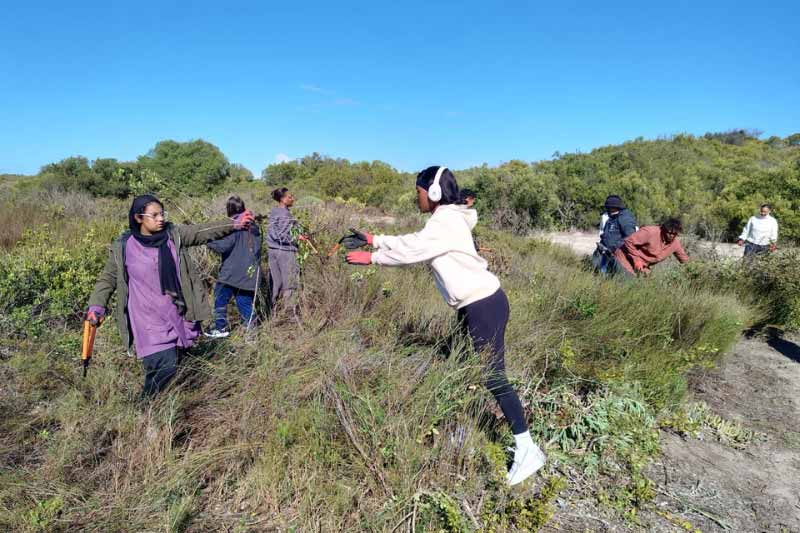
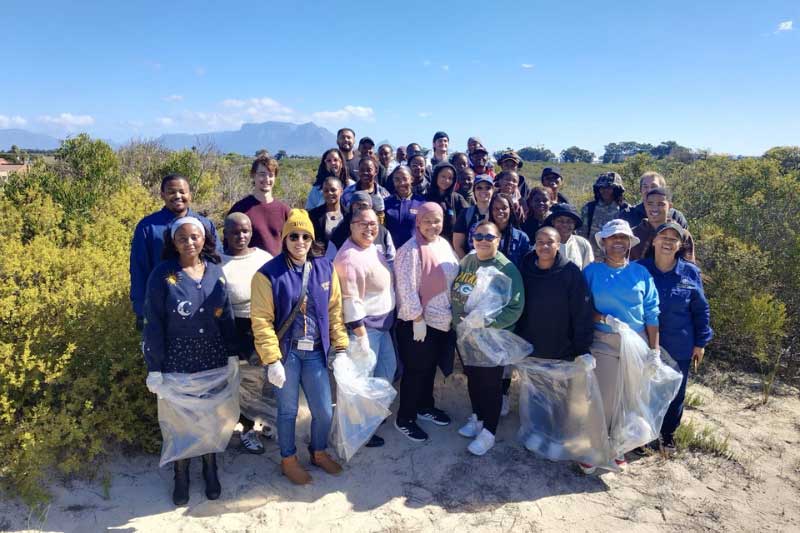
On 11 February 2026, WESSA partnered with the Lulwazi Lwethu Youth Group, Working on Fire, and The Sugarbird Project to lead an alien invasive plant clearing initiative in Tokai Forest.

Bringing together 32 participants, the event focused on restoring biodiversity within this important natural landscape while encouraging meaningful youth participation in environmental action.

Participants worked together to remove invasive plant species that threaten the integrity of Tokai Forest’s natural ecosystems, contributing directly to the rehabilitation of this vital habitat. Beyond the physical clearing, the initiative created a hands-on learning experience for young people, helping them understand the importance of ecological restoration and rewilding within South Africa’s unique biome.

The day reflected WESSA’s approach to environmental change, to Educate, Advocate and Act, by creating space for learning, encouraging awareness around the impact of alien invasive species, and enabling participants to take meaningful action in protecting local biodiversity.

Through collaboration and shared purpose, the initiative demonstrated how community-driven efforts can help restore ecosystems while empowering the next generation of environmental stewards.