
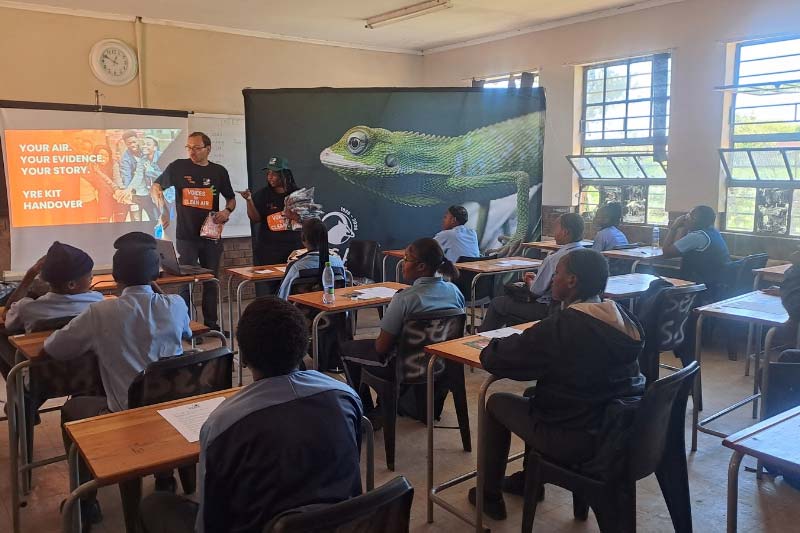
Pictured: Daniel Jackson, WESSA project manager, facilitating the Clean Air Fund induction session at Seaegeng Secondary School in Ga-Rankuwa, Gauteng.
What happens when young people are given the tools to investigate the air they breathe and the confidence to tell the stories behind the evidence?
They become more than observers. They become voices for change.
The WESSA Schools & Youth Unit have officially kicked off the induction workshops for the Citizen Science and Journalism Project: Voices for Clean Air. In partnership with the Clean Air Fund, we are bringing together 200 young people across five provinces to explore local air-pollution challenges and tell the stories that matter to their communities.
In October and November, induction workshops took place across Gauteng, KwaZulu-Natal, the Northern Cape and the Western Cape, including school learners, university students and unemployed youth. These young participants are beginning their journey as Young Reporters for the Environment, developing the knowledge and skills they need to understand air pollution and champion cleaner air.
Start with curiosity. Then investigate.
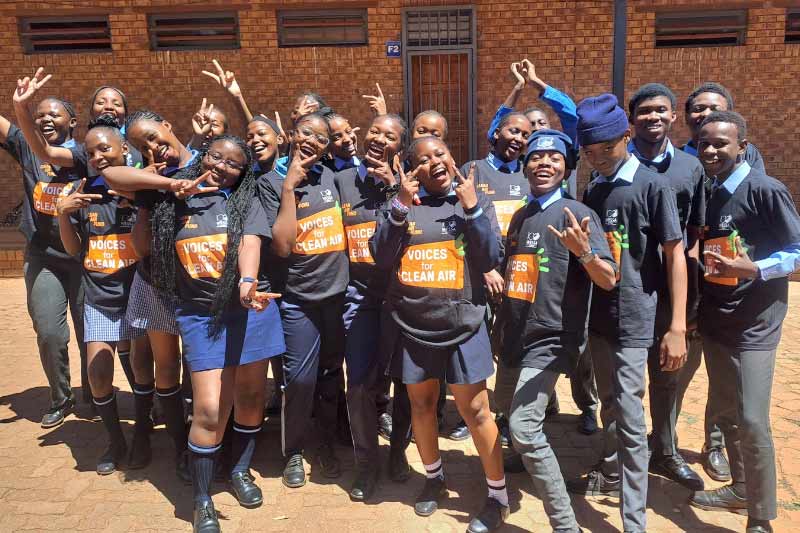
Pictured: Young reporters at Seaegeng Secondary School in Ga-Rankuwa, Gauteng.
At Seaegeng Secondary School in Ga-Rankuwa, Gauteng, and unemployed youth in the Western Cape young reporters were introduced to the programme, its objectives and the role they will play in raising awareness about air pollution.
The participants received Young Reporters for the Environment (YRE) toolkits, providing practical resources to support them throughout their journey.
But the most important part of the induction was what they were encouraged to do: ask questions.
Because understanding air pollution starts with being curious about what is happening around us – and asking what we need to know to understand it.
Taking the investigation into the real world
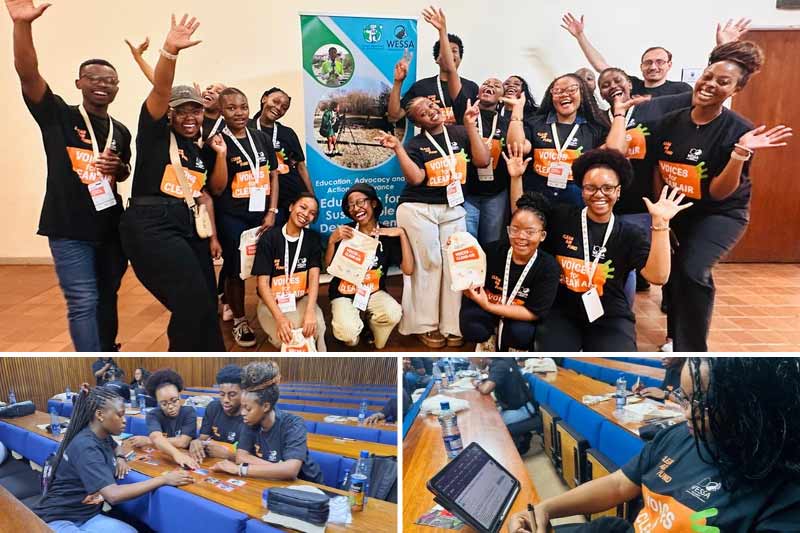
Pictured: Young reporters at Sefako Makgatho Health Sciences University (SMU).
At Sefako Makgatho Health Sciences University (SMU), that curiosity became investigation.
Students aged 19–25 explored what is in the air, how air pollution travels and the rights associated with clean air. They then took their learning onto campus, identifying potential pollution issues and considering who might be affected, what evidence they would need and how those issues could be investigated further.
This is citizen science in action: looking closely at the environment around us, identifying questions worth investigating and thinking critically about the evidence needed to understand the challenges communities face.
Connecting cleaner air to local realities
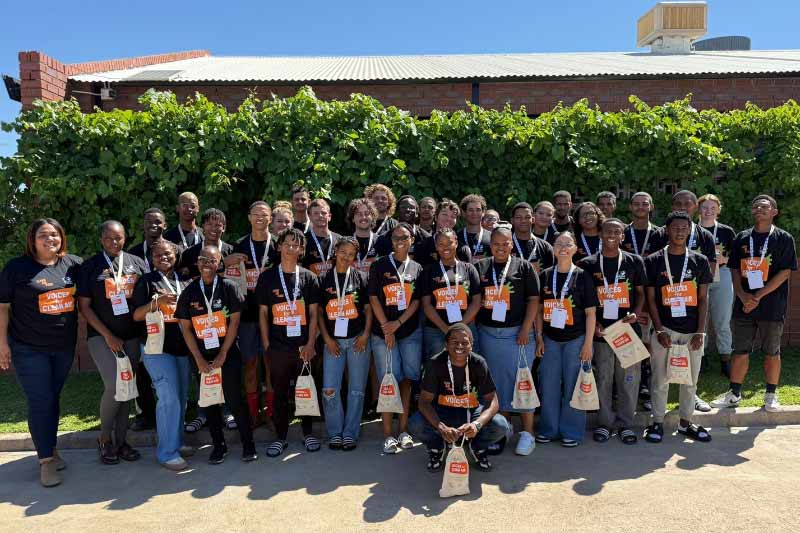
Pictured: Young reporters at Vine Academy Model Farm in Kakamas, Northern Cape.
On 5 November 2026, the programme continued at Vine Academy Model Farm in Kakamas, Northern Cape bringing together first-year students from the academy, whose enthusiasm and active participation helped bring the discussions to life.
Through interactive activities and conversations, students shared their perspectives, contributed ideas and explored how the workshop topics connected to issues in their own communities.
Their agricultural backgrounds added another important dimension to the discussions. Drawing on their own experiences, students were able to make meaningful connections between the workshop content and local agricultural practices, demonstrating how environmental issues can be understood through the realities of the communities in which people live and work.
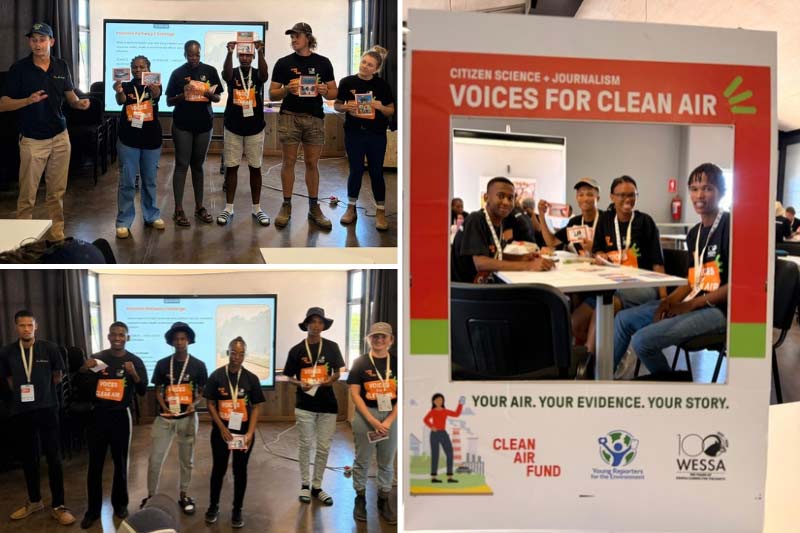
Pictured: Young reporters at Vine Academy Model Farm in Kakamas, Northern Cape, engaging in group work and presenting their findings.
By creating space for participants to bring their own knowledge and experiences into the conversation, the workshop reinforced an important part of citizen science: local knowledge and lived experience have a valuable role to play in understanding environmental challenges.
Evidence is only powerful when people can understand it
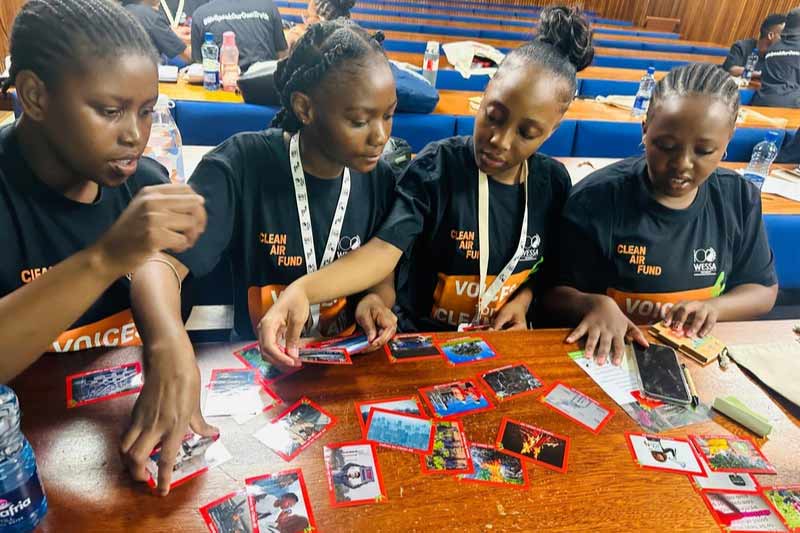
Pictured: Young reporters discussing different air pollution pathways, their sources, pollutants released, exposure and impact.
The programme is also developing another essential skill: the ability to communicate environmental issues clearly and meaningfully.
Participants are challenged to consider how they would explain air-pollution issues to different audiences, including children, community leaders and journalists.
Because gathering evidence is only part of the journey.
For that evidence to create impact, it needs to be understood. It needs to connect with people’s experiences. And it needs to become a story that people can engage with.
From environmental data to community stories
The journey ahead will take the Young Reporters deeper into air-quality monitoring, citizen science, community research and environmental journalism, supported by mentoring to strengthen their communication, critical-thinking and storytelling skills.
They will learn to connect environmental data with the lived experiences of their communities.
They will investigate. They will question. They will gather evidence. And they will turn what they discover into stories that can help their communities understand the challenges around air pollution.
This is what makes Voices for Clean Air more than an awareness programme.
It is about building the knowledge, practical skills and confidence young people need to investigate responsibly, communicate what they find and amplify the voices of their communities.
Because cleaner air is not only an environmental issue. It is something communities experience every day.
And when young people have the tools to understand it, investigate it and tell its story, they can become an important part of the conversation about cleaner, healthier air for all.
#YourAirYourEvidenceYourStory
Want to partner with WESSA Schools & Youth Unit on your next environmental education project? Reach out for more information: https://www.wessa.org.za/contact-us/