Mzuvele High School restores two hectares through alien invasive removal

Mzuvele High School restores two hectares through alien invasive removal

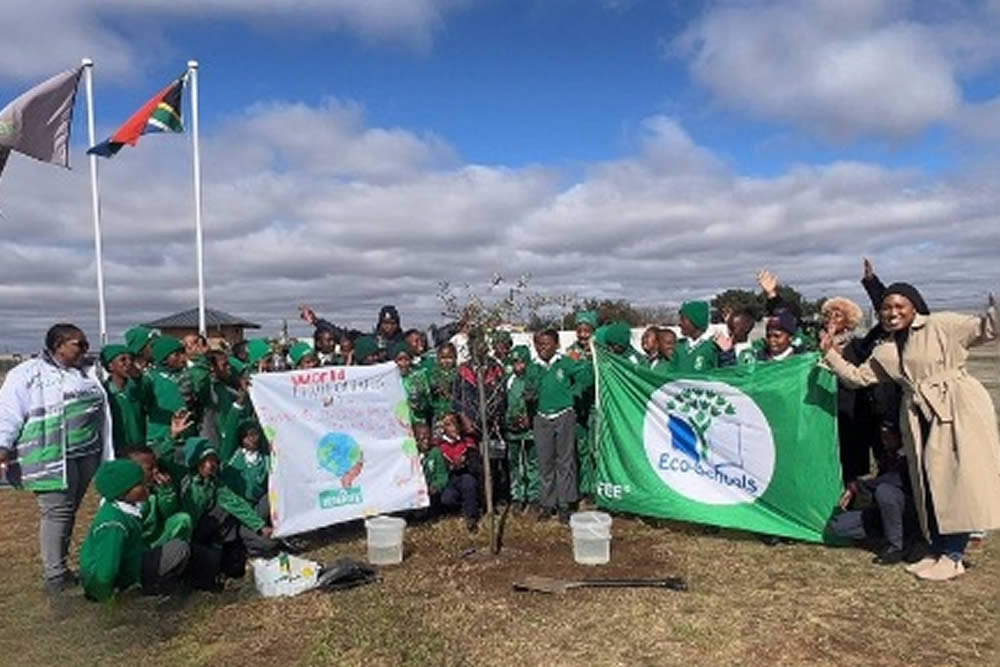
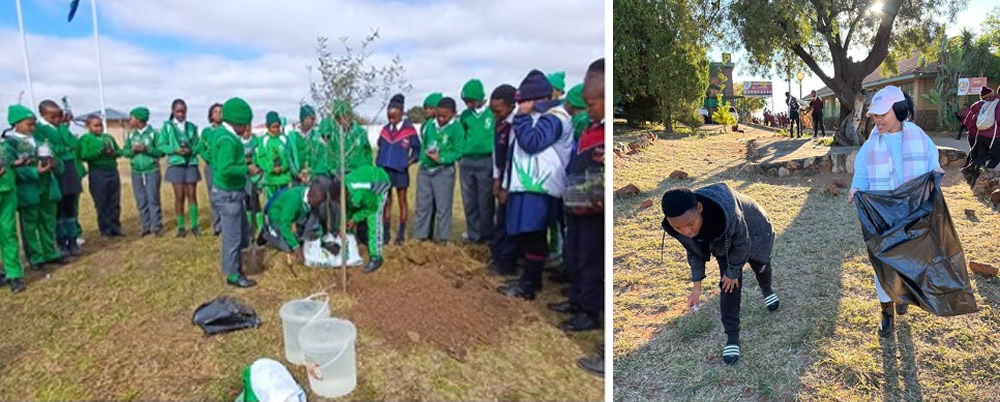
Pictured above: (top) WESSA Staff and Mzuvele learners and teacher rolling up sleeves to clear alien vegetation; (bottom left) WESSA Schools staff hard at work alongside learners; (bottom right) WESSA National Membership Coordinator Clearing helping with the clearing.

On 17 November 2025, the WESSA team joined Mzuvele High School for a hands-on environmental restoration initiative focused on clearing invasive alien plants that had overtaken the school’s food garden. What began as an educational engagement soon grew into a meaningful day of teamwork, leadership, and renewed environmental stewardship.

Understanding the impact of invasive species

The day opened with an informative session highlighting the importance of controlling invasive alien plants and the serious threats they pose to local ecosystems. Learners explored how these species compete with indigenous vegetation, reduce biodiversity, and undermine water and soil health, key concerns for a school that is working hard to maintain a productive food garden.

This learning laid the foundation for the practical work ahead, helping students recognise that caring for the land begins with understanding the challenges it faces.

A collaborative clearing effort with lasting benefits

After the briefing, learners and the WESSA team worked together to clear the affected area. Through shared effort and determination, a total of two hectares were successfully restored, reclaiming vital agricultural space and ensuring the sustainability of the school’s food production efforts.

The clearing session offered more than just environmental benefits. It strengthened learners’ understanding of conservation, nurtured teamwork, and helped them build confidence in their role as young environmental leaders.

Pictured above: Learners doing some heavy lifting

Celebrating environmental leadership

Following the clearing work, Mzuvele High School hosted a special award ceremony honouring Grade 12 Eco Club members for their leadership throughout the year. Their recognition highlighted the ongoing commitment of learners who continue to drive environmental awareness and positive change at the school.

In a meaningful gesture of partnership, WESSA was also awarded a certificate of appreciation for supporting the school’s efforts to promote sustainability and environmental awareness.

Pictured above: WESSA team receives a certification of appreciation by Mzuvele High School staff.

Growing stewardship and climate resilience

This initiative not only restored land and strengthened the school’s food garden, it reinforced learners’ identity as ecological stewards. Their active participation demonstrated how young people can make meaningful contributions to the sustainability and climate resilience of their school and community.

The day stands as a powerful example of what can be achieved when environmental education and action come together.

Building Water-Wise Schools: How CDM Educators and Learners stepped up in 2025

Building Water-Wise Schools: How CDM Educators and Learners stepped up in 2025

Pictured above: Makgwadiba Primary School Principal, Mrs Linah Malatji shaking hands with WESSA representative, Sabelo Sithole, during the resource hand over.

Through the WESSA & Capricorn District Municipality (CDM) Eco-Schools programme, educators and learners worked together to champion water-wise behaviour and long-term environmental stewardship.

Building Educator capacity for long-term climate resilience (Eco Schools Teachers workshop)

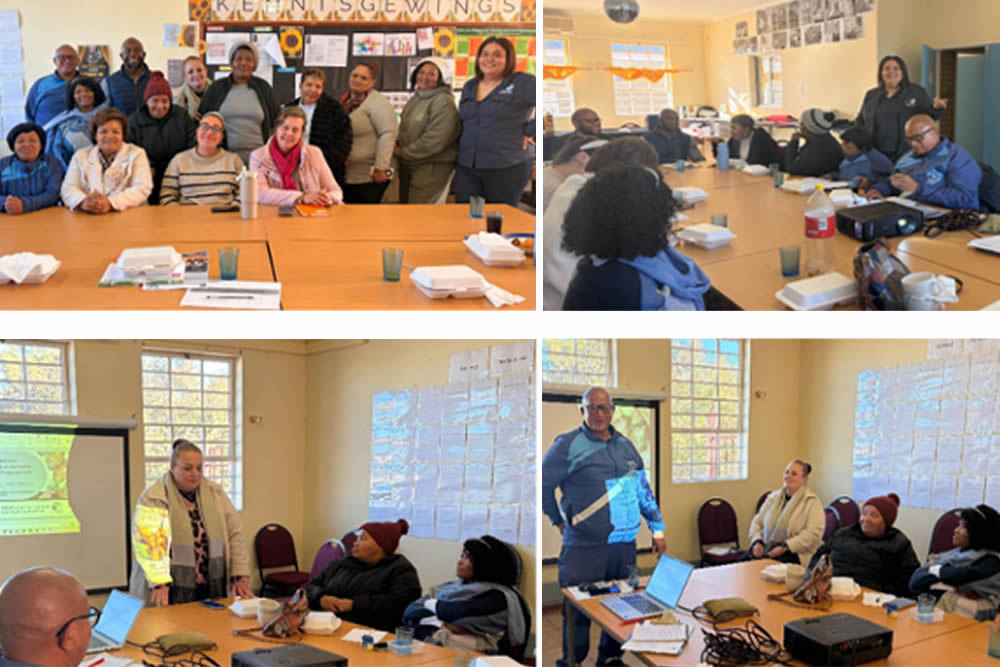
On 10 November 2025, the WESSA team hosted a dynamic teachers’ workshop at Makgwadiba Primary School to conclude this year’s project focused on building climate change resilience through water conservation. The session brought together all the knowledge gained throughout the year, with a strong emphasis on how schools can sustain the momentum moving forward.

Teachers engaged in meaningful discussions on the importance of critically assessing the trade-offs and consequences of resource allocation to maximise objectives, especially when working with limited resources. A key takeaway was the need for transparency, accountability, and the involvement of all stakeholders in decision-making processes ensuring everyone plays a part in achieving shared environmental goals.

One of the highlights of the workshop was welcoming newly joined Eco-Club teachers who were inspired by the ongoing Eco-Schools activities at their respective schools. Participants also took part in an interactive resource allocation simulation, applying their new knowledge to real school scenarios. Their enthusiasm and commitment showcased the growing strength of environmental leadership within the community.

Workshop

Pictured above: (top) Teachers participating in a resource allocation simulation activity during the Teacher’s workshop session (bottom) Maribe Primary School Eco Club enjoyed our last engagement.

Hands-on water conservation, enabling learners to turn knowledge into daily action

Dikolobe Primary School

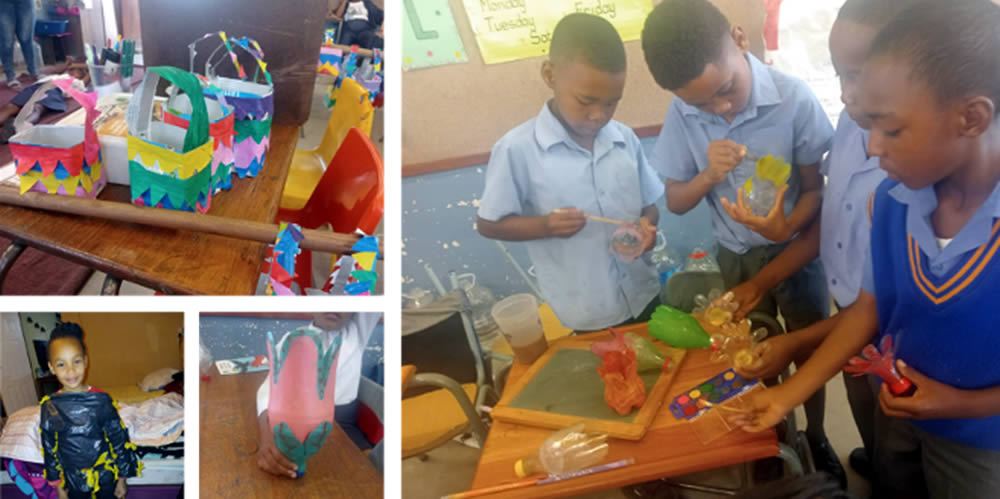
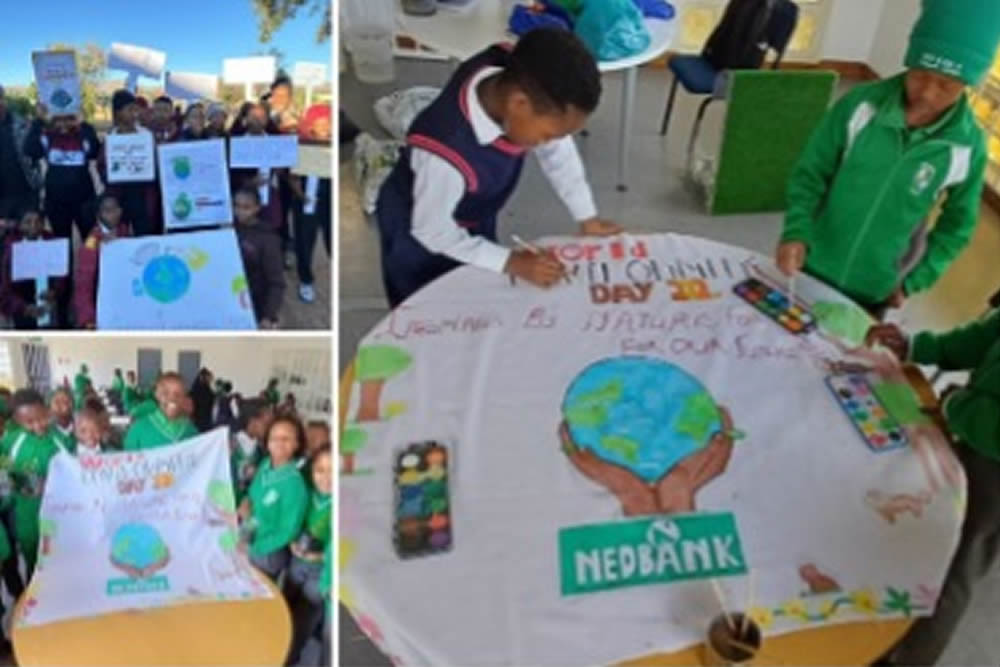
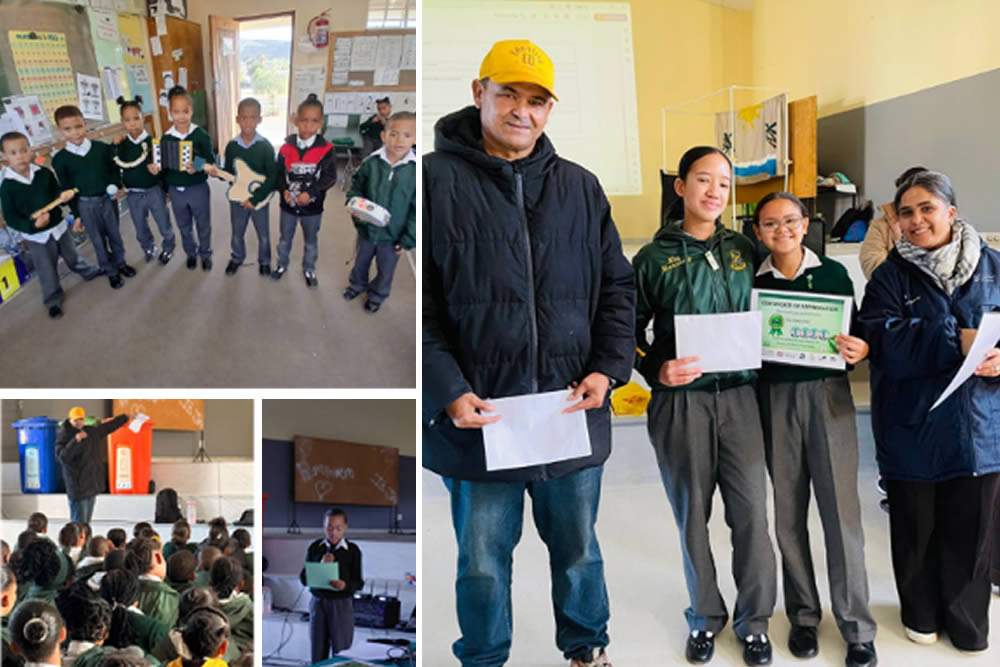
Pictured Above: (left) A learner at Dikolobe Primary School presenting on the importance of rainwater harvesting; (right) Learners at Pulamadibogo Primary School, prepared posters on water conservation and here a learner is seen presenting her poster.

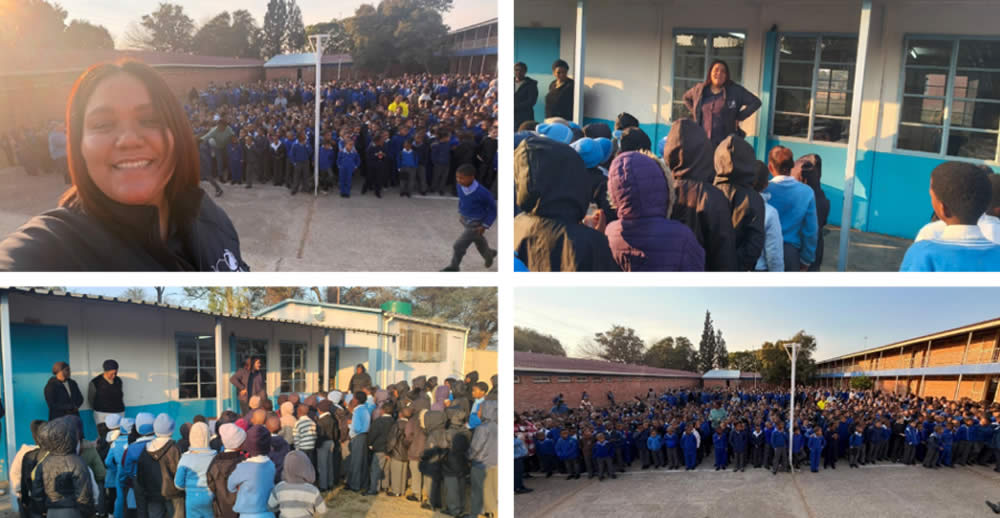
Education sessions were conducted on the 11th and 12th of November across six schools in Turfloop as part of the final engagements with learners for this year’s Eco-Schools project.

These sessions focused on:

  • Strengthening learners’ understanding of practical water conservation techniques that can be applied both at school and at home.
  • Learners exploring simple yet effective practices such as fixing leaks, using water wisely during daily routines, and adopting methods that reduce unnecessary wastage.

By revisiting the concepts learned throughout the year, the sessions helped consolidate knowledge and highlight the importance of responsible water use.

The overall aim was to reinforce practical approaches to saving water and empower learners to take an active role in safeguarding this vital resource. Through discussions and interactive demonstrations, learners were encouraged to see themselves as key contributors to water conservation efforts within their communities. The sessions emphasised that small, consistent actions such as reporting leaks, reusing greywater safely, or practising mindful consumption can collectively make a significant impact.

As a result, learners left with a renewed sense of responsibility and a stronger commitment to protecting water resources for the future.

A water tank that changes everything

Pictured above: The Makgwadiba Primary School Eco Committee with the newly received water tank.

Makgwadiba Primary School received a much-needed water tank donation after the lack of proper water storage was identified as a key challenge.

The principal and staff expressed their heartfelt gratitude, noting that the tank would make a meaningful difference in the school’s efforts to use water responsibly and sustainably. They highlighted how the donation came at the perfect time, as the school had recently established a food garden to improve nutrition and support feeding programmes.

With the new tank, the school can store rainwater and ensure a steady supply for irrigation, especially during dry periods. This reliable water source is expected to greatly enhance food production, allowing the garden to flourish and ultimately benefit learners through fresh produce and improved food security.

WESSA in ACTion – join us on 20 November

WESSA in ACTion – join us on 20 November

Mark your calendar now for Wednesday, 20 November 2025 – for an opportunity to connect, learn, and engage with fellow WESSA members, volunteers, and staff.

This month’s webinar features:

  • Nomsa Daele – discussing Citizen Science tools, advocacy and community engagement.
  • Sharnay Wagner – offering insights from the UNICEF Youth Leading in Water Resilience Project.
  • Mike Denison – with updates on the impactful Green Coast programme.

Don’t miss this chance to stay informed and engaged with the important work we are doing to protect our environment.

Register now and join us on 20 November from 18h00-19h00.

Join our Team: Senior Project Coordinator (Northern Cape)

Join our Team: Senior Project Coordinator (Northern Cape)

Are you a passionate, organised, and driven individual who thrives on creating impact through education and community action? WESSA is seeking a Senior Project Coordinator to lead the delivery of key environmental education projects in the Northern Cape.

Based in the Northern Cape (Kimberley), this fixed-term role will oversee project planning, implementation, and stakeholder coordination to ensure successful delivery against strategic objectives, budgets, and quality standards. The role is ideal for a results-oriented individual who values collaboration, innovation, and sustainability in education. It’s imperative that applicants own a reliable vehicle and have a valid driver’s license.

You will be responsible for developing and implementing project plans for schools in the region, monitoring and evaluating progress, and ensuring reporting obligations to funders are met. The role includes mentoring interns, supporting educators through regular communication and site visits, and expanding participation in WESSA’s programmes such as Eco-Schools, LEAF (Learning About Ecosystems & Forests), and YRE (Young Reporters for the Environment).

The successful candidate will also engage with partners, including district Department of Education officials, municipalities, private schools, and local businesses, to strengthen networks and visibility of WESSA’s impact in the province. This position offers the opportunity to work directly with communities, educators, and learners to inspire environmental action across the Northern Cape.

Read the full role requirements and apply.

Apply by: 12h00 SAST, Friday, 21 November 2025  

Send your CV and motivation letter to: applications@wessa.co.za

Subject line: Senior Project Coordinator – NC

Important to note: Please submit all documents (cover letter, CV, and supporting materials) in a single PDF document.

Teaching sustainability through waste-to-energy innovation with eWASA & WESSA

Teaching sustainability through waste-to-energy innovation with eWASA & WESSA

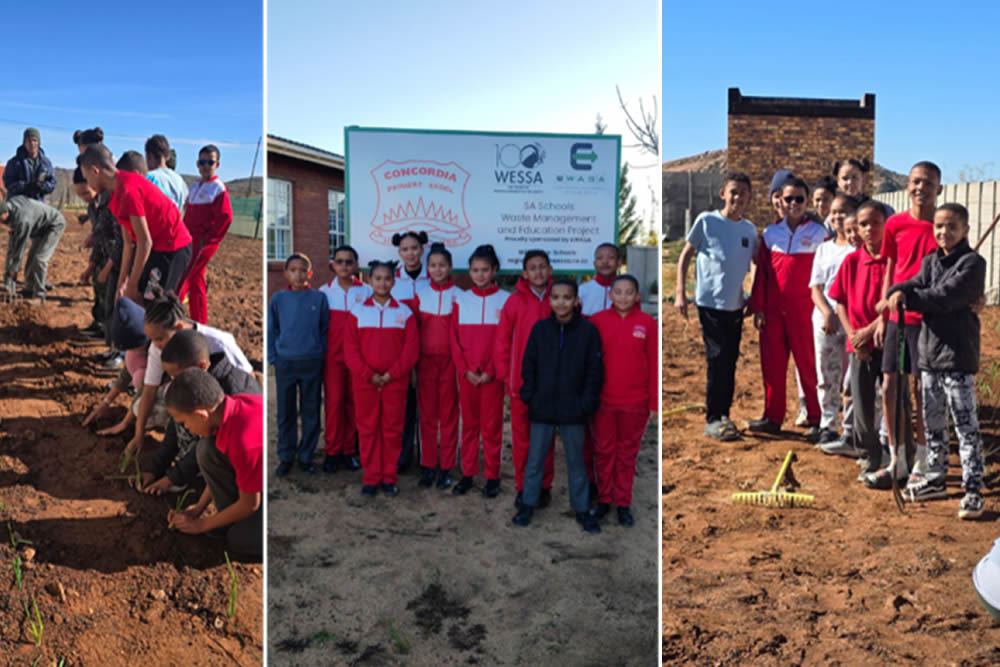
Pictured above: [top] Learners at Diepsloot West Secondary School receiving their project participation certificates; [bottom left] Learner Biogas Experiment at Diepsloot Secondary; [bottom right] Educators at the teacher workshop hosted by Diepsloot Combined School on 23 October 2025.

From 20 October to 5 November 2025, WESSA and the eWASA Schools Waste Management and Education Project wrapped up the year with a series of inspiring Biogas Education Sessions and Teacher Development Workshops across Gauteng.

Learners from ten participating Eco-Schools explored the theme “Waste to Energy”, discovering first-hand how organic waste can be transformed into a renewable resource. Through interactive experiments, they observed how gases released from decomposing food waste can be captured, stored, and used for cooking, a practical example of how waste can fuel sustainable solutions.

Each school’s Eco-Committee designed its own biogas experiment to monitor over the coming month, bringing science and sustainability to life in the classroom. The sessions sparked curiosity, encouraged critical thinking, and helped learners reimagine waste as a valuable resource rather than a problem.

To ensure that the project’s impact continues well beyond the classroom, WESSA hosted two teacher workshops on 22 and 23 October. Twelve dedicated educators took part in sessions focused on project sustainability, guided by the Eco-Schools sustainability planning framework. Together, they explored strategies to strengthen environmental projects over the next five years, deepening their understanding of the three pillars of sustainability, the WESSA Seven Steps, and the UN Sustainable Development Goals (SDGs). Teachers also developed action plans for resource mobilisation and long-term environmental education, ensuring that meaningful change continues to grow in their schools and communities.

This final round of activities marks an important milestone in the partnership between eWASA and WESSA, demonstrating the power of education to turn ideas into action and build a generation ready to shape a more sustainable future.

Pictured above: [Top left] Learners designing a biogas experiment at Winnie Mandela Secondary School; [top right] Educators at the teacher workshop hosted by Winnie Mandela Secondary School on 22 October 2025; [bottom right] Biogas experiment created by learners at Tembisa West Secondary School; [bottom left] Biogas education session at Tembisa West Secondary School

100 Reasons to Care: October’s WESSA 100 Highlights

100 Reasons to Care: October’s WESSA 100 Highlights

October brought an incredible wave of inspiration from across the WESSA family as staff, interns, and supporters shared their personal reasons to care for the Earth. From garden discoveries to group conservation efforts, these moments capture the heart of the #WESSA100 campaign, celebrating people who care for the earth through everyday actions and shared experiences in nature.

A master of disguise in the garden

Adrienne West, WESSA’s Head of Philanthropy & Resource Mobilisation, kicked off the month by spotting a Cape Dwarf Chameleon in her garden, a tiny but powerful reminder of nature’s hidden beauty.

“It’s incredible how much beauty hides in plain sight when we pause and look closely,” she shared. “Moments like these remind me why caring for our Earth matters, every creature, big or small, plays its part in the web of life.”

Revitalising nature, one pond at a time

At WESSA’s Twinstreams Education Centre, Work Integrated Learning (WIL) students rolled up their sleeves to restore the foggy pond, creating a thriving new habitat for frogging activity.

“Every action, big or small, helps restore balance in our ecosystems,” they said. “This is our reason to care for the Earth.”

Finding beauty in the smallest details

For Jaco van der Merwe, WESSA’s uMngeni Valley Reserve Manager, the return of a Scarlet Millipede after the rains sparked reflection on the intricate balance of life in nature. “The sun, the rain, the wind, every season has its role to play. Watching a Scarlet Millipede soak up the first rays after the rain reminds me how every small creature contributes to the balance of our ecosystems.”

A child’s wonder at first sight

WESSA CEO Cindy-Lee Cloete shared her personal moment of awe, watching her young nephew see a rhino for the first time.

“#WhyICareForTheEarth: to give my niece and nephew incredible experiences in nature,” she said. “He just wanted the rhinos to come say hello to him. That sense of wonder is what we need to protect.”

Connection by firelight

At Twinstreams, staff and interns gathered around a bonfire, sharing stories and connecting under the stars.

“There’s something special about a chilly evening at Twinstreams, gathered around a bonfire with people who share a deep love for the natural world,” reflected Jaco van der Merwe. “What better way to celebrate that than under the stars, surrounded by the very environment we work to protect?”

Call to action: Share your reason to care

As we head toward WESSA’s 100-year milestone in 2026, we’re calling you to join the movement.

Capture your favourite nature moment, it could be a sunrise, a walk with family, a garden discovery, or an exciting encounter in nature.

  • Tell us why it matters to you.
  • Tag @wessa_sa on Instagram and use #WESSA100 and #PeopleCaringForTheEarth in your post.
  • Your post/image could be featured next in our monthly highlights!

Together, let’s celebrate 100 (and more) reasons why people care for the Earth.

https://www.youtube.com/shorts/yrtV74sG-2o