Sep 27, 2024 | hide image, News
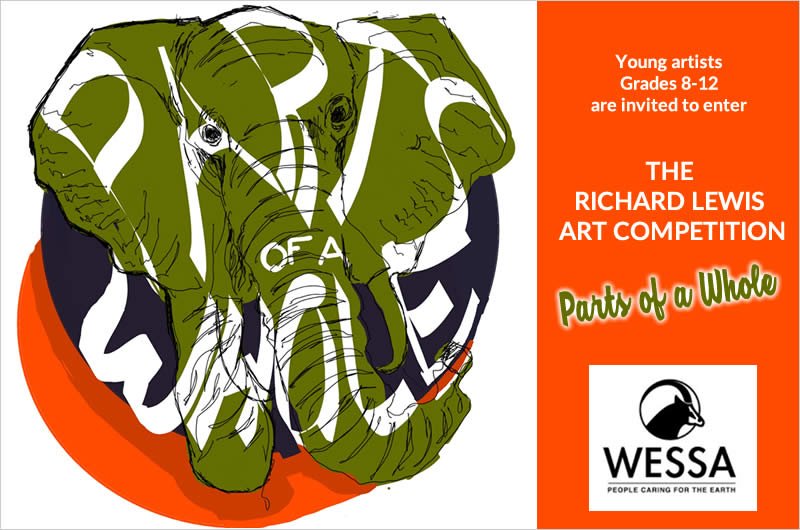
Young artists are invited to enter the Richard Lewis Art Competition, just launched by WESSA in partnership with talented Grade 9 learner, Rio Immerman, who attends Reddam House in Constantia.
“Parts of a Whole” challenges participants to explore how humans and animals interact with their environment. The theme highlights our inter-connectedness and the impact of disrupting these connections. Artworks should reflect how our actions affect the world, the consequences of damaging species, and the steps we can take to restore balance.
Entry into the competition is free of charge and open to all Grade 8-12 learners. And the winner walks away with all these great prizes:
- A weekend family getaway for four persons at uMngeni Valley Nature Reserve in Howick, KZN, valued at R4 000. Prize includes accommodation only, and excludes transport, meals and refreshments.
- R500 Cape Union Mart voucher.
- R1 500 food and cosmetics hamper for AVI.
- R1 000 from the Paul Roux community.
Richard Lewis was a dedicated conservationist and former WESSA CEO who passed away unexpectedly in 2024. The competition celebrates his commitment to environmental stewardship and youth development through the Artisanal Training Institute.
Terms & Conditions
- The competition runs from 27 August – 12 October 2024. No late entries will be accepted.
- The competition is open only to young artists in Grades 8-12.
- Entries must be original, unpublished artwork, photography or sculpture.
- Artwork must not contain any third-party logos.
- Artwork cannot be offensive or discriminatory, or display explicit gore, violence or sex.
- To enter, participants must fill in the entry form on this website, and upload an image of their artwork. In the case of sculptures, up to 3 images may be uploaded.
- Participants agree that WESSA may use their images or photographs in marketing and publicity materials related to the competition, including announcements of winners and showcases of the artwork. This complies with the Protection of Personal Information Act (POPIA).
- The judges’ decision is final. The judging panel comprises Kim Lieberman, Sarah Heinamann and Shirley Fintz.
- Six finalists will be selected by 30 October 2024.
- Finalists’ entries will be displayed on this website and the public will be invited to vote for the winner. Voting is limited to once per person. Voting closes 6 November 2024.
- The winner will be announced on 8 November, 2024, and will receive all the prizes listed above.
Sep 20, 2024 | News
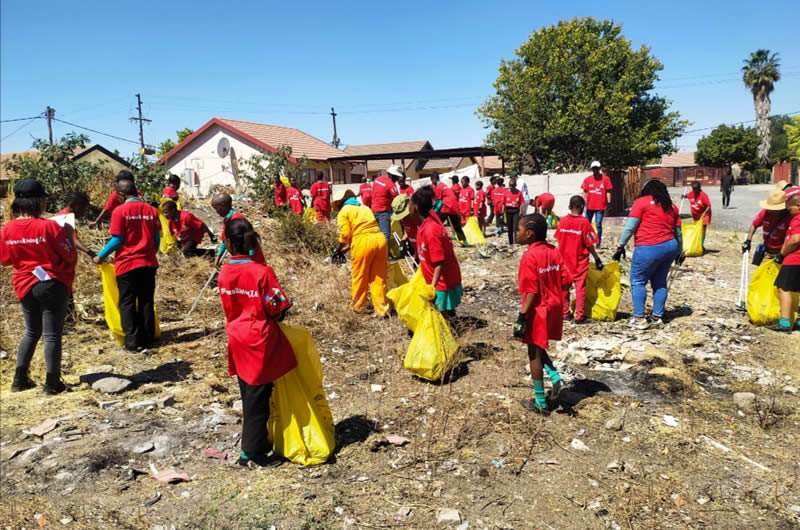
In celebration of Arbor Week (1-7 September), UNICEF South Africa in partnership with WESSA (Wildlife and Environment Society of South Africa) launched the Green Rising “Protect and Restore” Project, an initiative that tackles the pressing issue of biodiversity degradation in South Africa’s schools and communities. The project aims to engage 10,000 youth from 60 schools across the country and UNICEF Campus Clubs, to restore 100 hectares of land and collect 500 tons of waste by June 2025.
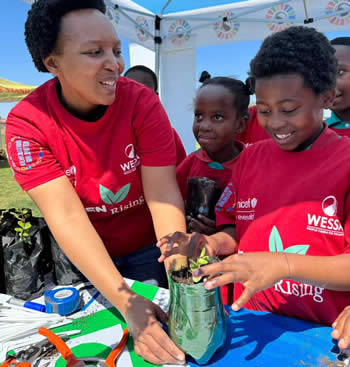
WESSA’s senior programme manager, Nomfundo Ndlovu, with participants of the Green Rising initiative.
Importance of youth-driven conservation
During the launch at Retlakgona Primary School in Rustenburg, attendees witnessed the importance of youth-driven conservation through activities such as tree planting, water testing, and community clean-up.
Trees play a vital role in combating biodiversity loss by providing habitats, improving soil health, and capturing carbon. Recent reports indicate that South Africa is losing more than 20% of its natural habitats due to human activities, intensifying the need for community-driven conservation efforts. The Green Rising Project is positioned to address this by empowering the youth to take direct action in their local environments.
Global Green Rising initiative
Lea Castro, UNICEF South Africa’s Programme Officer (Climate Action and Nutrition), expressed her excitement with the project’s potential.
“UNICEF South Africa is thrilled to join the global Green Rising initiative, empowering children and youth to become long-life champions for the environment. We are very pleased to collaborate with schools, WESSA and UNICEF Volunteer campus clubs nationwide to drive impactful change so that every child and young person has the opportunity to make a difference.”
Cindy-Lee Cloete, WESSA’s Acting CEO highlighted the broader impact of the initiative. “The Green Rising Project presents a triple impact – regenerating land, strengthening our connection to nature, and encouraging youth action. We are excited about this partnership with UNICEF South Africa in empowering young people to take the lead in protecting our planet.”
“Biodiversity loss is one of the greatest threats we face, with far-reaching consequences. Through this project, we focus on local citizen action to drive community-led conservation, benefiting both people and the planet,” she added.
Strengthening systems to support youth involvement in climate action
The Green Rising Project is scheduled to run until June 2025, with the broader objective of strengthening systems to support youth involvement in climate action. By providing training in conservation, restoration, and sustainable agriculture, the project will equip children and young people with valuable tools to make lasting changes in their communities.
Thoko Khosa, Deputy Director Education for Sustainable Development Climate Education at the Gauteng Department of Basic Education praised the initiative: “This project will help our learners change their behaviour and attitudes toward the environment for the better. The Department of Basic Education is committed to supporting this initiative, as it aligns with our educational priorities.”
During the launch event, Miss Earth South Africa, Thembelihle Mathebula, joined children and the local community, planting indigenous trees and highlighting the importance of community-led efforts in addressing biodiversity loss.
Sep 10, 2024 | News
Leave a legacy
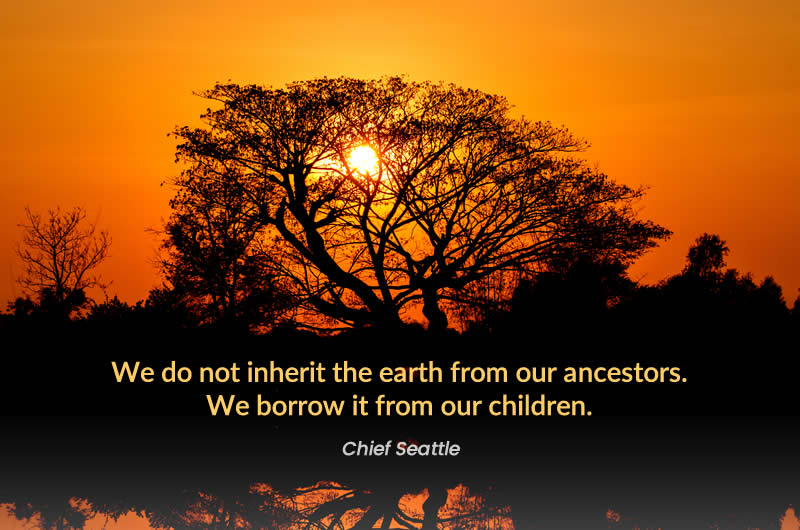
There couldn’t be a better time to talk about inheritances than right now. Because, from 16-20 September is National Wills Week – your chance to get a will drawn up by a qualified attorney absolutely free of charge.
Even if you already have a will, it’s worth checking that it’s not out of date. Circumstances change and some parts may no longer be relevant. Your estate may have increased or diminished in value. You may have bequeathed property or items you no longer possess to beneficiaries who are no longer around. Or there may be additional children or grandchildren who need to be included.
As you start thinking about, and making provision for, a time when you will no longer be around, remember to always make the most of every day. Start by taking just 20 seconds to enjoy one of those moments that make life so magical.
If you choose to do so, you can leave your heirs the most precious gift of all … a living world, filled with moments like this.
As you know, our natural world is under threat from climate change, pollution, and destructive human activities. But one sentence in your will can help protect habitats and species like the magnificent Southern Right whale.
By leaving a bequest to WESSA, you help us educate, advocate and act for a more sustainable planet. Speak to your attorney about how you can best include WESSA in your will – whether it’s by leaving a specific sum of money, or simply a share in whatever is left after you’ve made provision for your family.
If you want your bequest to be used for a specific project or programme, please contact us to discuss how this can be included in your will.

Sep 5, 2024 | News, Uncategorized
The new Climate Change Act signed into law by President Cyril Ramaphosa in April, aims to enforce stricter rules on greenhouse gas emissions. Going forward, companies, especially large businesses will need to meet emission targets set by Government.
The amount of greenhouse gas that companies are allowed to release will be capped according to business segment. While these regulations may seem challenging, they present opportunities for cost savings and enhanced reputation in an increasingly eco-conscious market.
This extends to business travel, where optimising routes, limiting trips, using more efficient transportation and choosing eco-friendly accommodation, such as that offered by members of the Green Key initiative, all have a role to play in reducing emissions.
The transition to more sustainable business travel is just beginning, with more regulations and incentives expected in the future. Companies that adapt now will be well-positioned to succeed in this new landscape.
Read more about sustainable business travel.
Sep 5, 2024 | News
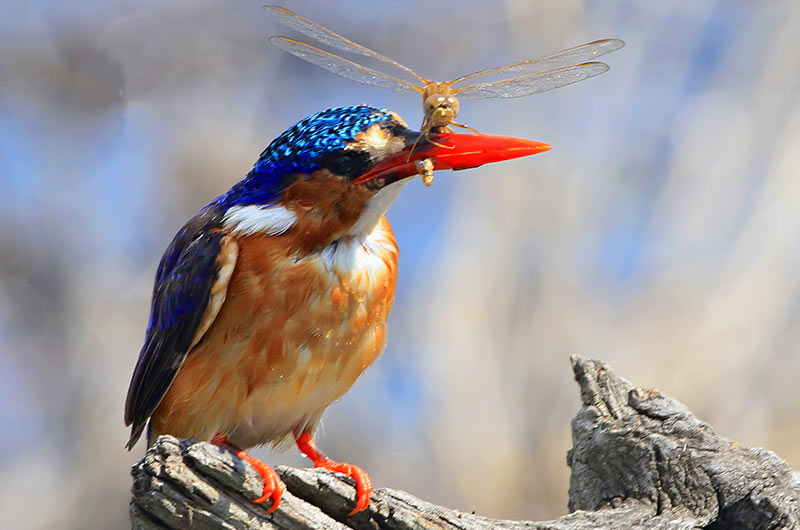
Born from a passion for birds and a dedication to conservation, “The Birds of the Magaliesberg” project has evolved into a cherished publication, captivating both local enthusiasts and global birding communities. Initiated in 2010 by John Wesson of the Rotary Club of Brits Hartbeespoort and WESSA Northern Areas, this endeavour was initially conceived to commemorate Rotary International’s Centenary while highlighting the rich biodiversity of the Magaliesberg region.
From its inception, the project aimed to raise awareness about the diverse birdlife thriving across Magaliesberg’s three biomes and 14 vegetation types. It showcased a tapestry of habitats—from serene dams to lush gardens, sprawling farms to pristine mountainous terrain— each contributing to the area’s ecological wealth. John Wesson, drawing from his experience in compiling similar publications for regions like Tzaneen and Virginia, highlighted the importance of avitourism in promoting sustainable tourism practices.
In 2014, the project underwent a significant enhancement with the collaboration of fellow birders Renier and Millene Balt and Jenny Wesson. This update marked a pivotal shift towards utilising the latest SABAP2 data, ensuring accuracy and reliability in documenting the region’s bird species. The revised publication garnered widespread acclaim, resonating with birding enthusiasts nationwide and beyond.
Fast forward to 2023, and the project embarked on an ambitious transformation into a comprehensive e-book. This digital adaptation, covering the Magaliesberg Biosphere and extending to Vaalkop Dam, introduced new features such as specialised bird galleries and updated data lists. Contributions from writers and photographers within WESSA and Birdlife Harties enriched the e-book, spotlighting key birding hotspots and showcasing the region’s avian diversity. The culmination came in 2024, when “The Birds of the Magaliesberg” e-book earned endorsement from BirdLife South Africa and inclusion on the SABAP2 and BirdLife South Africa websites. Continually updated with new sightings and field research findings, the e-book remains a dynamic resource for birders and conservationists alike. Plans are underway for a forthcoming hardcover edition, ensuring that this invaluable resource reaches even more enthusiasts and stakeholders.
As we reflect on this journey, we are grateful for the driving forces behind this project: WESSA Northern Areas, the Rotary Club of Brits Hartbeespoort, and BirdLife Harties. Their support has been instrumental in realising the project’s vision of promoting environmental stewardship and preserving the natural heritage of the Magaliesberg region. “The Birds of the Magaliesberg” inspires us to continue protecting our natural world.
Sep 5, 2024 | News
In the heart of every conservation effort lies a story of passion ignited and challenges conquered.
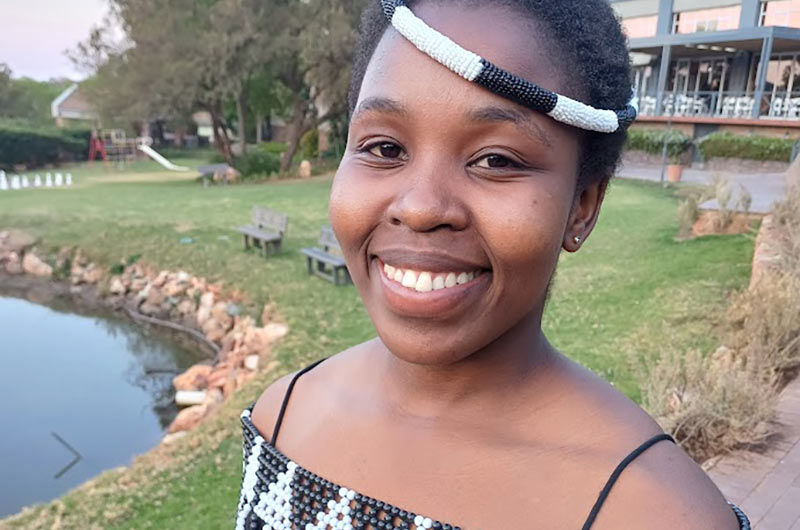
Zuzile Mpanza’s, journey with WESSA began in 2018 during her studies for a Diploma in Nature Conservation at UNISA. Little did she know, a module on water pollution would steer her toward a path of environmental leadership and inspiration.
“I vividly remember my first encounter with WESSA,” Zuzile recounts with a smile. “It was at a beach cleanup at Beachwood Mangroves Nature Reserve. That day, I connected with WESSA Youth members who shared their roles and invited me to join as a volunteer.” From that unexpected moment, Zuzile’s involvement with WESSA blossomed. Attending the WESSA Annual General Meeting in 2019 opened doors to further learning and collaboration. Under the guidance of seasoned members like Phoebe Carnegie, Zuzile embarked on training as a nature guide at Umhlanga Lagoon Nature Reserve and Hawaan Forest in KwaZulu-Natal, broadening her practical skills and understanding of conservation management. “
WESSA offered me opportunities and equipped me with leadership training and exposure to various environmental projects,” Zuzile reflects. “One memorable project, ‘Amanzi Ethu Nobuntu’, immersed me in bio-monitoring, water quality testing, and tackling invasive species and litter management.”
In 2021, Zuzile’s dedication and training led to a prestigious internship at Ezemvelo KZN Wildlife, Spioenkop Game Reserve. “It was a challenging yet fulfilling experience,” she shares. “Being one of the few women in a male-dominated field pushed me to excel. Thanks to WESSA, I was prepared for the demands and made a meaningful impact.”
Despite the distance and commitments of her internship, Zuzile remained connected to WESSA as a volunteer, participating in events and furthering her environmental advocacy work. Her journey took her to Imfolozi Game Reserve, where she delved into anti-poaching efforts and learned firsthand about rhino conservation—a cause close to her heart since her time at Spioenkop. “
My volunteering journey with WESSA has been transformative,” Zuzile emphasises. “It’s shaped my career, revealed my strengths and weaknesses, and instilled in me a sense of purpose. Today, I proudly serve as a Nature Guide at Umhlanga Lagoon Nature Reserve, continuing to educate and inspire others.” Zuzile’s story demonstrates the power of youth leadership in conservation, fueled by mentorship, hands-on experience, and passion. As she continues to advocate for environmental education and action, Zuzile embodies the spirit of WESSA’s mission—to create a sustainable future through education, advocacy, and community engagement.
At every step of her journey, Zuzile shines as an example of how dedication and empowerment can make a real difference in the conservation, inspiring others to follow in her footsteps.