Jan 9, 2026 | Advocacy, News, Uncategorized
The Wildlife and Environment Society of South Africa (WESSA), as the national operator in South Africa of the international Blue Flag programme, acknowledges and shares public concern regarding sewage pollution and marine outfalls along the Cape Town coastline. We also welcome robust, evidence-based debate about these issues.
However, recent commentary suggesting that WESSA has been “silent” on these matters, or that we show “little interest in holding municipalities to proper account”, misrepresents both the purpose of the Blue Flag programme and WESSA’s long-standing work in this space.
WESSA has not been silent
WESSA has engaged consistently and constructively with a wide range of stakeholders on the issue of sewage pollution and water quality.
WESSA Coastal Programme Manager, Mike Denison:
- “We haven’t been silent on it. We’ve engaged with groups such as Bays of Sewage and individuals like Prof. Anthony Turton, Caroline Marx, Byron Herbert, Jamii Hamlin and others whom we regard as leading civil society stakeholders grappling with the challenges of water quality in the Cape Town metro. “
- “We’ve been vocal and participated at the Permit Advisory Forum presenting for clarity around certain aspects linked to the Blue Flag programme.”
What Blue Flag measures, and what it does not
The Blue Flag is an internationally recognised eco-label awarded to beaches, marinas and tourism boats that meet a comprehensive set of environmental, educational, safety and accessibility criteria. It is not a general-purpose endorsement of all municipal infrastructure, nor is it a guarantee that no environmental challenges exist in a city or along a coastline.
WESSA Coastal Programme Manager, Mike Denison:
- “Blue Flag is an award based on a defined set of 33 environmental and sustainability criteria set by the international body, and WESSA reviews and evaluates against those criteria.”
- “From a Blue Flag perspective, based on the defined criteria, we get an indicator over time from water samples by independent accredited labs whether a particular section of our coastline falls within parameters that are deemed safe to swim. Those parameters include both Enterococci and E. Coli, although the World Health Organisation has said only Enterococci is necessary, we agree that E. Coli should also be considered, and hence we’ve kept it as one of our measures.
From our FAQs – what are the water quality requirements?
- Blue Flag Beaches water quality sampling only takes place during the current season of the flag. Water quality sampling is done by an independent and accredited lab against a pre-determined schedule for the season. Results are shared directly with WESSA.
- New beaches need 20 water quality samples to qualify. Once awarded, beaches must take a minimum of 5 samples per season evenly spread out, preferably every two weeks but not longer than 30 days between samples. Both E.coli and Enterococci must be tested for. E.coli limit is 250 cfu/100 ml and Enterococci is 100 cfu/100 ml.
- WESSA posts the water quality results on the WESSA website for the duration of Blue Flag beach seasons. Should water quality fall outside the Blue Flag parameters, then the flag is lowered until a satisfactory sample, within a maximum of 10 days, is achieved.
Using Blue Flag to hold municipalities accountable
The Blue Flag programme is itself a key mechanism through which municipalities are held accountable for maintaining high standards.
WESSA Coastal Programme Manager, Mike Denison:
- “With regards to the Blue Flag programme, WESSA uses the set global criteria to not only strengthen municipal services, but also hold municipalities accountable, and we understand that it is very important for the Blue Flag to fly for various reasons.”
- “Through this past season, there’s been several occasions in which a Blue Flag was lowered while municipalities resolve a specific unmet criterion. Municipalities are therefore held accountable by the Blue Flag standards. They must remedy the issues on hand before a Blue Flag can fly again.”
- “We’ve also had one beach that’s had its Blue Flag withdrawn for the remainder of the season, for not being able to sustain itself against the demands of the 33 criteria. Therefore, from a WESSA perspective, we believe that this is how using the Blue Flag holds the municipalities accountable.”
These actions demonstrate that Blue Flag status is continually reviewed and that municipalities are required to remedy issues before flags can be raised again.
Integrity, evidence and constructive engagement
For nearly a century, WESSA has worked to protect and conserve biodiversity in South Africa. That history and institutional knowledge underpin our role in the Blue Flag programme.
WESSA Coastal Programme Manager, Mike Denison:
- “In our 100-year history, WESSA has always been open to suggestions and recommendations to strengthen protection and the conservation of our natural resources. Blue Flag is no different, and we do engage municipal partners, individuals and civil society organisations to help us improve the programme – and this goes for the sampling criteria too.
WESSA CEO, Cindy-Lee Cloete:
- “WESSA recognises that trust between civil society, municipalities, laboratories, and independent programmes is essential. While critical scrutiny is healthy, a default of total distrust is corrosive.
- We acknowledge and we respect the integrity of approved entities within our stakeholder network that work with the Blue Flag programme.
- WESSA remains committed to constructive, evidence-based engagement, to continuously improve the Blue Flag programme, and to working with all good-faith stakeholders towards healthier oceans, safer bathing waters, and more accountable coastal management.”
To request an interview with WESSA’s Coastal Programme Manager, please contact Ronell Swartbooi via marketing@wessa.org.za.

Dec 9, 2024 | Advocacy, Position papers
Mining is a cornerstone of South Africa’s economy – a major employer, tax contributor, and key driver of energy production.
But it can also bring long-term and often destructive environmental impact. WESSA’s Mining Policy sets a framework for WESSA to engage with current and future mining issues. This includes ensuring that mining and related activities are adequately assessed and mitigated across their lifecycles.
Our aim is not to oppose mining in principle, but to understand its role in climate change and biodiversity loss, to ensure that mining and related activities are fully identified and adequately assessed across their lifecycles, and that the mitigation of detrimental immediate and long-term impacts takes place within reasonable timeframes and by those responsible.
We also call for adequate compliance monitoring by the authorities, and that strong enforcement action is taken when non-compliance is found. This is the only way to ensure responsible environmental practices in mining, in the interest of workers, communities and the sustaining environment.
We also recognise that South Africa has constitutional and moral obligations to protect the environment for current and future generations, that takes into cognisance South Africa’s global responsibilities and commitments, especially with regards to the voluntary commitments made as part of the Paris Convention to reduce GHG emissions, the Sustainable Development Goals (SDGs) and a commitment to a Just Energy Transition (JET).
Read the full WESSA Policy on Mining & Mineral Resources.
Dec 7, 2024 | Advocacy, Position papers
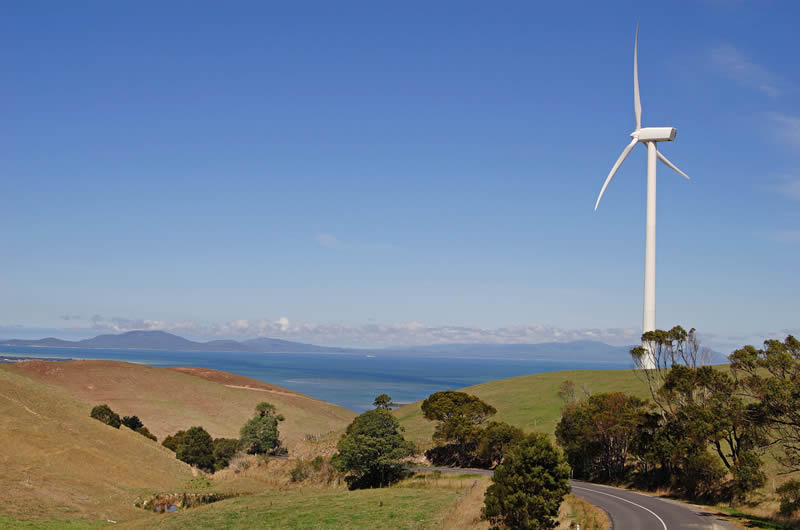
Energy should enhance human life and society, but must be generated and used sustainably to help mitigate the harmful impacts of global warming and climate change.
WESSA supports South Africa’s goal to achieve net zero CO₂ emissions by 2050. Our Energy Policy promotes five key energy transitions to ensure a Just Transition that protects people, other species, and the planet.
In general, WESSA supports energy generation solutions that:
- Are assessed to be a combination of “best fit” and “minimal harm” to the specific country and local ecosystem conditions.
- Adhere to the principle of sustainable development (in which social, economic, and environmental considerations are evaluated and addressed).
- Employ the practice of collective stewardship in which all of society carries responsibility for addressing the challenge. But that such doesn’t absolve the polluter from paying, and importantly environmental justice principles must guide energy decisions, which includes enabling marginalised and disadvantaged communities to participate in the decision-making and beneficiation process.
- Promote more efficient and reduced per capita consumption
- Reduce or swop-out consumptive lifestyle and practices that are energy intensive for those that are less so, for instance reducing dependence on high-energy grown foods and clothes, composting organic waste, minimising food waste and more.
Read the full WESSA Policy on Energy.
Jul 29, 2024 | Advocacy, Position papers
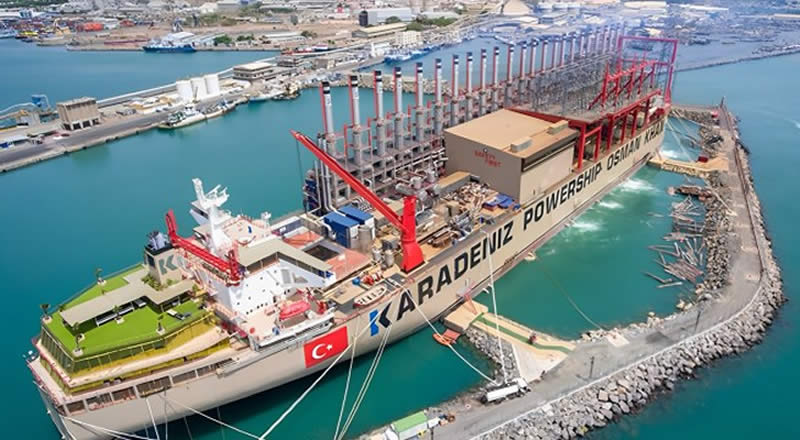
Pictured above: the Turkish floating power plant Osman Khan in the Ghanaian port of Sekondi Takoradi. (Image: Karpowership, from Daily Maverick site)
WESSA staff and volunteer activists opposed the proposal to mooring floating gas-powered powerstations in Saldanha, Ngqura and Richards Bay harbours, for contracts lasting 20 years.
Our opposition, along with many other NGOs and CBOs was based on the global warming and local environmental impacts, as well as on sustainable development and financial arguments against investing South Africa in a declining gas-energy future.
In July 2024, the SA government announced the withdrawal of these proposals. WESSA is now engaging in other offshore oil/gas seismic surveys and inland gas fracking proposal applications. Donate towards our advocacy work for a just energy transition.
Jul 29, 2024 | Advocacy
WESSA activists have for many years been trying to prevent the pollution of the Hartbeespoort Dam and the rivers that feed it.
Sewage from 4 dysfunctional municipal treatment works spilling down the Crocodile, Swartspruit and Magalies Rivers have caused significant eutrophication of the dam waters, leading to extensive hyacinth growth (and at times other invasive aquatic weeds), which often covers the dam in excess of 30% of the dam surface area. This in turn has significant detrimental impacts on the dam’s ecology.
WESSA staff and volunteers, along with those of The Magaliesberg Biosphere, National Association of Conservancies/Stewardship of SA, Birdlife Harties and civic structures, have been pressing for appropriate and lasting action. They have recently taken to conducting independent water quality testing to demonstrate the pollution load, that requires intervention from provincial and national government.
To support our efforts in stemming the sewerage pollution and/or get involved in the clean-ups and invasive plant control actions, please contact John Wesson by emailing jwesson@wessanorth.co.za.
Jun 14, 2024 | Advocacy
WESSA’s origins nearly one hundred years ago were grounded in advocating for dedicated conservation areas such as the Kruger National Park and other parks that now play a critical role in conserving and protecting our natural heritage and rich biodiversity. From the beginning we have tried to use our vision, expertise, experience, and passion to leverage citizens and decision-makers into finding lasting collaborative solutions as to how humans live on the planet. Thus, our motto: people caring for the Earth.
A century later, we find ourselves in a world threatened by climate change, biodiversity loss and pollution in which humans have removed themselves from nature and sought to exploit our natural resources to support consumer lifestyles. The Earth has limits, and we have crossed several of those boundaries already that now have dire impacts on our ecosystem and the Earth our children will inherit.
Educate, Advocate and Act
In the face of these challenges, and in recognition of South Africa’s rich terrestrial and marine resources, WESSA’s strategic focus has centred on three core activities: educate, advocate, and act. In turn we have committed ourselves to and are guided by the principles of sustainable (ecosystem) development; natural justice and a just transition; and collective sustainability. Specifically on the advocacy front we have sought to be both proactive and reactive, and work at both a local and national basis.
All-of-society approach
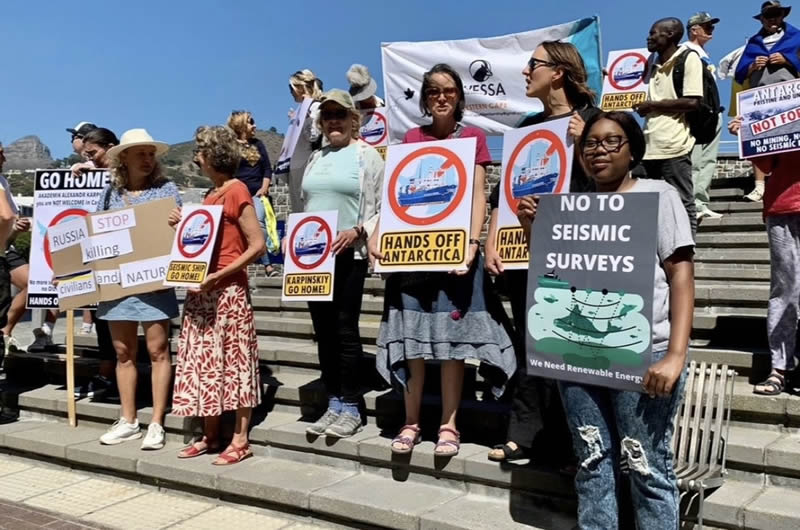
To this end, our local membership regions and branches have become actively involved in local issues which has ranged from participating in campaigns against oil and gas extraction in the ocean (like the Shell and CGG anti-seismic campaigns), taking up sewage and pollution issues in local rivers and catchments, and inputting into various environmental impact assessments amongst others. We try use our local knowledge, access to membership’s (scientific) expertise, and a collaborative all-of-society approach to leverage positive change.
Strong public stance on issues
At a national level, we have focused on raising our “voice” on environmental matters and taken a stronger public stance on issues. Consequently, we have given detailed input into government policy on aspects such as plastic waste, nuclear energy, and the biodiversity “economy;” and collaborating with other environmental NGO’s and the DFFE on initiatives such as the 30 x 30 commitment (30% of our marine and terrestrial habitats restored and protected by 2030). We are also working to establish a raft of policy positions on various aspects such as mining, energy, sustainable use, water catchments, pollution and the like to create a principled and strategic platform from which to engage on daily issues.
Within the operational side of WESSA, this has also resulted in dedicated resources to support advocacy work, the re-aligning of our blue flag beach oversight to be more advocacy orientated, and the creation of a species project focus on Pangolins. As such, advocacy is joint endeavour of central staff, membership, and the Board’s Environmental Governance Committee (EGC), which gives us an especially useful range of resources and interest.
While our planet and country’s ecosystems are in a critical state, we are blessed with a rich biodiversity in South Africa’s land and seas, and our advocacy work will continue to seek collaborative and sustainable solutions to protecting, building resilience, and being part of the nature upon which we are dependent.