Dec 7, 2024 | Advocacy, Position papers
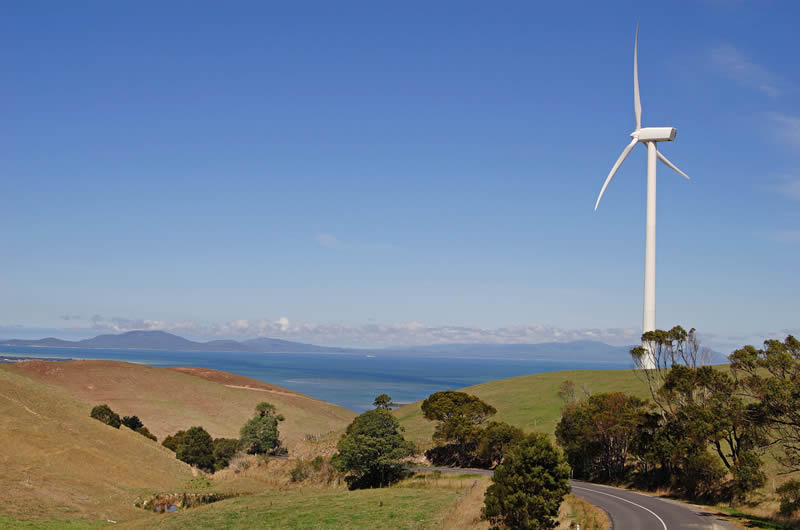
Energy should enhance human life and society, but must be generated and used sustainably to help mitigate the harmful impacts of global warming and climate change.
WESSA supports South Africa’s goal to achieve net zero CO₂ emissions by 2050. Our Energy Policy promotes five key energy transitions to ensure a Just Transition that protects people, other species, and the planet.
In general, WESSA supports energy generation solutions that:
- Are assessed to be a combination of “best fit” and “minimal harm” to the specific country and local ecosystem conditions.
- Adhere to the principle of sustainable development (in which social, economic, and environmental considerations are evaluated and addressed).
- Employ the practice of collective stewardship in which all of society carries responsibility for addressing the challenge. But that such doesn’t absolve the polluter from paying, and importantly environmental justice principles must guide energy decisions, which includes enabling marginalised and disadvantaged communities to participate in the decision-making and beneficiation process.
- Promote more efficient and reduced per capita consumption
- Reduce or swop-out consumptive lifestyle and practices that are energy intensive for those that are less so, for instance reducing dependence on high-energy grown foods and clothes, composting organic waste, minimising food waste and more.
Read the full WESSA Policy on Energy.
Nov 7, 2024 | News
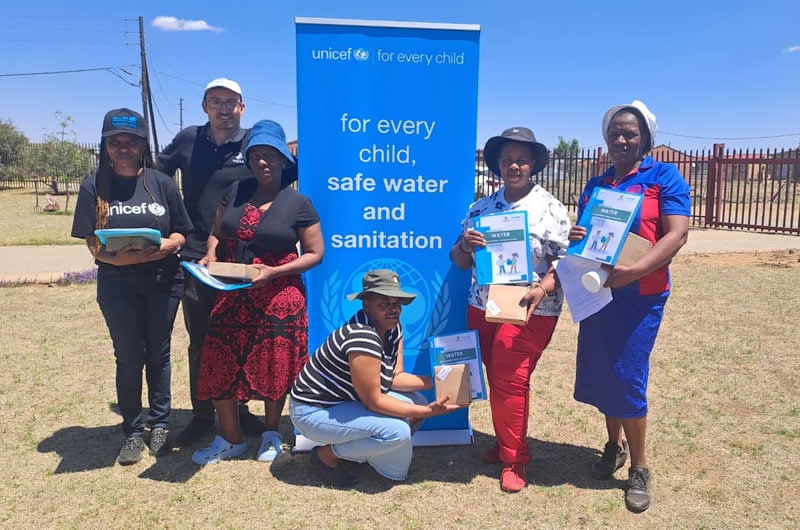
As South Africa faces increasing water shortages and water quality challenges, WESSA has partnered with the United Nations Children’s Fund (UNICEF) on the Youth Leading in Water Resilience Project. Part of the Water, Sanitation, and Hygiene (WASH) programme, this initiative empowers young people in South Africa to tackle one of the nation’s most urgent challenges: water security.
Running from October 2024 to March 2025, the programme will engage 29 000 learners between the ages of 5 and 19 across 30 schools in Gauteng, the Northern Cape, KwaZulu-Natal, and the Free State. Over 4 000 unemployed youth – mainly from rural and peri-urban areas – are being trained to lead water resilience efforts. This extensive outreach is designed to create a ripple effect, deepening community engagement in tackling South Africa’s urgent water challenges.
The involvement of community members, including government officials, further amplifies its impact. By training both local leaders and government representatives, the project aims to embed sustainable water practices within the structures that oversee the country’s water systems, fostering collaboration and action across sectors to ensure that water monitoring becomes a shared responsibility.
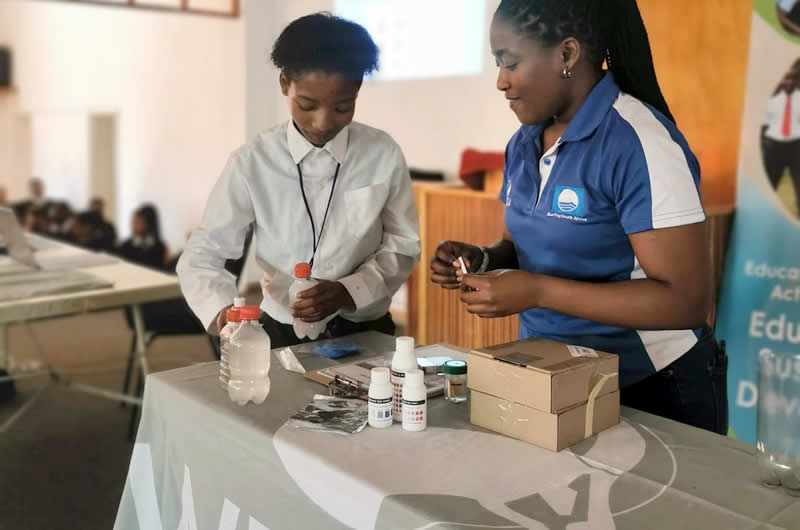
Water quality testing at Okiep Hoerskool.
Water quality testing
The initiative focuses on water quality monitoring, capacity building, and community-based solutions, aiming to build a generation of informed and empowered water custodians. Through the project, youth and community members play an integral role in community-based water monitoring, while working to ensure that clean drinking water is accessible and that water systems are maintained effectively. By encouraging a spirit of collaboration, UNICEF and WESSA aim to empower children, youth and their communities to prioritise water resilience.
“Water is the foundation of life and a resource under tremendous strain in our country. This project aims to empower children and young people by providing them with the skills, resources, and knowledge to monitor water quality in their schools and communities. Participants will gain hands-on experience in identifying and addressing water-related issues, as well as learn how to advocate for sustainable water management practices,” says Cindy-Lee Cloete, WESSA’s CEO.
These sentiments are echoed by Christine Muhigana, UNICEF South Africa Representative who notes that “empowering children and young people to take ownership of water resilience is crucial for South Africa’s future. Through this programme, we are cultivating a generation of informed and motivated water custodians who will champion sustainable water management practices and ensure a water-secure future for all.”
Water warriors
The support of WaterCAN’s data management system ensures that water quality insights are accurately stored, analysed, and leveraged to make impactful decisions. Ferrial Adams, Executive Manager at WaterCAN, emphasises the importance of the data-driven approach, adding, “by engaging children and youth through citizen science, the initiative deepens their understanding of water issues and encourages sustainable practices. This effort not only raises awareness but also empowers the next generation to take proactive steps in preserving our precious water resources and becoming water warriors.”
As the country grapples with erratic rainfall, recurring droughts and flooding, and contaminated water supplies, the need for initiatives like this has never been greater. South Africa’s fragile water resources are critical to the well-being of millions, particularly those living in under-resourced regions. Through this partnership, UNICEF and WESSA address the issue holistically bridging the gap between education, community mobilisation, and systemic reform.
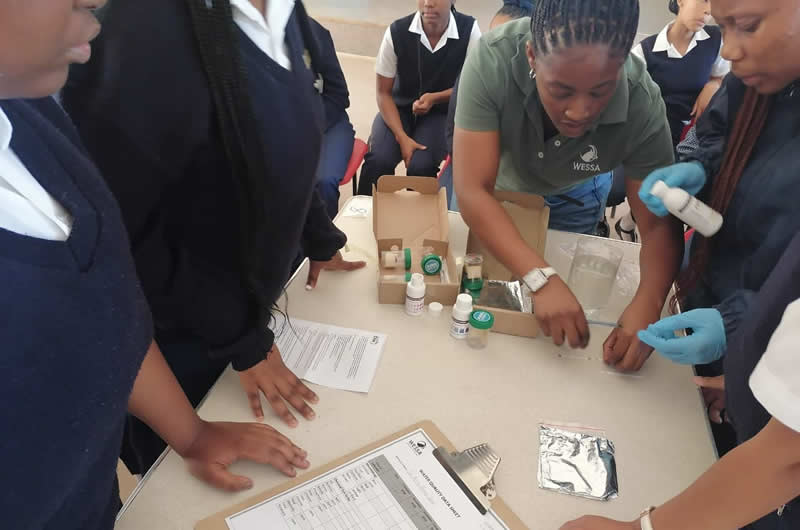
Water quality testing at St Anna Private School
Oct 28, 2024 | News
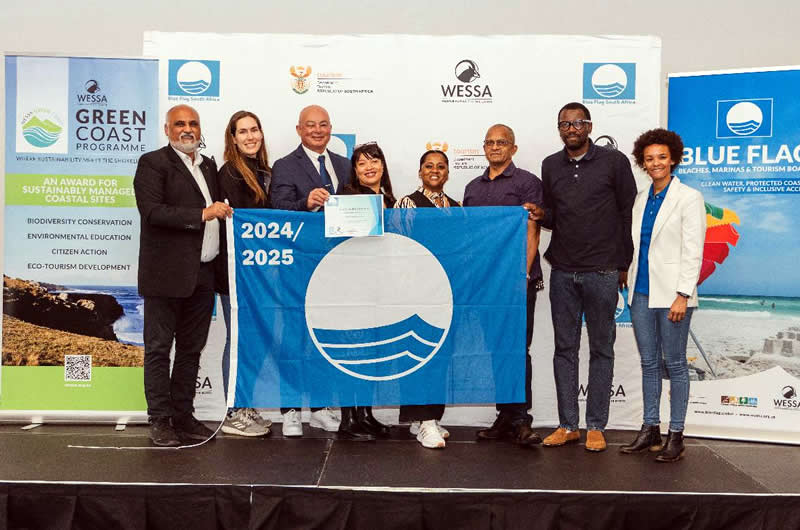
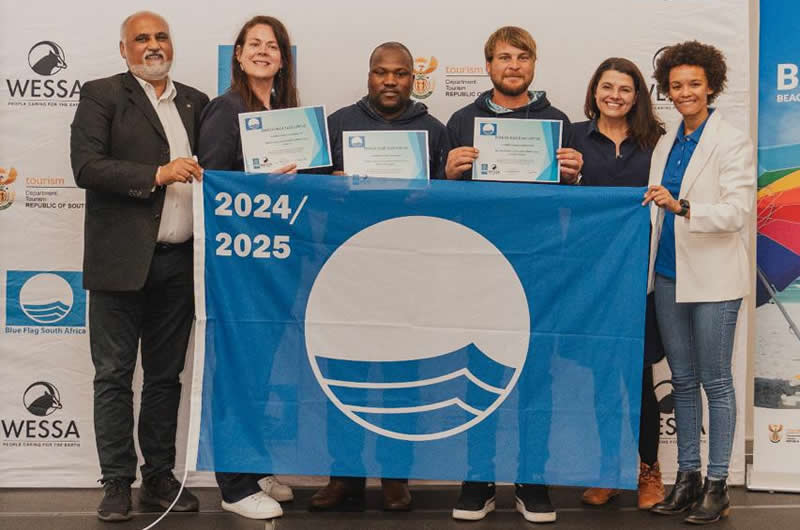
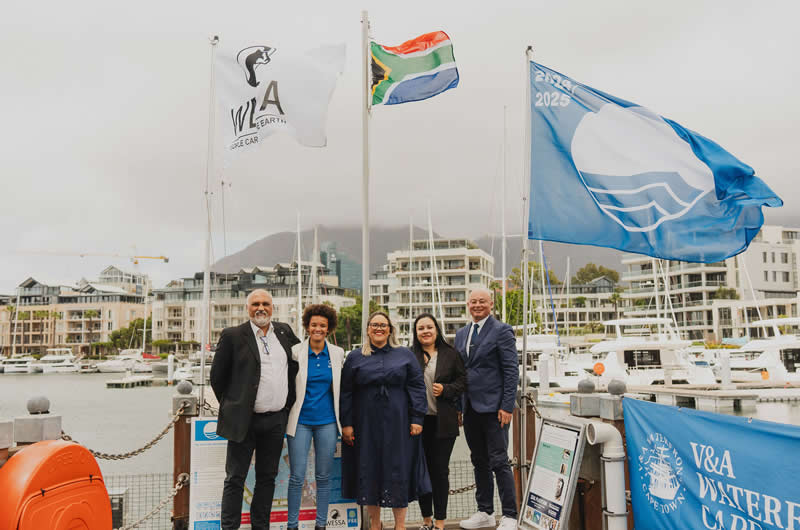
Pictured above are Andre Blaine, V&A Waterfront Executive Manager Marine & Industrial with WESSA CEO Cindy-Lee Cloete, Head of Programmes and Projects Kelly Alcock, Senior Sustainability Manager Tevya Lotriet and Joshio Fischer, V&A’s Marina & Canal Manager.
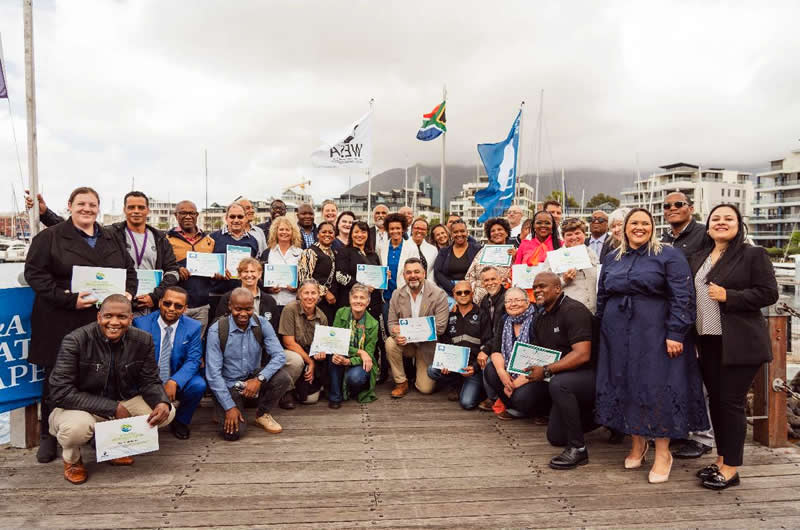
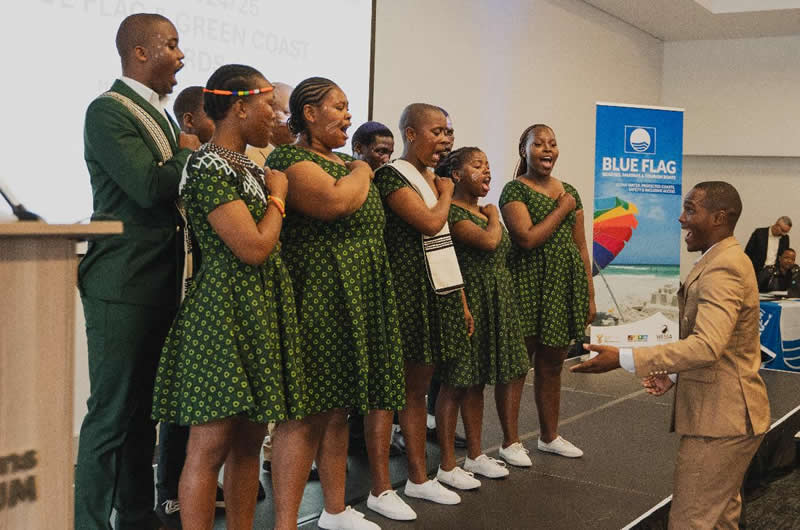
As South Africa welcomes summer, WESSA and V&A Waterfront proudly hosted the Blue Flag and Green Coast Awards today, celebrating the country’s outstanding beaches, marinas, and sustainable tourism operators.
In total, 48 beaches, four marinas, and seven tourism boats were recognised for meeting the highest environmental management, education, safety, accessibility, and sustainability standards, earning them the esteemed eco-labels. In addition, seven sites were awarded Green Coast status, these being community-driven coastal conservation areas of high biodiversity and eco-tourism value in South Africa that appeal to people seeking adventure and nature-based experiences.
This year’s awards also acknowledge the efforts of 18 pilot beaches, highlighting their progress in striving for Blue Flag status. By doing so, WESSA aims to promote a strong connection between communities and the protection of South Africa’s coastal environments, ensuring the well-being of both people and our coastal ecosystems.
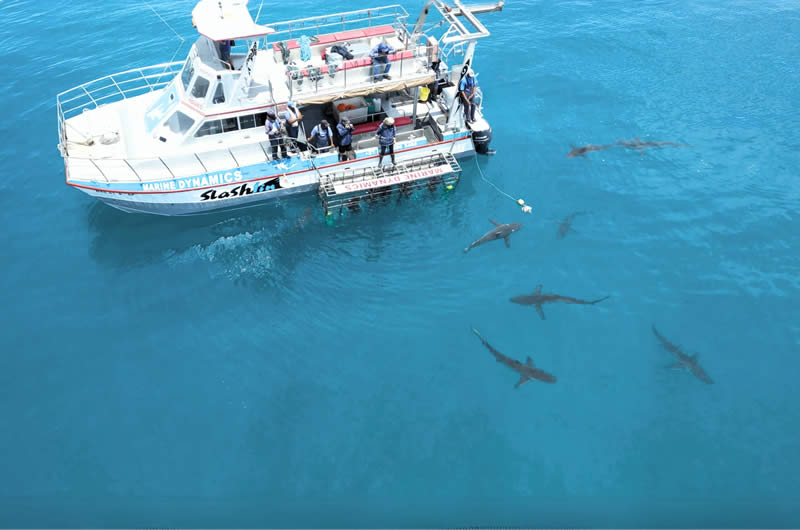
Newly awarded Blue Flag status
A highlight of this year’s awards includes the recognition of Pennington Beach from Umdoni Municipality in KwaZulu-Natal, which has been newly awarded Blue Flag status. Additionally, three new pilot beaches have been introduced: Paternoster Beach from Saldanha Municipality on the West Coast, and Kidd’s Beach and Gonubie Beach from Buffalo City Municipality in the Eastern Cape. Another exciting addition is a new tourism boat, Shark Bait, a research vessel operated by White Shark Diving Company, which has also earned Blue Flag recognition for its outstanding contribution to marine conservation.
Managed by WESSA in South Africa and internationally by the Foundation for Environmental Education (FEE), the Blue Flag Programme sets rigorous environmental, educational, safety, and accessibility criteria for coastal destinations worldwide. Since 2001, WESSA has led in promoting sustainable tourism and coastal management through the Blue Flag and Green Coast Programmes in South Africa.
Stringent criteria
Earning a Blue Flag is no small feat, with 33 stringent criteria to meet, ranging from water quality to environmental education, accessibility, and visitor facilities. The award highlights the dedication of local municipalities, tourism operators, marinas, and volunteers in educating, advocating, and acting for the beauty and biodiversity of the country’s coastlines.
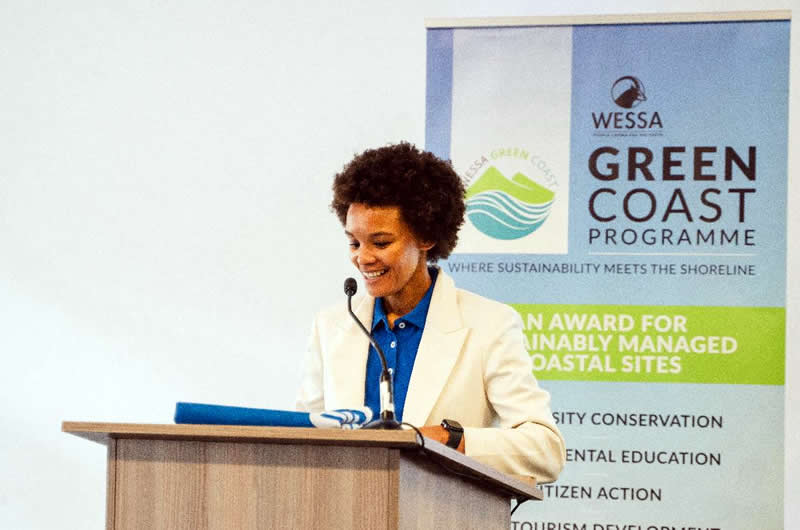
“Today, we celebrate beaches, marinas, and tourism boat operators that have met the stringent requirements for Blue Flag and Green Coast status, as well as the passionate people behind these efforts,” said WESSA CEO Cindy-Lee Cloete.
“WESSA’s Blue Flag and Green Coast Programmes work collaboratively with these partners to address critical environmental issues affecting coastal environmental management, sustainable coastal tourism, and the well-being of people who enjoy these eco-systems. These initiatives, inspire responsible tourism and showcase the vital role communities play in caring for our natural spaces.” She said.
This year’s ceremony celebrates great achievements and aims to encourage greater collaboration and innovation. For example, the V&A Waterfront is making efforts to reduce marine litter by installing stormwater outlet litter traps.
Grow, protect, respect and use marine resource
David Green, CEO of V&A Waterfront says businesses have a responsibility to identify, grow, protect, respect, and use marine resources for the benefit of the public and the environment.
“We’re strategically positioned to merge positive socio-economic and environmental impacts. Our goal is to expand ocean education and awareness through this awards platform and demonstrate improved practices in nature conservation, while responsibly sustaining the intersection between city and sea.
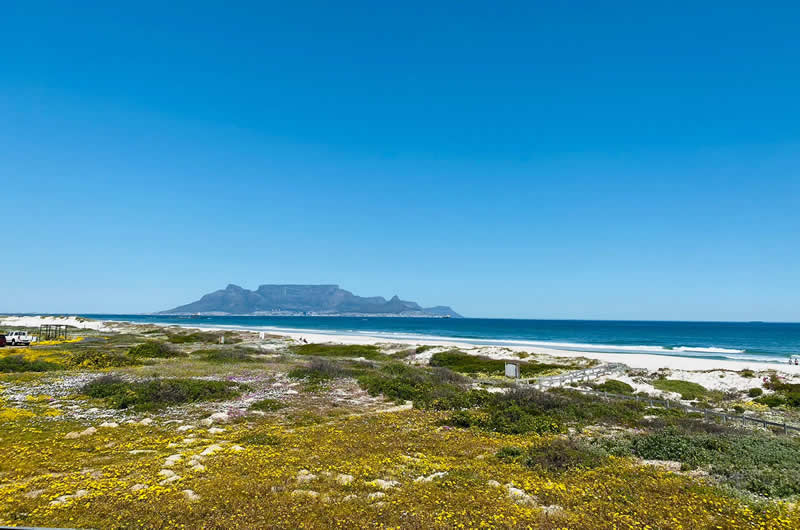
The Green Coast Awards applaud local conservation heroes and municipalities for good environmental management and the promotion of nature-based tourism. Through the programme, communities have mobilised to collaborate with local authorities to monitor mangroves and estuary health, host environmental learning, participate in Bio-blitz, coastal clean-ups, and campaigns for the protection of vital ecosystems. Their efforts reflect the power of collective action in coastal conservation, which in turn is promoting local eco-tourism and job creation opportunities.
As part of WESSA’s advocacy efforts, these Awards also provide a platform for citizen science monitoring projects (such as water quality testing and biodiversity surveys), local community activism, and environmental education, empowering individuals to take action in protecting South Africa’s coastlines.
Click here for more information on Blue Flag and Green Coast sites.
Click here for the list of beaches, marinas, and tourism boat operators you can visit in South Africa.
Oct 3, 2024 | News
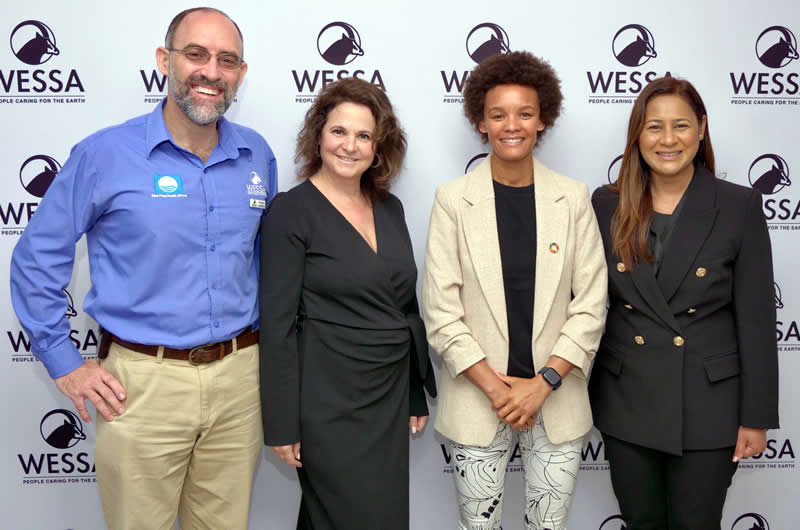
From left to right: Morgan Griffiths, Tina Costas, Cindy-Lee Cloete and Gail Samuels led the discussions on the new Climate Change Act during today’s corporate dialogue event.
In a time of escalating climate crisis, WESSA (Wildlife and Environment Society of South Africa) – SA’s leading environmental organisation – hosted a high-level corporate dialogue at Coastlands SKYE Hotel in uMhlanga, Durban to unpack the critical implications of the Climate Change Act for corporate South Africa. This crucial discussion, led by Cindy-Lee Cloete, newly appointed CEO of WESSA, and Tina Costas, a director and environmental law expert from Norton Rose Fulbright, highlighted the urgent role that South African businesses play in the fight against climate change.
The Climate Change Act, signed into law by President Cyril Ramaphosa in July 2024, is the country’s most comprehensive response to the global climate emergency. The legislation mandates corporate compliance through stringent carbon budgets, emission reduction targets, and mitigation plans. It is a law that signals the dawn of a new era where businesses must evolve or face the consequences—both financial and reputational.
Urgent call to action for South Africa’s business sector
During the dialogue, WESSA emphasised the importance of this legislation as a regulatory framework and an urgent call to action for South Africa’s business sector. Companies will now be required to submit mitigation plans, stay within assigned sectoral (carbon) emission targets (SETs), and adapt operations to meet climate change risks. These changes are imminent, and the Act gives businesses little room for complacency.
WESSA, with its extensive 98-year track record in environmental advocacy, conservation and education, is uniquely positioned to support corporate South Africa in navigating this new landscape. Cloete’s message was clear: the private sector can no longer delay its response to climate change. Businesses must urgently shift to more sustainable practices, and WESSA stands ready to guide them.
“The Act challenges businesses to rethink their environmental impact. Compliance is no longer an option – it’s a requirement. But it’s also an opportunity for companies to innovate, future-proof their operations, and contribute to a just transition that benefit both people and the planet,” said Cloete.
Comprehensive presentation of the Climate Change Act
Tina Costas, Director at Norton Rose Fulbright, provided a comprehensive presentation of the Climate Change Act; stressing that the law was designed to hold companies accountable for their greenhouse gas emissions and enforce sector-specific reduction targets. The message was unequivocal – those failing to comply face significant penalties and risk being left behind in a rapidly changing global marketplace where sustainability and resilience are prized.
The dialogue highlighted that, while the Climate Change Act has not become operational as yet, it opens opportunities for businesses to rethink their response strategies.
WESSA, through its impactful environmental programmes and training workshops, assessments, and expertise in environmental conservation and education, is ready to guide companies in attaining their environmental goals.
Cloete concluded the session by reinforcing WESSA’s commitment to a sustainable South Africa and calling on the business community to embrace the transformation that lies ahead: “The Climate Change Act is our nation’s answer to the climate change crisis and challenges, and WESSA is committed to providing expert guidance and solutions to businesses that are eager to respond and adapt to these changes effectively.”