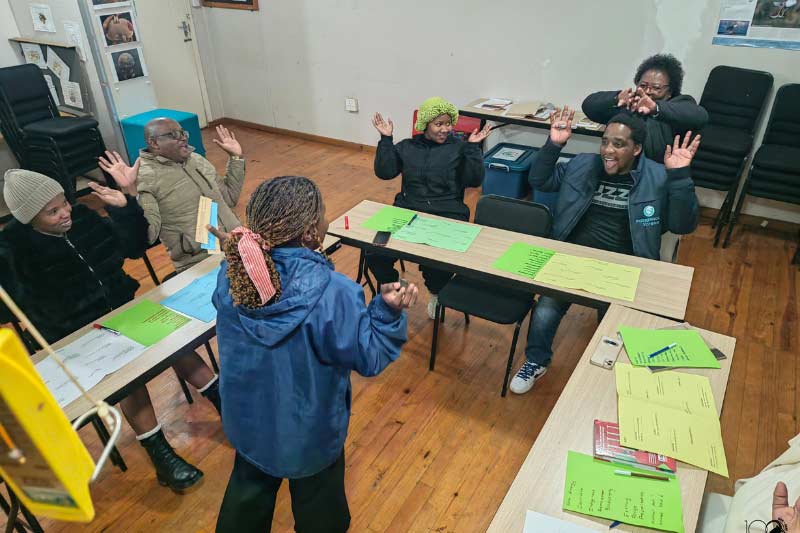
Pictured above: Educators participating in the NAAEE Educators Workshop
How can a butterfly’s feeding process inspire a classroom activity? How can nature help learners think differently about environmental challenges in their communities?
During May 2026, WESSA welcomed educators from six schools to the WESSA uMngeni Valley Nature Reserve for two practical workshops focused on environmental problem-solving through e-STEAM education and biomimicry.
The workshops introduced educators to creative approaches that combine Environmental Education, Science, Technology, Engineering, Arts and Mathematics. By bringing these disciplines together, e-STEAM encourages educators and learners to explore environmental challenges, understand their causes and develop practical solutions.
Equipping educators with tools for innovative learning
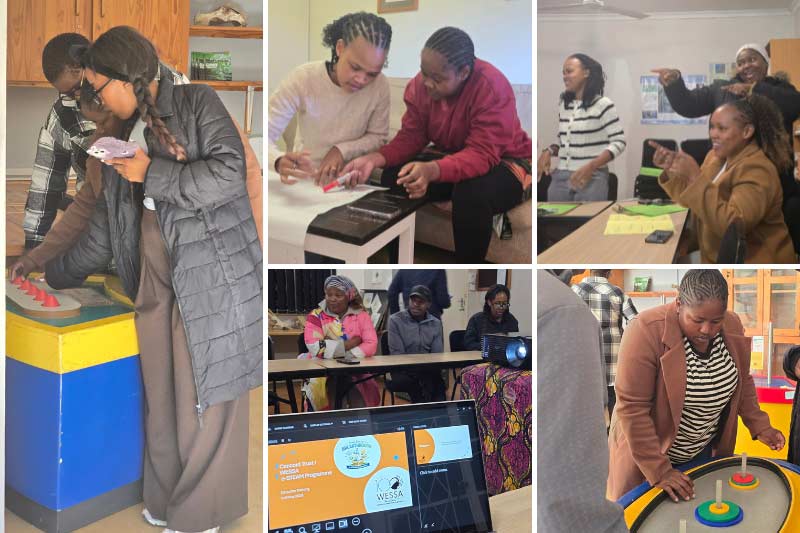
Pictured above: Six educators participating in the Concord Trust e-STEAM Project Educators workshop
The first workshop, held from 8–9 May 2026, formed part of the Concord Trust e-STEAM Project. Six educators from Zamuthule Primary School and Lions River Primary School participated in the two-day programme.
The second workshop took place from 15–16 May 2026 as part of the North American Association for Environmental Education Project. It brought together 10 educators from Woodlands Secondary School, Hawkstone Primary School, Curry’s Post Primary School and Crystal Springs Primary School.
Across both workshops, educators explored ways to integrate e-STEAM methodologies into classroom teaching and learner engagement. The sessions introduced arts-based learning and biomimicry, an approach that draws inspiration from nature when exploring challenges and possible solutions.
Turning environmental challenges into opportunities for learning
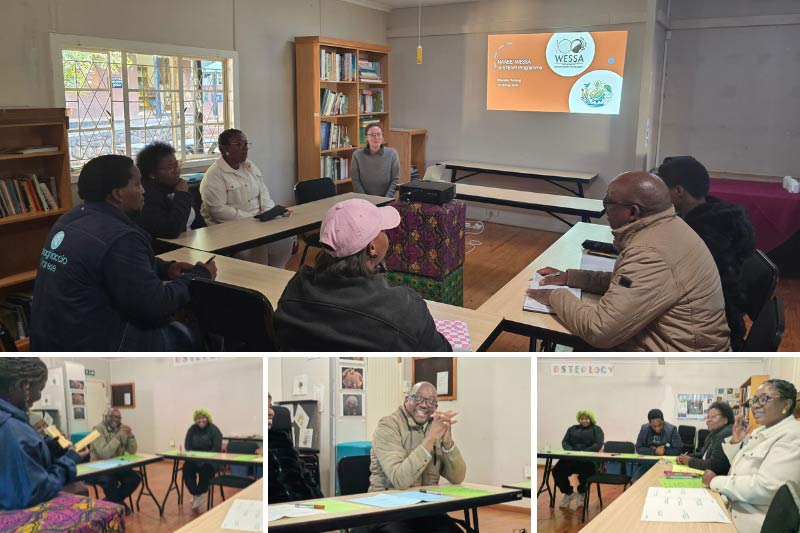
Pictured above: Educators participating in the NAAEE Project Educators Workshop
The workshops placed practical learning at the centre of the experience.
Educators took part in activities inspired by nature, including biomimicry exercises and, during the North American Association for Environmental Education workshop, butterfly feeding simulations.
They also worked through Problem Tree and Solution Flower exercises. These activities encouraged participants to identify environmental challenges, explore their causes and effects, and think critically about possible responses.
Team-building and critical-thinking activities in the e-STEAM room further demonstrated how creative, solution-based learning can encourage collaboration and active participation.
From educator workshops to learner-led solutions
The workshops mark the beginning of a longer learning journey for the participating schools.
Educators will take the knowledge and practical tools gained during the sessions back into their classrooms and school communities. With ongoing support through WESSA school visits and mentorship, participating schools will continue exploring environmental challenges and developing solutions throughout the year.
Learners will ultimately have an opportunity to develop prototypes that respond to the issues identified at their schools and present their ideas during a final showcase workshop.
Inspiring a new approach to environmental education
By combining environmental education with creativity, science and problem-solving, the workshops are helping educators create opportunities for learners to engage with real-world challenges in meaningful ways.
The WESSA uMngeni Valley Nature Reserve offered a fitting setting for this work: a space where educators could learn from nature while exploring how to help young people become thoughtful, innovative environmental problem-solvers.
When learners are encouraged to observe, ask questions and design solutions, environmental education becomes more than a lesson. It becomes a pathway to action.