
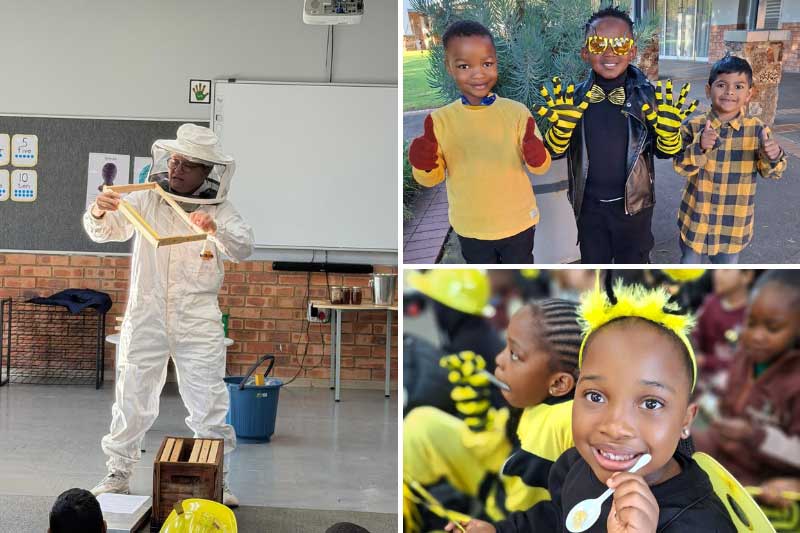
Pictured above: Southdowns College Pre-Prep learners engage in World Bee Day Talk and dress-up in black & yellow
From dressing up in black and yellow to exploring pollination through interactive activities, learners across three ADvTECH schools marked World Bee Day with curiosity, creativity and a growing appreciation for the small but essential role bees play in sustaining healthy ecosystems.
Through age-appropriate activities at Southdowns College Pre-Prep, Crawford International Bedfordview and Crawford International Lonehill, learners explored how bees support biodiversity, food production and plant growth. The celebrations transformed environmental learning into memorable experiences, helping young learners connect classroom knowledge with the natural world around them.
Discovering the importance of pollinators at Southdowns College Pre-Prep
On 20 May, the playground at Southdowns College Pre-Prep became a sea of yellow and black as children dressed up to celebrate these important pollinators.
Grade 00 and Grade 0 learners took part in an engaging talk led by Coach Petro, who shared interesting facts about bees, beekeeping and the essential role pollinators play in the environment. Learners had an opportunity to see beekeeping equipment up close and even taste a sample of honey.
Through the discussions and activities, the children discovered that bees help pollinate many of the plants that provide fruits, vegetables and flowers. They also learnt that a single bee can visit hundreds of flowers in one day, highlighting the impact that these small creatures can have on the natural world.
The celebration helped foster curiosity, environmental awareness and respect for nature from an early age, while introducing learners to the importance of protecting animals and habitats that support healthy ecosystems.
Combining environmental awareness and literacy at Crawford International Bedfordview
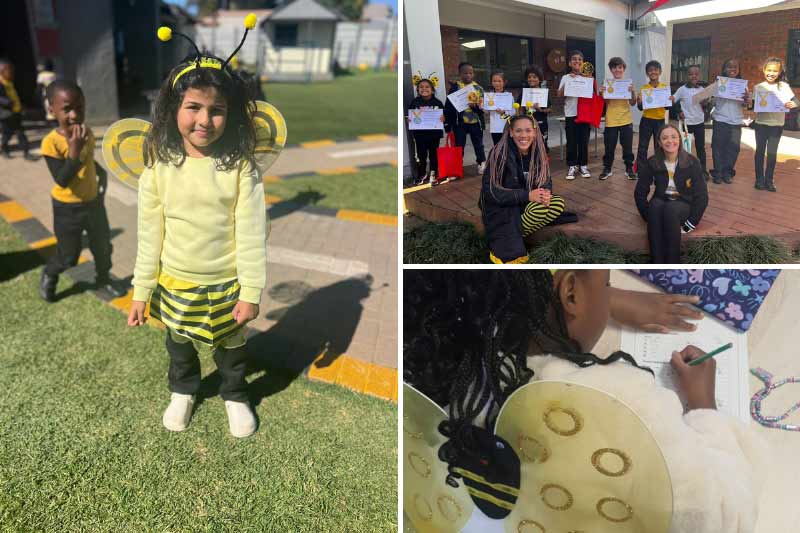
Pictured above: Crawford International Bedfordview learners and educators got dressed up in black & yellow
At Crawford International Bedfordview, learners and staff embraced World Bee Day through a vibrant Black and Yellow Civvies Day, filling the campus with colour, energy and conversations about biodiversity.
The celebration formed part of the school’s ongoing WESSA Biodiversity in Nature initiative, encouraging learners to connect environmental responsibility with meaningful awareness and action.
Foundation Phase learners also participated in a lively Spelling Bee, where they showcased their confidence, communication skills and academic abilities while learning more about the importance of bees and pollinators.
Custom 3D-printed trophies were created for the winners, while additional prizes and treats helped bring the theme to life. The activities created an engaging environment where literacy, creativity and environmental learning could come together in a memorable way.
Learning how pollination works at Crawford International Lonehill
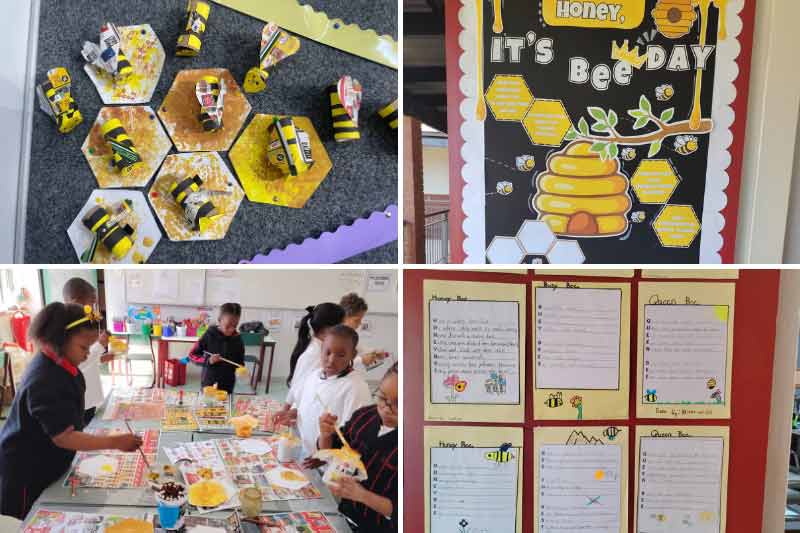
Pictured above: Crawford International Lonehill – Learners creating World Bee Day art; Grade Four classroom door art about Bees; and the Grade Five class wrote acrostic poems
At Crawford International Lonehill, learners explored pollination through a playful, hands-on activity designed to show how bees help flowers grow.
After colouring and creating their own flowers and bees, learners used their fingers as pretend bees. They collected “pollen” from a packet of cheese curls before visiting their classmates’ flowers to pollinate them.
The interactive activity helped learners understand the important connection between bees, pollination and plant growth while encouraging collaboration and creativity.
Learners also explored the idea of reusing materials through a recycled bee art activity. Using newspaper, toilet-roll holders, bubble wrap and paint, they created bees and a beehive collage, bringing together environmental learning and imaginative expression.
Growing environmental awareness from an early age
Across all three schools, World Bee Day provided an opportunity to make biodiversity education practical, engaging and accessible.
Whether learners were tasting honey, exploring beekeeping equipment, participating in a themed Spelling Bee, learning how pollination works or creating art from recycled materials, each activity encouraged a deeper connection to nature.
These celebrations showed that meaningful environmental learning can begin with small moments of discovery. By helping children understand why bees matter, schools are nurturing a generation that is more aware of the natural world and better equipped to care for it.