
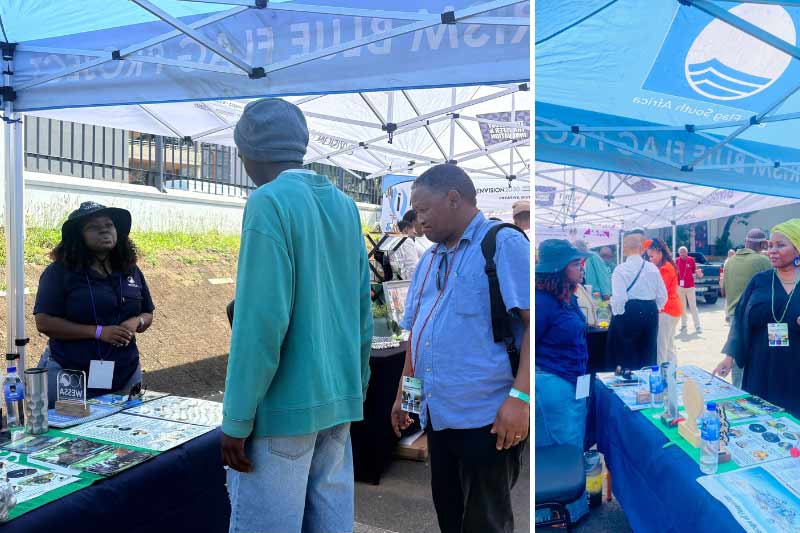
Pictured above: WESSA joined other conservation organisations, researchers, students and indigenous knowledge holders at the DUT campus for a day of knowledge sharing and dialogue.
What happens when generations of traditional ecological knowledge meet academic research and conservation practice?
This question was at the heart of a two-day conference and practical workshop on Indigenous Knowledge Systems (IKS), held on 22 and 23 October 2026 and hosted by the Durban University of Technology (DUT).
WESSA was invited to participate in the event, which focused on the identification, conservation and sustainable use of indigenous medicinal and herbicidal trees and plants. The programme brought together indigenous knowledge holders, traditional healers, academic researchers, students and environmental stakeholders to explore how traditional knowledge can contribute to biodiversity conservation and environmental management.
The two-day programme moved from the university campus into the landscape itself, creating an opportunity not only to talk about indigenous knowledge but also to learn directly from the people and places where that knowledge lives.
Bringing different forms of knowledge together
The first day of the programme took place at the DUT campus, where exhibitions and presentations created a space for dialogue between scientists, students and indigenous knowledge holders.
WESSA participated as an exhibitor, showcasing its work in environmental education, biodiversity conservation and community-based natural resource management.
The exhibition provided an opportunity to connect with participants and share perspectives on the importance of indigenous plants and the role that communities can play in protecting and managing natural resources.
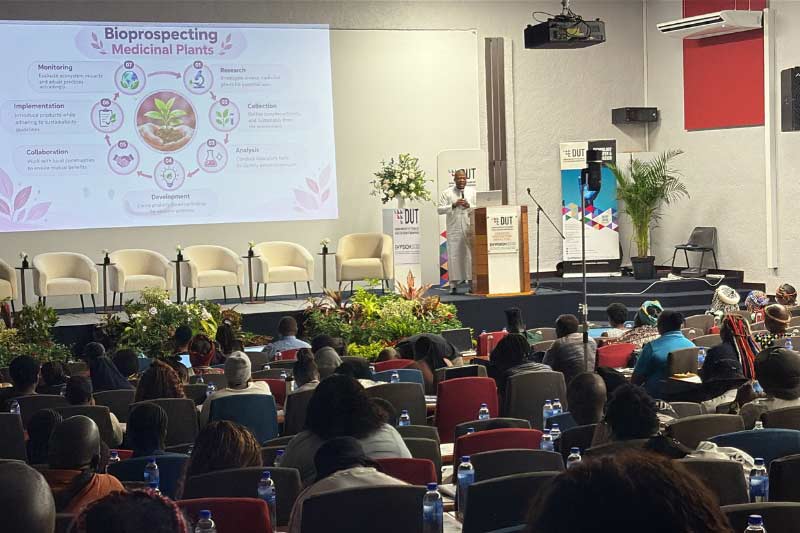
Pictured above: The conference brought together researchers, students, indigenous knowledge holders and environmental stakeholders to explore the relationship between Indigenous Knowledge Systems and conservation.
Across the conference, a central message emerged: indigenous knowledge is not simply something to be documented or studied. It is a living body of knowledge, passed between generations and rooted in people’s relationships with their environment.
Recognising this knowledge also means recognising the people who hold it.
Recognising the custodians of biodiversity
For generations, traditional healers and rural communities have carried detailed knowledge of indigenous plants, their uses and the environments in which they grow. Yet this knowledge has often existed outside formal scientific and academic platforms. The conference created space to change that.
By bringing traditional healers and knowledge holders into conversation with academic researchers and environmental practitioners, the event helped demonstrate the value of working with communities rather than simply conducting research about them.
It also highlighted the importance of ensuring that indigenous knowledge is respected, preserved and appropriately integrated into education, research and conservation strategies.
This approach has implications beyond knowledge sharing. It can support environmental justice by recognising communities as custodians of biodiversity, while creating opportunities for collaborative research, ethical bioprospecting and conservation approaches that are both culturally appropriate and ecologically sustainable.
It also raises important questions around the protection of indigenous plants from over-exploitation, as well as intellectual property and the rights of the communities whose knowledge makes research possible.
On the second day, the conference moved from the university campus into eNanda, an area rich in indigenous botanical resources and traditional knowledge.
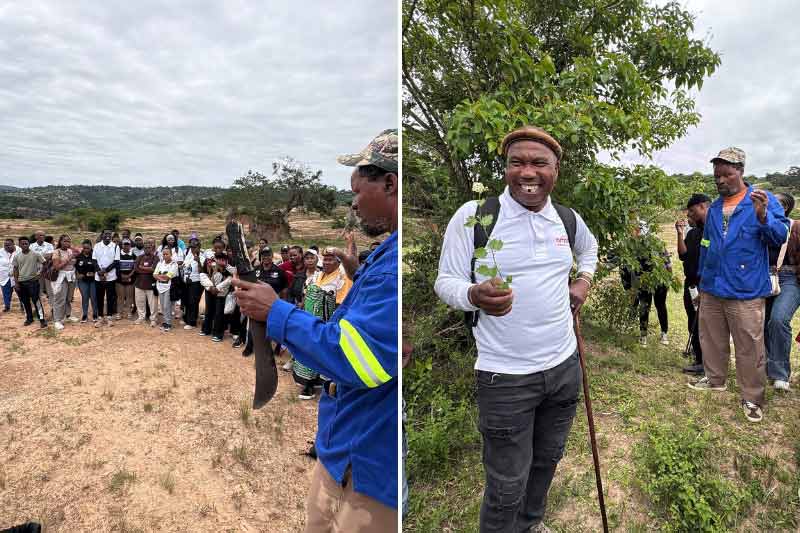
Pictured above: Participants experienced a more immersive form of learning. Local traditional healers and elders guided the group through the identification of indigenous trees, sharing knowledge about their medicinal properties, sustainable harvesting methods and the cultural protocols associated with their use.
Rather than learning only through presentations or written material, participants were able to engage directly with knowledge holders in their natural environment.
The experience demonstrated how much can be learned when scientific and traditional knowledge systems are brought together in the places where biodiversity and community knowledge intersect.
The field session also offered a reminder that conservation is about more than protecting individual species.
It is about understanding the relationships between people, plants, landscapes and culture.
- For the research community, engaging directly with knowledge holders provides access to lived knowledge that cannot be found in textbooks.
- For conservation practitioners, it creates opportunities to explore approaches that are grounded in local realities and cultural understanding.
- For communities, it creates a platform to have their expertise recognised and their voices included in conversations about biodiversity, sustainable development and environmental management.
For WESSA, participation in conversations such as these reflects the importance of placing people and communities at the heart of environmental conservation.
Indigenous knowledge has an important role to play in understanding and protecting biodiversity. By creating opportunities for traditional knowledge holders, researchers, students and conservation organisations to learn from one another, we can begin to build conservation approaches that are more inclusive, locally relevant and sustainable.
The experience in eNanda reinforced an important principle: some knowledge cannot simply be transferred from one person to another through a textbook or presentation. Sometimes, it needs to be shared on the land, by the people who know it best.
As South Africa continues to explore ways of protecting its biodiversity while supporting sustainable and inclusive development, ensuring that indigenous knowledge holders are part of the conversation will remain essential.
WESSA looks forward to continuing to support opportunities that connect people, knowledge and nature, and that recognise the value of learning from both scientific research and the communities who have long been custodians of the natural environment.
To volunteer your expertise and time towards our advocacy work – or seek advice with dealing with a local, regional or national environmental governance issue – please contact your WESSA regional representative or contact the Advocacy, Governance & Membership Manager: morgan.griffiths@wessa.co.za. Tel:
031 2013126.