Jan 9, 2026 | Advocacy, News, Uncategorized
The Wildlife and Environment Society of South Africa (WESSA), as the national operator in South Africa of the international Blue Flag programme, acknowledges and shares public concern regarding sewage pollution and marine outfalls along the Cape Town coastline. We also welcome robust, evidence-based debate about these issues.
However, recent commentary suggesting that WESSA has been “silent” on these matters, or that we show “little interest in holding municipalities to proper account”, misrepresents both the purpose of the Blue Flag programme and WESSA’s long-standing work in this space.
WESSA has not been silent
WESSA has engaged consistently and constructively with a wide range of stakeholders on the issue of sewage pollution and water quality.
WESSA Coastal Programme Manager, Mike Denison:
- “We haven’t been silent on it. We’ve engaged with groups such as Bays of Sewage and individuals like Prof. Anthony Turton, Caroline Marx, Byron Herbert, Jamii Hamlin and others whom we regard as leading civil society stakeholders grappling with the challenges of water quality in the Cape Town metro. “
- “We’ve been vocal and participated at the Permit Advisory Forum presenting for clarity around certain aspects linked to the Blue Flag programme.”
What Blue Flag measures, and what it does not
The Blue Flag is an internationally recognised eco-label awarded to beaches, marinas and tourism boats that meet a comprehensive set of environmental, educational, safety and accessibility criteria. It is not a general-purpose endorsement of all municipal infrastructure, nor is it a guarantee that no environmental challenges exist in a city or along a coastline.
WESSA Coastal Programme Manager, Mike Denison:
- “Blue Flag is an award based on a defined set of 33 environmental and sustainability criteria set by the international body, and WESSA reviews and evaluates against those criteria.”
- “From a Blue Flag perspective, based on the defined criteria, we get an indicator over time from water samples by independent accredited labs whether a particular section of our coastline falls within parameters that are deemed safe to swim. Those parameters include both Enterococci and E. Coli, although the World Health Organisation has said only Enterococci is necessary, we agree that E. Coli should also be considered, and hence we’ve kept it as one of our measures.
From our FAQs – what are the water quality requirements?
- Blue Flag Beaches water quality sampling only takes place during the current season of the flag. Water quality sampling is done by an independent and accredited lab against a pre-determined schedule for the season. Results are shared directly with WESSA.
- New beaches need 20 water quality samples to qualify. Once awarded, beaches must take a minimum of 5 samples per season evenly spread out, preferably every two weeks but not longer than 30 days between samples. Both E.coli and Enterococci must be tested for. E.coli limit is 250 cfu/100 ml and Enterococci is 100 cfu/100 ml.
- WESSA posts the water quality results on the WESSA website for the duration of Blue Flag beach seasons. Should water quality fall outside the Blue Flag parameters, then the flag is lowered until a satisfactory sample, within a maximum of 10 days, is achieved.
Using Blue Flag to hold municipalities accountable
The Blue Flag programme is itself a key mechanism through which municipalities are held accountable for maintaining high standards.
WESSA Coastal Programme Manager, Mike Denison:
- “With regards to the Blue Flag programme, WESSA uses the set global criteria to not only strengthen municipal services, but also hold municipalities accountable, and we understand that it is very important for the Blue Flag to fly for various reasons.”
- “Through this past season, there’s been several occasions in which a Blue Flag was lowered while municipalities resolve a specific unmet criterion. Municipalities are therefore held accountable by the Blue Flag standards. They must remedy the issues on hand before a Blue Flag can fly again.”
- “We’ve also had one beach that’s had its Blue Flag withdrawn for the remainder of the season, for not being able to sustain itself against the demands of the 33 criteria. Therefore, from a WESSA perspective, we believe that this is how using the Blue Flag holds the municipalities accountable.”
These actions demonstrate that Blue Flag status is continually reviewed and that municipalities are required to remedy issues before flags can be raised again.
Integrity, evidence and constructive engagement
For nearly a century, WESSA has worked to protect and conserve biodiversity in South Africa. That history and institutional knowledge underpin our role in the Blue Flag programme.
WESSA Coastal Programme Manager, Mike Denison:
- “In our 100-year history, WESSA has always been open to suggestions and recommendations to strengthen protection and the conservation of our natural resources. Blue Flag is no different, and we do engage municipal partners, individuals and civil society organisations to help us improve the programme – and this goes for the sampling criteria too.
WESSA CEO, Cindy-Lee Cloete:
- “WESSA recognises that trust between civil society, municipalities, laboratories, and independent programmes is essential. While critical scrutiny is healthy, a default of total distrust is corrosive.
- We acknowledge and we respect the integrity of approved entities within our stakeholder network that work with the Blue Flag programme.
- WESSA remains committed to constructive, evidence-based engagement, to continuously improve the Blue Flag programme, and to working with all good-faith stakeholders towards healthier oceans, safer bathing waters, and more accountable coastal management.”
To request an interview with WESSA’s Coastal Programme Manager, please contact Ronell Swartbooi via marketing@wessa.org.za.
Apr 23, 2024 | Blue Flag, Green Coast, News
Did you know that the Blue Flag is an internationally recognised eco-label awarded to beaches, marinas, and sustainable boating tourism operators?
In South Africa, WESSA implements this prestigious programme, celebrating over two decades of commitment to environmental excellence and sustainable tourism along our beautiful coastlines. When you see a Blue Flag waving, it is a symbol of pristine conditions, safety, and high environmental standards.
The Green Coast Programme, a visionary extension of WESSA’s conservation efforts, focuses on the hidden gems of South Africa’s coastlines. This programme champions the cause of lesser-known biodiverse coastal areas with high sustainable tourism potential, promoting their conservation through community-led initiatives and integrated management strategies. It’s about bringing together local communities, authorities, and the private sector to protect and enhance our coastal treasures.
Green Coast transforms communities
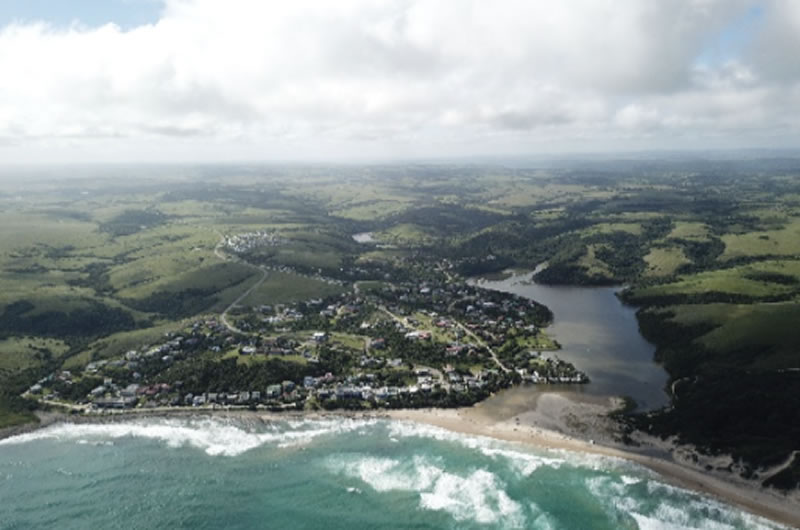
Through the Green Coast Programme, communities like Kei Mouth and Morgan Bay have transformed into active conservation hubs. Under the guidance of dedicated locals and environmentalists, these areas have become models of coastal stewardship, with initiatives ranging from mangrove monitoring to estuary health. It is a testament to how recognition and support can galvanise communities to protect their natural heritage.
Blue Flag and Green Coast promote sustainable tourism
The Blue Flag Programme not only signifies environmental quality but also promotes sustainable tourism practices. Beaches, marinas, and boats that achieve this status are recognised globally as safe, clean, and committed to conservation. This makes them preferred destinations for eco-conscious travellers, enhancing South Africa’s reputation as a premier eco-tourism destination.
Both the Blue Flag and Green Coast Programmes are deeply committed to environmental education and advocacy. These initiatives offer a platform for raising awareness, conducting citizen science projects, and encouraging a deeper connection between people and their coastal environments. It is about creating a culture of conservation that lasts.
Dr Deborah Roberston-Andersson, a marine scientist and Green Coast National Jury Member residing in Kei Mouth, shared inspiring stories of change brought about by the programme in Kei Mouth and Morgan Bay in the Eastern Cape. Participating in the Green Coast programme and earning recognition has united and mobilised these communities to monitor and protect coastal ecosystems. The communities pride themselves on keeping their environments clean and engaging in various initiatives, motivated by their Green Coast status.
Each award is a story of dedication, innovation, and community spirit. From Samantha Hansen’s shark cage diving company achieving Blue Flag Boat status to the inspiring community efforts in Kei Mouth and Morgan Bay, these stories not only celebrate success but also inspire us to continue our commitment to preserving South Africa’s coastal beauty for future generations. Each one of us has a role to play in environmental conservation, and together, we can achieve remarkable things.
How you can get involved
Support WESSA’S Blue Flag and Green Coast programmes dedicated to coastal conservation and sustainable tourism. You can contribute financially to these initiatives, sponsor specific projects or activities, or donate resources such as equipment or expertise.
By supporting WESSA’s initiatives, you can play a vital role in protecting and preserving coastal environments, promoting responsible tourism practices, and ensuring the long-term sustainability of coastal communities.
To find out more about how you can get involved contact: Kerry McLean – Senior Programme Manager: Coastal Programmes by emailing greencoast@wessa.co.za or Tevya Lotriet – Senior Sustainability Programme Manager at blueflag@wessa.co.za
Oct 25, 2019 | Archives
64 Blue Flags will be proudly flown at 45 beaches, 9 marinas and by 10 sustainable tourism boats around South Africa over the forthcoming 2019/20 South African Blue Flag season. The season officially opens on the 1st of November 2019. This was announced at the National WESSA Blue Flag launch hosted by the V & A Waterfront in Cape Town on the 23rd October 2019.
The Western Cape has achieved the highest number of Blue Flag sites, with 33 beaches, 10 boats and seven of the nine Blue Flag marinas. The Eastern Cape has been awarded two Blue Flag Marina sites, as well as six beaches. Kwa-Zulu Natal has been awarded six Blue Flag beaches.
The Blue Flag programme also allows for potential Blue Flag sites to participate in the Pilot Programme. This year will see 35 beaches across our three coastal provinces on this development phase of the programme. WESSA will work with beach managers from these Pilot beaches, towards the longer-term goal of achieving full Blue Flag status. Part of this support includes the provision of Tourism Beach Stewards to these beaches, over the busiest holiday periods.
In her opening address, Mayoral Committee Member for Spatial Planning and Environment, Ms Marian Nieuwoudt said, “Blue Flag offers the City a management tool for acceptable living” and she mentioned that “We need to educate to change behavior”
Speaking at the event, South African endurance swimmer and founder of Breathe Conservation, Sarah Ferguson thanked WESSA for the work the organisation is doing through the Blue Flag programme and she emphasised that “together we can make a change and achieve great things, if we all find our passion and follow that and in the process think about the environment”
An impressive 40% of the Blue Flag beach sites have been on the programme for 10 or more consecutive years, while 7 of those sites have been on for 15 or more consecutive years. This season also sees the addition of four brand new sites to the programme. WESSA is proud to be the national implementing partner for Blue Flag in South Africa since 2001.
View the full list of 2019/20 Blue Flag Beaches, Boats and Marina’s
Ends.
INTERVIEWS:
Broadcasters please note that the WESSA CEO Dr Thommie Burger, and Vincent Shacks GM of Sustainable Tourism are available for radio and television interviews.
Links to images and captions:
Image 1 Sarah Ferguson and WESSA CEO Dr Thommie Burger presenting Marian Nieuwoudt, Councillor City of Cape Town, certificates for 10 Blue Flag full status and 1 pilot beach
Image 2 Sarah Ferguson and WESSA CEO Dr Thommie Burger presenting Carel Venter and Cliffie Beyman, from Mossel Bay Municipality, certificates for 5 Blue Flag full status beaches
Image 3 Sarah Ferguson and WESSA CEO Dr Thommie Burger presenting Nosicelo Xhasa, from Ndlambe Municipality, certificates for 2 Blue Flag full status and 1 pilot beach
Image 4 Sarah Ferguson and WESSA CEO Dr Thommie Burger presenting Nombuso Dube, from Ethekwini Municipality, certificates for 1 Blue Flag full status and 11 pilot beaches
Image 5 Sarah Ferguson and WESSA CEO Dr Thommie Burger presenting Andre Blaine, Louis Souls and Joshio Fisher, from V & A Waterfront, certificates for Blue Flag full status Marina
Image 6 Sarah Ferguson and WESSA CEO Dr Thommie Burger presenting Francis Saul and Mariette Hopley, from White Shark Ventures, certificates for full status boat
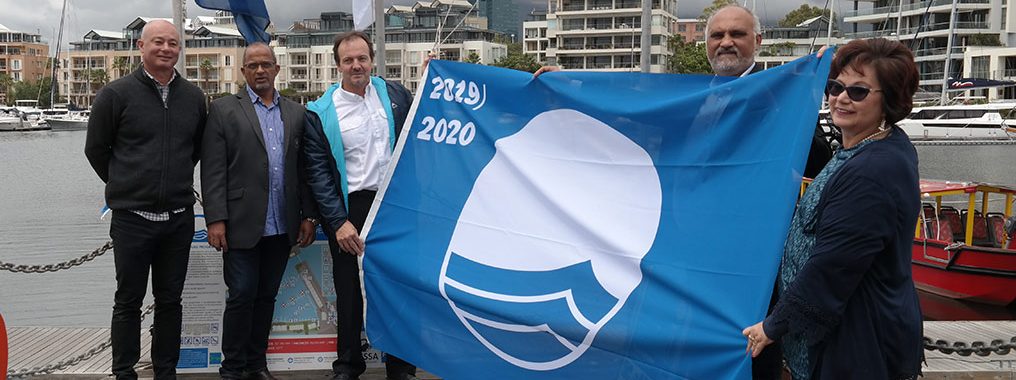
Image 7 Official Flag Raising done by WESSA CEO Dr Thommie Burger and Joshio Fisher, Louis Souls Thommie and Andre Blaine from V & A Waterfront and Marian Nieuwoudt from City of Cape Town
About WESSA Blue Flag:
The WESSA Blue Flag Programme, now in its 19th year, is focused on the conservation of marine and coastal habitats, and is designed to raise environmental education and awareness, and increase sound environmental practices among tourists, local populations and beach management bodies.
To achieve Blue Flag status, as many as 33 different criteria spanning over four themes of coastal management must be met and maintained: These are water quality, environmental education and information, environmental management, and safety and services. Each Blue Flag site is compelled to conduct several environmental education activities during the year, and to practise effective and efficient conservation management.
In South Africa, the Blue Flag programme is managed by WESSA and participating coastal municipalities. In the Southern Hemisphere, the Blue Flag season runs from 1 November to 31 October each year. Beaches are required to apply for Blue Flag status each year and the Blue Flag standards are only enforced at the beaches over the participating beach’s stated season, which varies from just two months of the year to the full 12 months.
The WESSA Blue Flag Programme is operated under the auspices of the Foundation for Environmental Education and is headquartered in Copenhagen, Denmark. The baseline criteria are set by the international coordinators of the Blue Flag campaign in Europe, the FEE (Foundation for Environmental Education). Through close collaboration with their members on all issues, the Foundation for Environmental Education works to ensure the programme’s expansion, and that the unrivalled standards of the Blue Flag are maintained internationally. The detailed criteria and award process is available on Blue Flag’s international website www.blueflag.global
About WESSA:
WESSA is a 93-year-old youthful and vibrant organisation with a rich history in South African conservation and environmental education. WESSA researches, develops and implements focused accredited and non-accredited environmental, ecotourism, education and youth development programmes throughout South Africa. We are the sole and proud implementor of all the international Foundation for Environmental Education (FEE) programmes in South Africa, as well as an implementor of choice for various youth programmes on behalf of Government and the private sector. Our youth education programmes under the banners of Eco-Schools, Learning about Forests, Young Reporters for the Environment and Youth Entrepreneurship, together with our five outdoor education centres, make a critical contribution to youth development. We are developing and giving hands on work experience to 800 unemployed youth through our Blue Flag, Green Coast and other Youth Programmes. We have a volunteer membership footprint throughout the country, with passionate members ensuring that local conservation and environmental issues are addressed. We are ‘People Caring for the Earth’ and we invite you to join us in our quest to become champions of the environment and achieving a more sustainable South Africa for all. For more information visit www.wessa.org.za
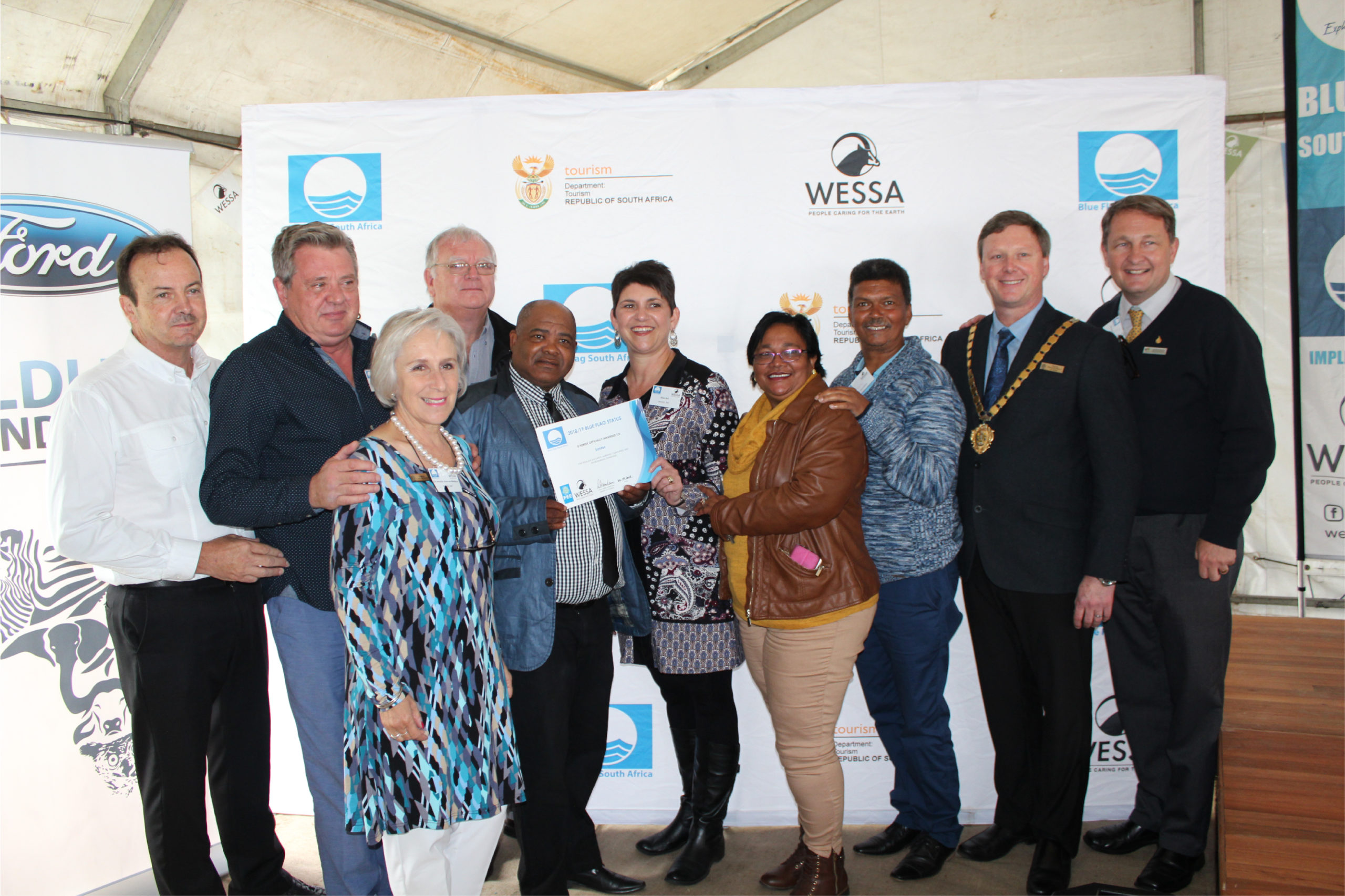
Oct 13, 2018 | Archives
66 Blue Flags will be proudly flown at 46 beaches, 8 marinas and by 12 sustainable tourism boats around South Africa over the forthcoming 2018/19 South African Blue Flag season, which opens officially on the 1st of November 2018. This was announced at the National WESSA Blue Flag launch hosted by the Mossel Bay Municipality at Santos Beach, Mossel Bay, in the Western Cape on the 12th October 2018.
The Western Cape has achieved the highest number of Blue Flag sites, with 30 beaches, 12 boats and seven of the eight Blue Flag marinas. The Eastern Cape has been awarded one Blue Flag Marina site, and retained their seven beaches. Kwa-Zulu Natal has been awarded nine Blue Flag beaches.
The Blue Flag programme also allows for potential Blue Flag sites to participate in the Pilot Programme. This year 24 beaches across three provinces have been awarded Pilot status and throughout the 2018/19 Blue Flag season, WESSA will work with beach managers and Tourism Blue Flag Beach Stewards from these Pilot beaches, towards the longer-term goal of achieving full Blue Flag status.
Speaking at the event, The National Department of Tourisms’, Director of Programme Planning & Implementation, Ms Patience Molokoza said, “Through programmes like the Tourism Blue Flag Beach Stewards that is implemented by WESSA, we can address the issue of South Africa’s youth unemployment. This programme is meant to capacitate the youth and provide skills training and development. Programmes like these would not be possible if it were not for partnerships with municipalities.
She also went on to say, “The Blue Flag project has a number of highlights, we have managed to educate and train more than 14000 people over a period of two years and we applaud WESSA for their involvement in this programme.”
Vincent Shacks, General Manager of the Ecotourism unit noted that the municipalities, marinas and boat operators who have achieved the prestigious Blue Flag award today are our sustainable tourism champions and all South Africans should be proud of these achievements. Blue Flag is a voluntary eco-label, so all of the effort and funding that is put into improving these sites is done in the interest of those using them. We are especially inspired by those sites where municipalities, the business sector and local residents are all working together to maintain this standard of excellence”
Since its launch in 1987, the Blue Flag Programme has continued to grow, not only regarding the number of member countries and sites involved, but also in its range of expertise within marine and freshwater environments. WESSA is proud to be the national implementing partner for Blue Flag in South Africa since 2001.
In his opening address, Deputy Mayor Councillor Dirk Kotzé said,
“As the town of Mossel bay, we are honoured to host the launch of the new Blue Flag season and as the Mossel bay council, we see the importance of local tourists and we try to keep our facilities in good condition to welcome tourists to our shores during the summer seasons. We always try to maintain our facilities and one of our top priorities to maintain our Blue Flag status because it is a well-respected award that takes educational, environmental and cultural value of the beach into account, ensuring that each Blue Flag beach is not only beautiful and safe, but also environmentally friendly and socially responsible.”
View the full list of 2018/19 Blue Flag Beaches, Boats and Marinas
Links to images:
Image 1: Clr Dirk Kotze – Mossel Bay Executive Deputy Mayor, Ms Patience Molokoza – National Department of Tourism, Dr Thommie Burger – WESSA CEO at the Blue Flag flag raising ceremony.
Image 2: (L-R) City of Cape Town, Safety and Security portfolio committee Chairman – Mr Mzwakhe Nqavashe, Mossel Bay Community Services Manager – Mr Niklaas Booisen, Mossel Bay Executive Deputy Mayor – Clr Dirk Kotze, Director of Programme Planning & Implementation, National Department of Tourism – Ms Patience Molokoza, WESSA Board Member – Ms Nontobeko Sibisi, WESSA CEO – Dr Thommie Burger, Wilderness Municipality Representative – Ms R Ruyters
Image 3: Tourism Blue Flag Stewards from Santos Beach in Mossel Bay with Clr Dirk Kotze, Patience Molokoza and Dr Thommie Burger.
About WESSA Blue Flag:
The WESSA Blue Flag Programme, now in its 31st year, is focused on the conservation of marine and coastal habitats, and is designed to raise environmental education and awareness, and increase sound environmental practices among tourists, local populations and beach management.
To achieve Blue Flag status, as many as 33 different criteria spanning over four aspects of coastal management must be met and maintained: water quality, environmental education and information, environmental management, and safety and services. Each Blue Flag site is compelled to conduct several environmental education activities during the year, and to practise effective and efficient conservation management.
In South Africa, the Blue Flag programme is managed by WESSA and participating coastal municipalities. In the Southern Hemisphere, the Blue Flag season runs from 1 November to 31 October each year. Beaches are required to apply for Blue Flag status each year and the Blue Flag standards are only enforced at the beaches over the participating beach’s stated season, which varies from just two months of the year to the full 12 months.
The WESSA Blue Flag Programme is operated under the auspices of the Foundation for Environmental Education and is headquartered in Copenhagen, Denmark. The criteria are set by the international coordinators of the Blue Flag campaign in Europe, the FEE (Foundation for Environmental Education). Through close collaboration with their members on all issues, the Foundation for Environmental Education works to ensure the programme’s expansion, and that the unrivalled standards of the Blue Flag are maintained internationally. The detailed criteria and award process is available on Blue Flag’s international website www.blueflag.global
Contact:
WESSA GENERAL MANGER
Vincent Shacks
+27 (0)82 337 1273
vincent.shacks@wessa.co.za