
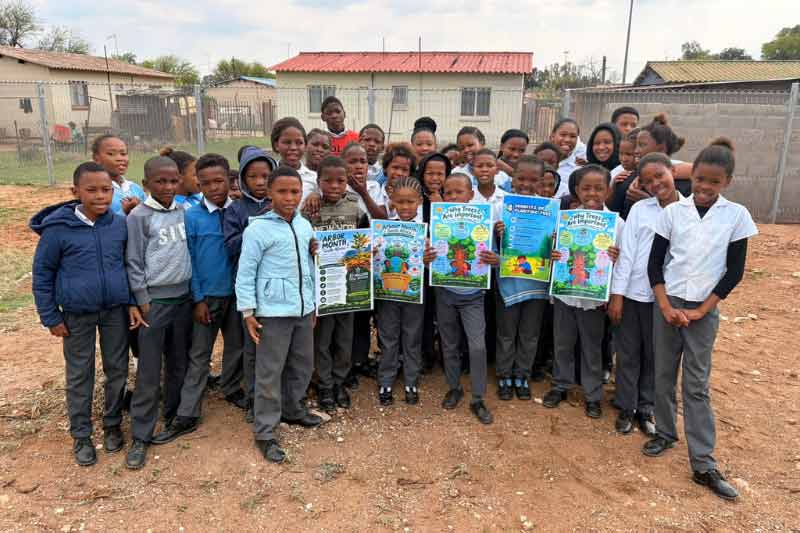
Pictured: Waterworks Primary School EcoClub learners holding their environmental posters.
Environmental education becomes most meaningful when learners can see, touch and experience the difference their actions can make.
This came to life through two recent WESSA Eco-Schools club activities at Waterworks Primary School and Beacon Primary School, where learners explored the importance of trees, responsible waste management and caring for their school environments through a combination of learning and hands-on activities.
From planting indigenous trees and learning how seeds germinate to picking up litter and sorting waste, the activities demonstrated how small actions can help build a stronger culture of environmental stewardship.
At Waterworks Primary, the lesson began with a tree and grew from there
WESSA joined Waterworks Primary School for an Arbour Day celebration focused on the importance of trees and environmental stewardship.
The learners actively participated in discussions about Arbour Week and confidently shared five reasons why trees are important. The Department of Environment, Forestry and Fisheries donated trees for planting, with the school also participating in the department’s 10 million Trees Programme, which aims to plant 10 million trees this year.
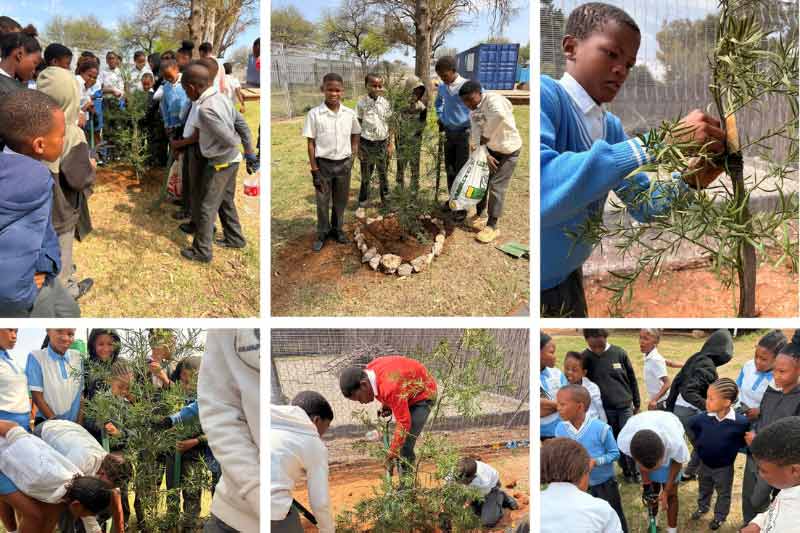
Pictured above: Waterworks Primary School EcoClub learners learning about the importance of trees.
But the learning did not stop with the presentation.
The learners proudly showed how their school’s developing food garden was being prepared for upcoming planting. They enthusiastically explained how the area had been cleaned and prepared, demonstrating that environmental stewardship can begin with caring for the spaces learners use every day.
Then it was time to put their learning into practice.
Getting their hands dirty and learning how a tree takes root
The learners worked together to select a suitable location for the trees and prepare the ground. Taking turns, they dug the planting holes, removed soil, added compost and carefully planted the saplings. They also created a tree berm around the base of each tree to support water retention.
The second tree provided an unexpected lesson in problem-solving. After planting, one learner noticed that the sapling was leaning rather than remaining upright. Instead of simply leaving it, the learner found a long stick and used leftover plastic to secure the tree and help it grow upright.
It was a small moment, but an important one: environmental learning is not only about knowing what to do but also about noticing, responding and taking responsibility.
From a seed in cotton wool to a lesson about growth
Before the tree-planting activity concluded, the learners took part in a seed-germination activity.
Using cotton wool and water, they learned how seeds can germinate and begin the process of growing into plants.
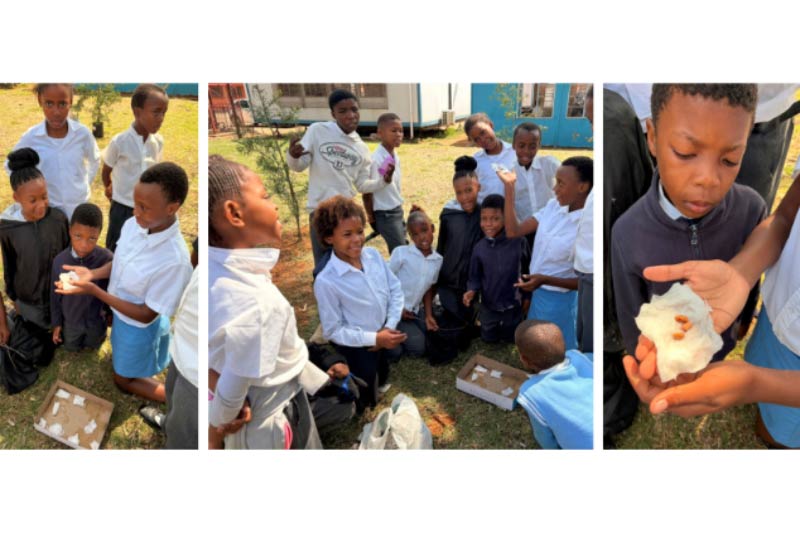 Pictured: Waterworks Primary School EcoClub learners participating in a seed-germination activity.
The combination of environmental education and practical activities kept learners engaged throughout the day, creating an opportunity to connect what they learn with what they can do.
At Beacon Primary, environmental action took many forms
On 21 September 2026, WESSA joined Beacon Primary School to celebrate National Recycling Day as part of Clean-Up and Recycle SA Week.
The focus was on responsible waste management, the importance of keeping the environment clean and the role recycling can play in supporting a circular economy.
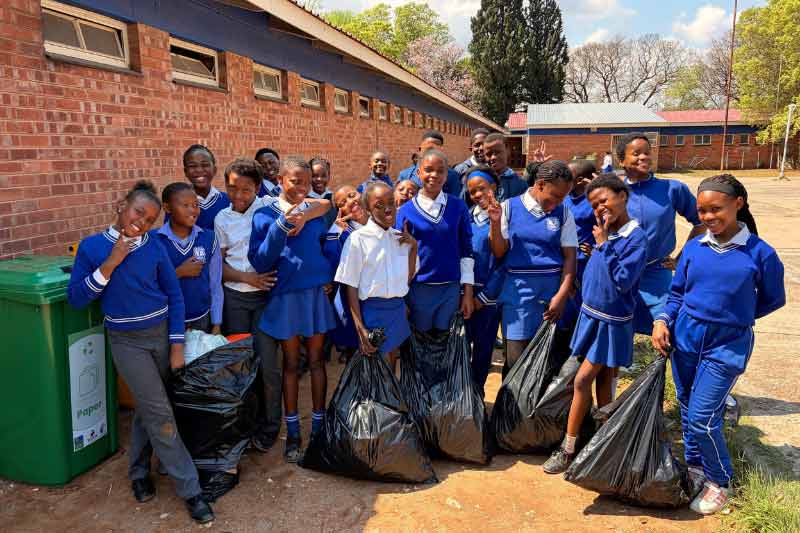
Pictured above: EcoClub learners from Beacon Primary School taking part in the National Recycling Day activities.
But the day was about more than recycling alone.
In recognition of Arbour Month, teacher coordinator Ms Stevens also introduced learners to the importance of trees and their role in the environment.
Although some learners were initially unsure about the significance of Arbour Month, they soon became engaged in the discussion and confidently shared what they knew about the benefits of trees.
The conversation then moved from understanding to action.
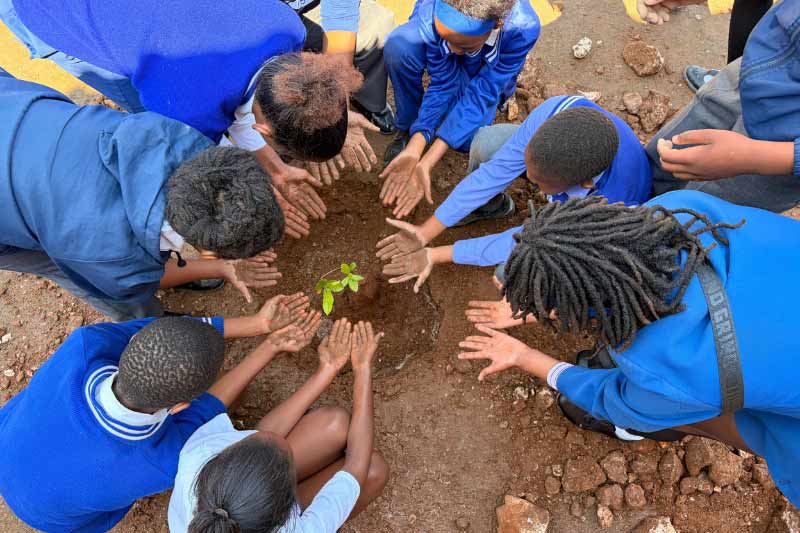
Pictured above: Beacon Primary School EcoClub learners getting their hands dirty while planting indigenous trees.
Following the presentations, learners worked together on a hands-on tree-planting activity.
They began by preparing the soil and removing loose stones. The saplings were then used to measure the planting holes, helping learners understand why a hole needs to be the right depth – not too deep and not too shallow – to support the tree’s growth.
Once the hole was ready, the sapling was carefully placed.
Learners worked together to keep it upright while their classmates filled the hole with soil and packed it firmly, helping the tree remain upright while allowing water to penetrate the ground. A tree berm was also constructed to support water retention.
The learners were eager to participate and, quite literally, got their hands dirty in the process.
Importantly, the trees planted at Beacon Primary School were indigenous trees donated by the Department of Environment, Forestry and Fisheries.
Ending with action: pick it up, sort it and make a difference
The environmental learning continued beyond the planting activity.
The celebration concluded with a school-wide litter pick-up and waste-sorting activity, giving learners an opportunity to put responsible waste management into practice.
Working together, learners collected litter around the school and then participated in sorting activities, reinforcing the importance of understanding where waste belongs and how responsible waste management can contribute to a cleaner environment.
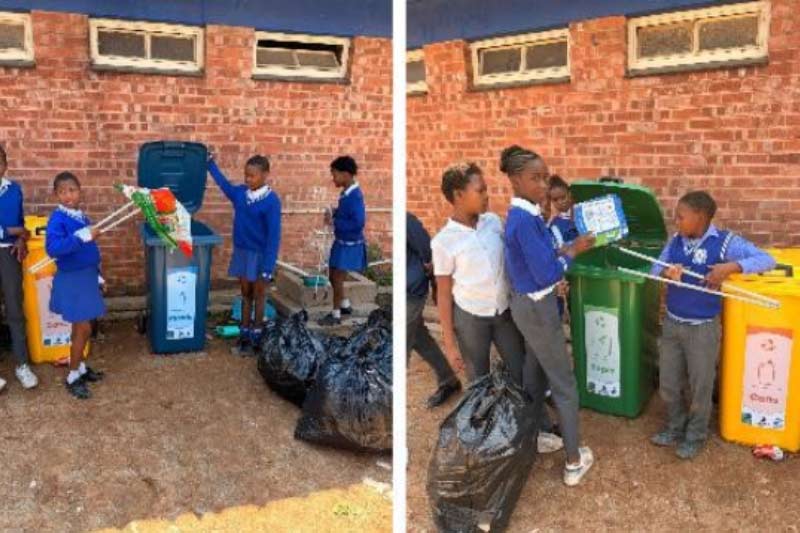
Pictured above: Learners from Beacon Primary School taking part in waste-sorting activities.
Building environmental responsibility through experience
The activities at Waterworks Primary School and Beacon Primary School highlight the value of environmental education that moves beyond awareness and into action.
Whether learners are planting a tree, helping a sapling grow upright, germinating a seed, picking up litter or sorting waste, these practical experiences create opportunities to understand environmental responsibility in tangible ways.
For WESSA EcoClubs, these moments are part of building environmental knowledge, confidence and a sense of stewardship – one learner, one school and one action at a time.
Because when young people are given the opportunity to learn by doing, environmental stewardship can take root and grow.