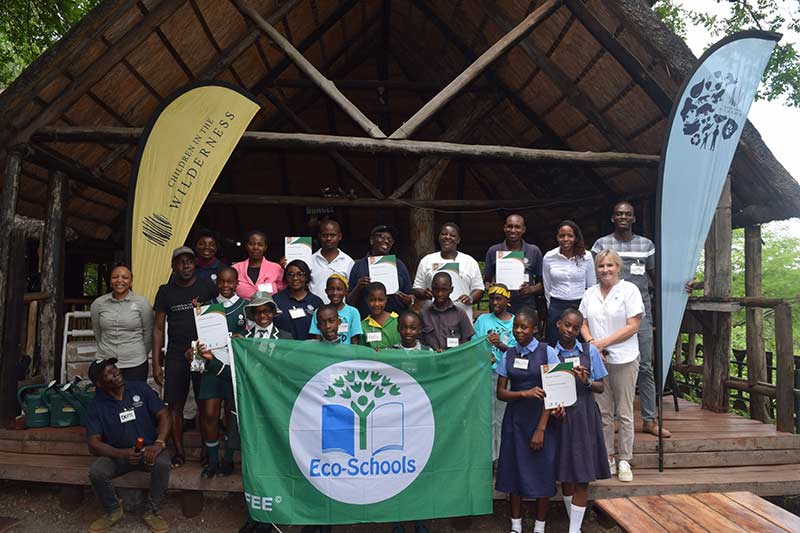
On 28 November 2025, WESSA Eco-Schools in partnership with Children in the Wilderness (CITW) proudly hosted the 2025 Eco-Schools Awards Ceremony at Bridge Café, located on the Victoria Falls Bridge along the Zambezi River and connects Zimbabwe and Zambia. The Awards recognised six exceptional Southern African schools that achieved their Bronze Award for their commitment to environmental education and sustainability.
Each of the six Eco Clubs showcased their year-long projects and the positive changes they are driving within their communities.
Strengthening food security through health & wellbeing
All six schools successfully implemented the Health & Wellbeing theme, focusing on strengthening food security through sustainable food gardening. Their work highlights how environmental education can directly improve nutrition, resilience, and community wellbeing.
To further support their learning, each school received a hydroponic system, enabling them to expand food production while integrating innovation, science, and practical environmental learning into the curriculum.
Awarded schools
- Zambia: Lupani Primary School and Twabuka Primary School
- Zimbabwe: Mizpah Primary School, Chamabondo Primary School, Ngamo Primary School and Ziga Primary School
A regional partnership strengthening environmental education
This celebration also reflects the growing impact of WESSA’s Eco-Schools programme across Southern Africa. In Zimbabwe, the programme strengthened significantly following a three-day WESSA-led training with the CITW team, conducted by Nomfundo Ndlovu, WESSA Senior Manager, Schools & Youth Programmes. During this engagement, she also visited multiple schools across the country to understand their unique challenges and opportunities.
Ndlovu shared her insights, “These six schools have shown what is possible when environmental learning becomes hands-on, purposeful, and rooted in the realities of their communities. Their commitment to the Health & Wellbeing theme, from food gardens to hydroponic systems, demonstrates how young people can lead transformative change when they are empowered with the right tools and guidance. We are incredibly proud of the teachers, learners, and CITW mentors who have embraced Eco-Schools with such passion and determination. Their successes are not just school achievements; they are seeds of hope for a more resilient and sustainable Southern Africa.”
“The integration of the FEE programme through WESSA has significantly strengthened our existing initiatives, enabling CITW to more effectively educate Africa’s children on the importance of environmental stewardship and caring for our planet,” adds Susan Goatley, the CITW programme coordinator.
Celebrating a shared mission for sustainability
The partnership between WESSA and Children in the Wilderness is helping cultivate a new generation of young environmental leaders in Zambia and Zimbabwe. By nurturing environmental awareness, strengthening food security, and encouraging innovation, these schools are laying the foundation for healthier, more sustainable communities.
About Children in the Wilderness
Children in the Wilderness is the non-profit trust of Wilderness, established to support rural communities living alongside protected areas in Africa. The programme focuses on educating and empowering children through long-term environmental education, life skills development, and access to learning opportunities. By investing in education and community development, Children in the Wilderness helps reduce pressure on wildlife and natural resources while nurturing the next generation of conservation leaders. The programme reflects Wilderness’ belief that conservation and community well-being must go hand in hand. To learn more visit https://www.childreninthewilderness.com/