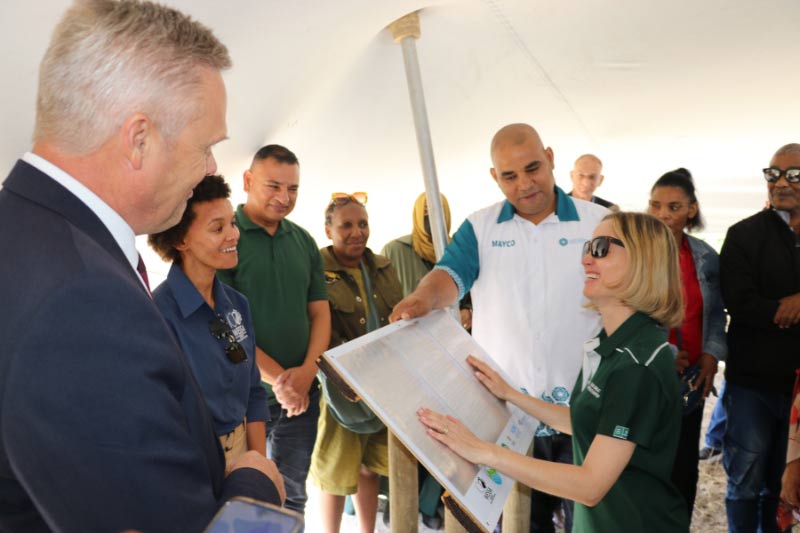
Pictured above: Speakers and guest surround Hanlie Stehli, Nedbank’s Wellness Administrator – Business and Commercial Banking
This pilot initiative is sponsored by Nedbank, and implemented in collaboration with Blind SA, the National Council of & for Persons with Disabilities (NCPD), and City of Cape Town, with support from the Ford Wildlife Foundation.
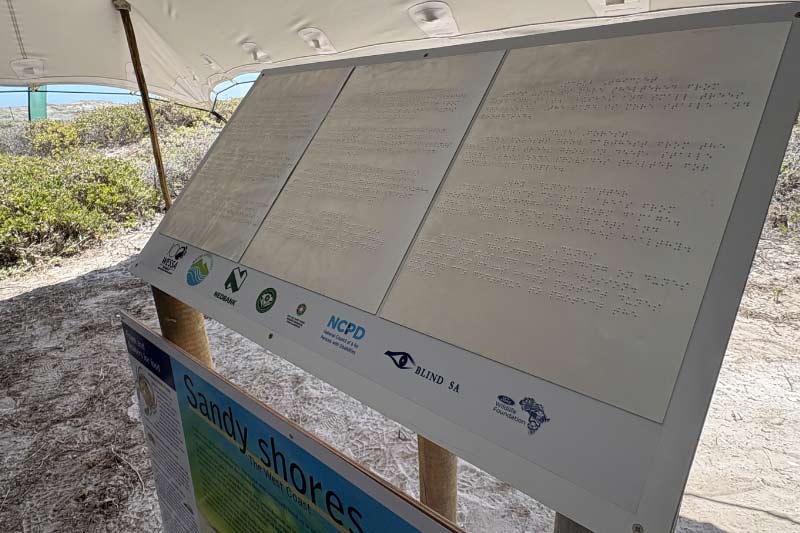
On 11 February 2026, WESSA (The Wildlife and Environment Society of South Africa) unveiled South Africa’s first Braille coastal environmental education signage at Blaauwberg Nature Reserve’s Eerste Steen, marking a significant step towards creating more inclusive coastal experiences for all. Blaauwberg Nature Reserve was selected as the launch site as it is the first WESSA Green Coast site in South Africa, making it a strategic location to pilot the initiative ahead of planned expansion to additional Green Coast and, in time, Blue Flag sites along the coastline.
“It is not just about signage. It is about access. It is about dignity. And it is about who gets to experience South Africa’s magnificent natural heritage – and how,” says Cindy-Lee Cloete, CEO of WESSA. “This is a national first, and an important one. Our beaches and nature reserves may be public spaces, but for blind and partially sighted people, meaningful engagement with these environments has largely remained out of reach. For WESSA, this project says: that gap is not acceptable. For a century, WESSA has worked to enable people to care for the earth. The next century asks something more of us. It asks that we ensure everyone can experience it.”
In his keynote address, the Minister of Forestry, Fisheries and the Environment, Willie Aucamp, reminded guests that, “We are gathered here, not simply to unveil a set of signboards, but to mark a significant step forward in how we share South Africa’s natural heritage with all her people. This revitalisation is about more than just fresh paint or new timber – it is about inclusivity. We are moving from a philosophy of ‘look and read’ to one of ‘touch, listen, feel and experience.”
This pilot initiative, sponsored by Nedbank, is delivered through WESSA’s Green Coast programme and designed to enable blind and partially sighted visitors to engage independently and meaningfully with coastal ecosystems. Nedbank has a long-standing partnership with WESSA and supports a range of conservation, education and inclusion-focused initiatives nationwide. Pedro Rhode, Executive: CBC Business Unit at Nedbank shares that, “Our purpose is to use our financial expertise to do good. Critically, we know that a truly green economy cannot exist without inclusion. That’s why we are proud to be the funding partner for this initiative. These Braille signs are not just informational tools, it represents dignity, belonging and equal access. This initiative demonstrates what can be achieved when government, civil society and the private sector work together to ensure our natural heritage belongs equally to every citizen.”
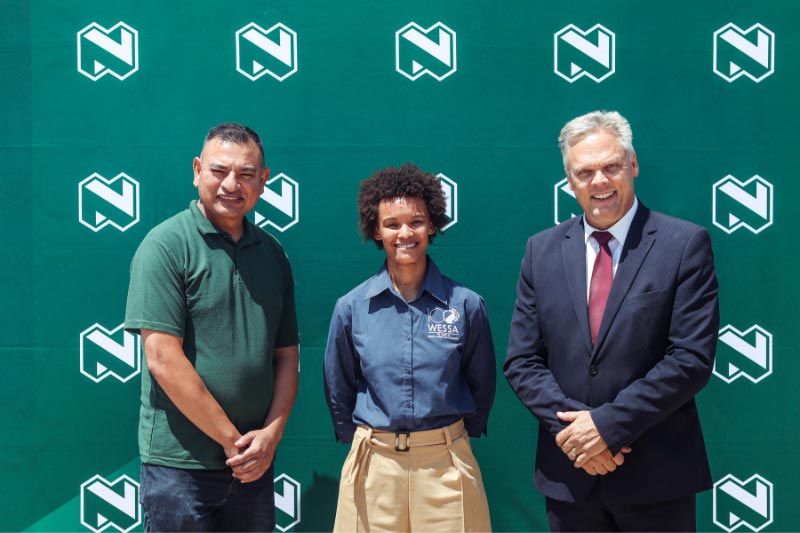
Pictured above: Pedro Rhode, Executive: CBC Business Unit at Nedbank; Cindy-Lee Cloete – WESSA CEO and Willie Aucamp, Minister of Forestry, Fisheries and the Environment
While South Africa’s beaches and nature reserves are public spaces, environmental interpretation has historically remained inaccessible to people with visual impairments. This initiative directly addresses that gap through Braille-specific design, descriptive clarity and outdoor durability, with the signage co-developed alongside accessibility partners Blind SA and NCPD, to ensure authenticity and technical accuracy. These organisations played a critical role in shaping the project, contributing lived-experience insight and technical guidance to ensure the signage is genuinely usable and meaningful.
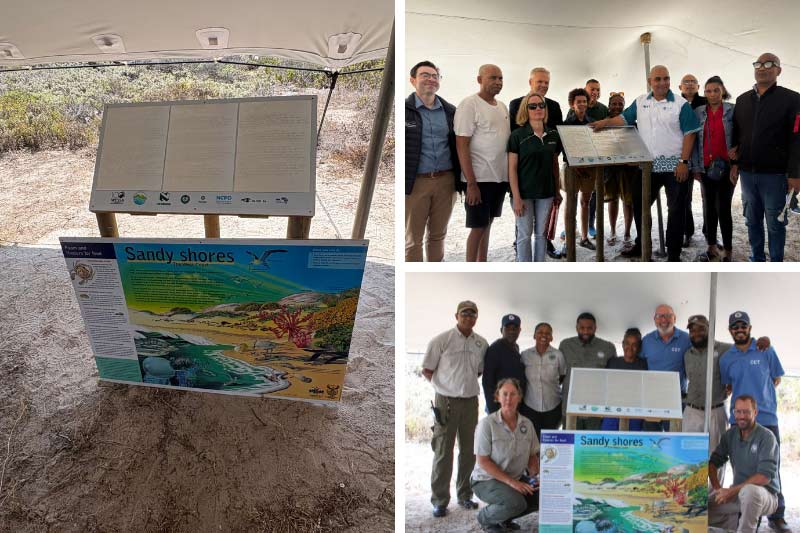
Pictured above: (left) Braille Signage; (top right) Ryan Peters (DFFE), Abrhamam Allies (BlindSA), Hanli Stehli (Nedbank), Minister Aucamp, WESSA CEO Cindy-Lee Cloete, Pedro Rhode (Nedbank), Alderman Eddie Andrews (CoCT Deputy Mayor), Guests and representatives Blind SA; (bottom right) CoCT and Blaauwberg Nature Reserve teams with signage
“In integrated coastal management, we often speak of the ‘public trust doctrine’, the principle that coastal resources are held in trust for all people, present and future. Today, we are honouring that doctrine in a new way. We are recognising that ‘all people’ must truly mean all people – regardless of ability, regardless of how we move through the world, regardless of how we perceive it,” adds Ryan Peter, Director of Coastal Development, Department of Forestry, Fisheries and the Environment.
Abraham Allies from Blind SA spoke about what today means for visually impaired persons, “For a visually impaired visitor, this means arriving at a coastal site and not having to rely entirely on another person to explain what the visual element is all about. It means being able to read with your own hands about the environment, the wildlife, the history and the significance of this place. It means being acknowledged as a person who belongs here. Looking ahead, we are excited about the possibilities for future collaboration. This launch should not be the end, but the beginning.”
Rather than a once-off intervention, the Braille coastal signage project forms part of a longer-term accessibility pathway within WESSA’s Coastal Programme, which integrates environmental protection, education and social inclusion.
Deputy Mayor, City of Cape Town, Alderman Eddie Andrews, adds that, “Inclusivity cannot remain a well‑intended concept that lives comfortably in our strategies, policies, and speeches. Protection without access is incomplete, and sustainability without dignity is insufficient. Our coastline is a shared asset that carries ecological value, cultural memory, and public meaning, but it can only truly belong to all of us when access is intentional, inclusive, and human‑centered. By bringing Braille signage to our coastal spaces, we’re proving that thoughtful design is one of the most powerful tools we have to restore dignity, independence, and a real sense of belonging for every person who comes to the shore,”
The goal is to establish a scalable model for inclusive environmental education infrastructure across South Africa’s coastline, reflecting WESSA’s commitment in its 100th year, to ensure South Africa’s natural heritage belongs equally to every citizen.