From water and waste to biodiversity and community action, Free State schools demonstrate the power of education to drive real environmental impact
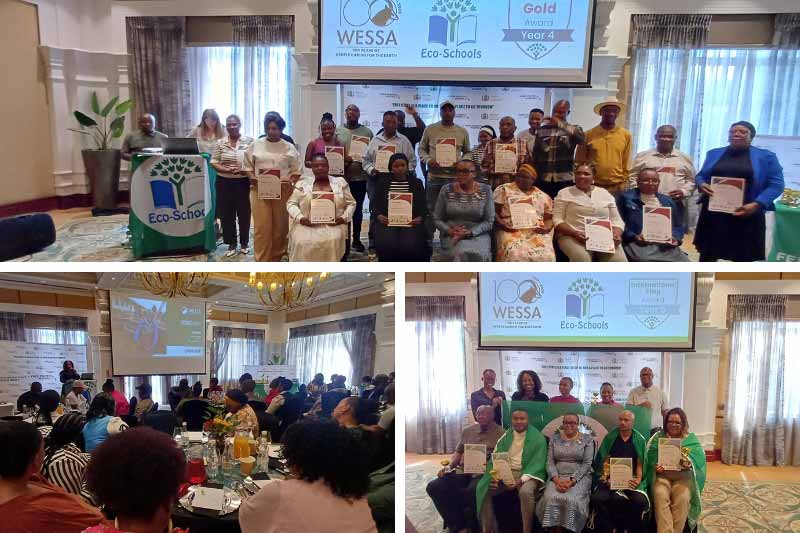
Pictured above: Recipients of the Gold and International Flag awards; speaker Mrs. Ralepedi from Department of Basic Education giving word of support to the Eco-Schools programme
Bloemfontein, South Africa – 25 March 2026: WESSA (Wildlife and Environment Society of South Africa) has recognised s for their measurable environmental action and sustainability leadership at the 2025 Eco-Schools Awards, held on 12 March 2026 at Windmill Casino in Bloemfontein.
Part of the world’s largest education for sustainable development programme, Eco-Schools equips learners and educators to move beyond awareness and into meaningful, school-wide environmental action. In the Free State, these awards reflect not only participation in the programme, but tangible impact across communities and ecosystems.
The ceremony brought together key stakeholders including the Department of Education, the Department of Water and Sanitation, and the Department of Economic, Small Business Development, Tourism and Environmental Affairs (DESTEA), alongside educators and eco-committee representatives from schools across the province.
DESTEA and WESSA share a long-standing partnership of over 10 years, through which environmental education has been successfully delivered to more than 100 Eco-Schools across the Free State Province. This collaboration demonstrates the how sustained partnerships can advance education for sustainable development.
From learning to action across key environmental themes
Throughout 2025, participating schools implemented practical environmental projects across core Eco-Schools themes including health and wellbeing, water, waste, nature and biodiversity, and community and heritage. These projects enabled schools to progress through the programme’s award levels, demonstrating a clear commitment to sustainability in action.
From improving waste management practices to protecting biodiversity and strengthening community engagement, learners and educators continue to show that environmental education is most powerful when it leads to real-world change.
Recognising long-term commitment and excellence
The awards ceremony celebrated achievements across multiple levels, from Bronze through to the prestigious International Green Flag, with several schools also recognised for long-term commitment to the programme – including Batjha Primary School from Botshabelo in Mangaung Metro and Nthuthuzelo Primary School from Bultfontein Lejweleputswa District, each receiving the Diamond Award for participating for 10 years in the programme.
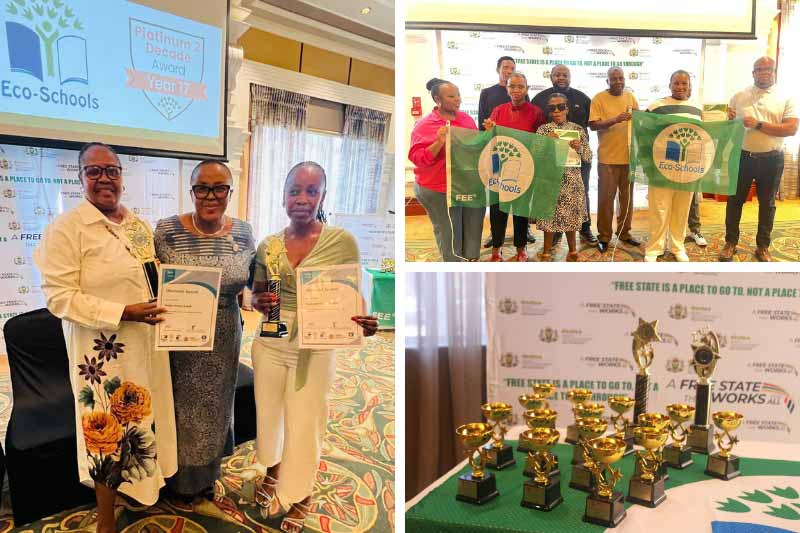
Pictured above: Diamond Award and Eco Flag recipients. Image source: DESTEA
These milestones reflect sustained environmental leadership and the embedding of sustainability into school culture over time.
In her closing remarks, Ms Nozi Nkoe, Chief Director for Environmental Management at DESTEA, acknowledged the collective effort behind the programme, highlighting the critical role of educators in driving environmental action within schools and communities.
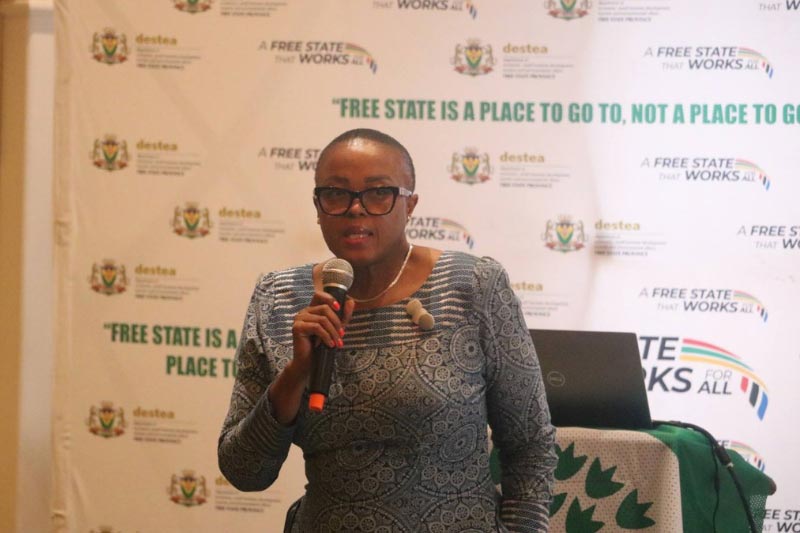
Pictured above: Ms Nozi Nkoe, Chief Director for Environmental Management at DESTEA. Image source: DESTEA
Strengthening partnerships for impact
When government departments join hands with WESSA as an implementation partner, it strengthens coordination, optimises resources, and enhances impact at grassroots level, enabling schools and communities to benefit from integrated support. This ensures that environmental education is not only taught but actively practiced, fostering responsible citizenship and sustainable livelihoods.
As the Eco-Schools Programme continues to grow, it remains a powerful platform for equipping young people with the knowledge, skills and agency to respond to environmental challenges – and to lead change within their communities.