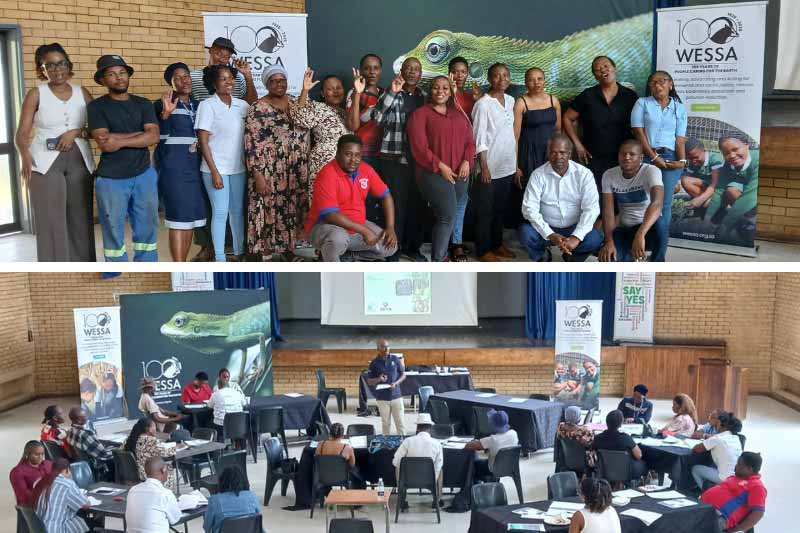
Pictured above: group photo; Below: Presentation on the circular economy by the WESSA project coordinator
On 27 January 2026, educators from Glencore-funded and independently registered schools gathered at Ogies Combined School in Mpumalanga for a dedicated teachers’ workshop under the Glencore Circular Economy Project.
The workshop marked an important moment of reflection and renewal, creating space to look back at 2025 project activities, assess progress on the ground, and identify practical ways to strengthen and grow school-based circular economy initiatives in the year ahead.
Building on what works
A core focus of the session was supporting schools to consolidate what they have already achieved. Educators reflected on recycling and waste-management activities implemented during 2025, sharing what has worked well in their school environments and where additional support is needed.
These conversations helped surface common challenges and opportunities, ensuring that the project remains responsive to the realities faced by teachers and learners in the classroom and schoolyard.
Expanding the circular economy conversation
Looking ahead, the workshop introduced opportunities to expand circular economy activities beyond recycling, with a new emphasis on upcycling.
By exploring ways to transform waste materials into usable or artistic products, the project aims to:
- deepen learners’ understanding of resource value
- encourage creativity and problem-solving
- expose learners to the idea that waste can be a resource, not just something to be discarded
This approach opens up space for learners to express artistic skills while reinforcing key sustainability principles in a hands-on, accessible way.
Strengthening local partnerships
The workshop also created a platform for two local buy-back centres to present their services and explain how they collaborate with schools. Their participation strengthened links between schools and local recycling economies, highlighting how partnerships can support consistent waste diversion and reinforce real-world learning.
In total, 30 educators from schools in the eMalahleni area took part, representing both funded schools and independently registered schools engaged in the project.
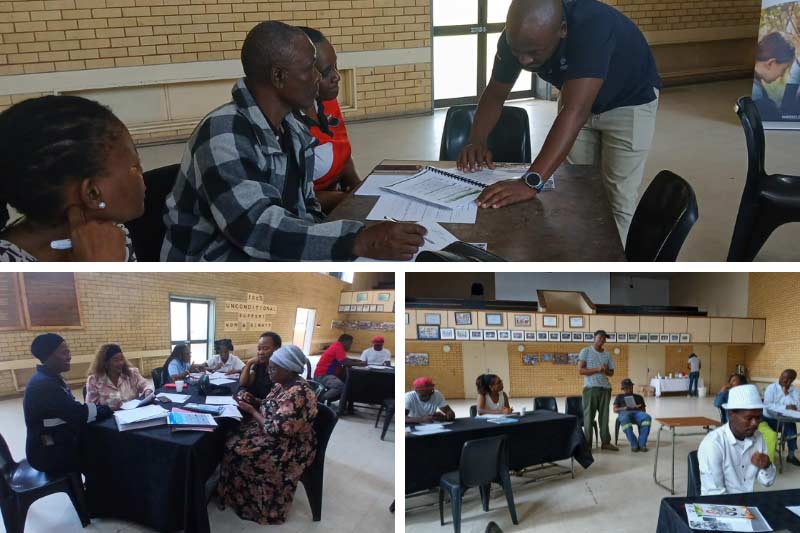
Pictured above: Group engagement sessions
Supporting accountability and progress
In addition to reflection and planning, the workshop played a practical role in ensuring project momentum. Time was set aside to:
- complete outstanding registration documentation
- support schools in compiling evidence required for assessment
- address questions and gaps affecting progress against project activities
This structured support helps ensure that schools are well positioned to meet project requirements while continuing to build meaningful, learner-led environmental action.
Turning environmental education into everyday practice
By bringing educators together at the start of the year, the Glencore Circular Economy Project reinforced the role of teachers as drivers of sustained change within their schools and communities. The workshop not only strengthened existing initiatives but also laid the groundwork for deeper engagement with circular economy principles in 2026.
As schools continue to build on their achievements, the focus remains on practical action, collaboration and creativity, turning environmental education into everyday practice.