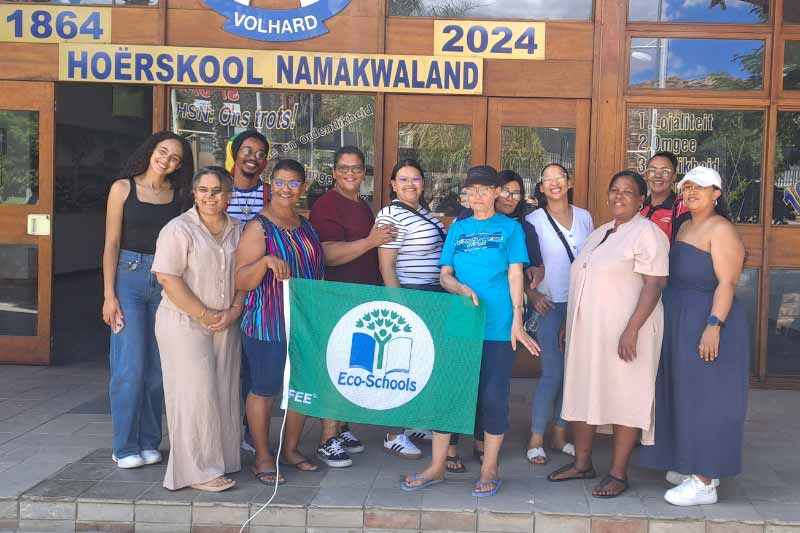
Pictured: Teachers representing 10 schools attending the eWASA & WESSA Waste Management and Education Project at Hoërskool Namakwaland
On 21 February 2026, educators from across the Northern Cape gathered in Springbok for the first eWASA and WESSA SA Schools Waste Management and Education Project workshop, hosted at Hoërskool Namakwaland.
The session brought together 24 teachers from 10 schools across Springbok and surrounding communities, marking an important step in equipping schools to address waste management challenges through environmental education and practical action.
The workshop forms part of a broader collaboration between WESSA and eWASA, aimed at strengthening environmental education while supporting schools to implement structured waste management initiatives aligned with the Eco-Schools Programme.
Building capacity through the Eco-Schools framework
A key focus of the workshop was to introduce educators to the Eco-Schools Programme and WESSA’s Seven Step Framework, a practical process designed to help schools move from environmental awareness to measurable action.
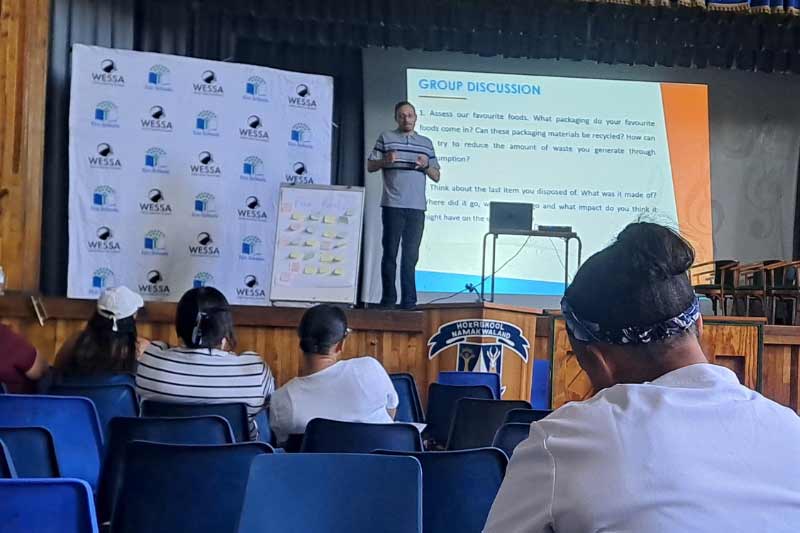
Pictured: Faciliated by Daniel Jackson, WESSA Project Manager in the Schools & Youth Unit
Through guided discussions and collaborative planning sessions, teachers explored how the framework can be applied within their own schools to support sustainability projects, strengthen environmental leadership among learners, and integrate environmental action into school activities throughout the year.
The workshop also introduced the objectives and implementation approach of the eWASA & WESSA SA Schools Waste Management and Education Project, ensuring participating educators understand how the initiative will unfold within their school communities.
Collaboration with provincial partners
The workshop was supported by representatives from the Northern Cape Department of Agriculture, Environmental Affairs, Rural Development and Land Reform, who participated in the session and assisted schools in developing their Eco-Schools action plans.
Their involvement helped ensure that schools are aligned with broader environmental priorities in the province while strengthening partnerships between education, government and environmental organisations.
Participating schools
The workshop brought together educators representing the following schools:
- Namaqualand High School
- Sacred Heart RC Primary School
- Ferdinand Brecher Primary
- Dr Izak van Niekerk Primary
- Okiep High School
- Concordia Primary School
- St Cyprians Primary
- Springbok Primary School
- Steinkopf High School
- Okiep Primary School
By participating in the project, these schools are committing to embedding environmental action within their school programmes and empowering learners to become active contributors to sustainable waste management solutions.
From planning to action
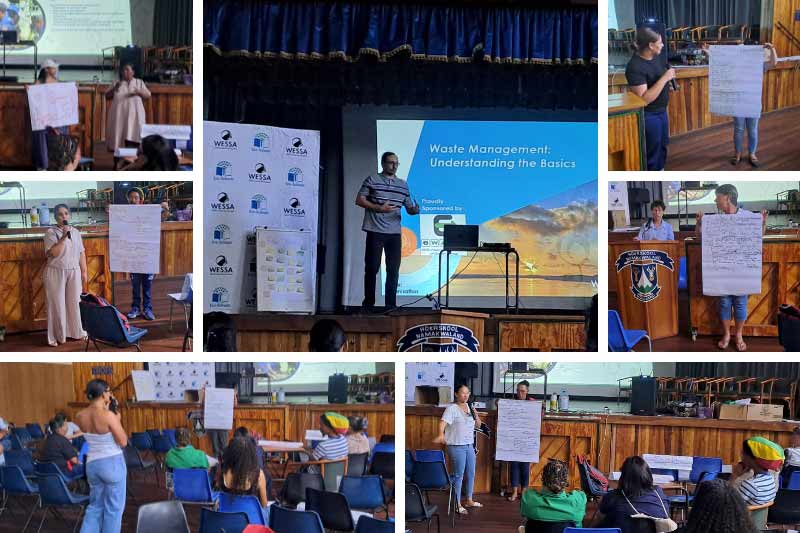
Pictured: Teachers presenting their Eco-Schools action plans
By the end of the workshop, educators had developed practical annual action plans aligned to key dates and project activities. These plans outline clear tasks, roles and responsibilities for implementing waste management initiatives within each school.
Teachers also gained a stronger understanding of how to implement, monitor and document environmental activities as part of their Eco-Schools journey, ensuring that progress can be tracked and shared across participating schools.
Just as importantly, the session created space for peer learning and collaboration, enabling educators from different schools to exchange ideas, experiences and practical approaches to environmental education.
Strengthening environmental leadership in schools
Workshops like this play a critical role in enabling educators to guide learners in addressing real environmental challenges. By focusing on practical implementation and collaboration, the eWASA and WESSA Schools Waste Management and Education Project is helping schools build the knowledge, structures and networks needed to turn environmental education into meaningful action.
As these schools begin implementing their plans throughout the year, the initiative will continue to support educators and learners in developing solutions that contribute to cleaner communities and a more sustainable future.