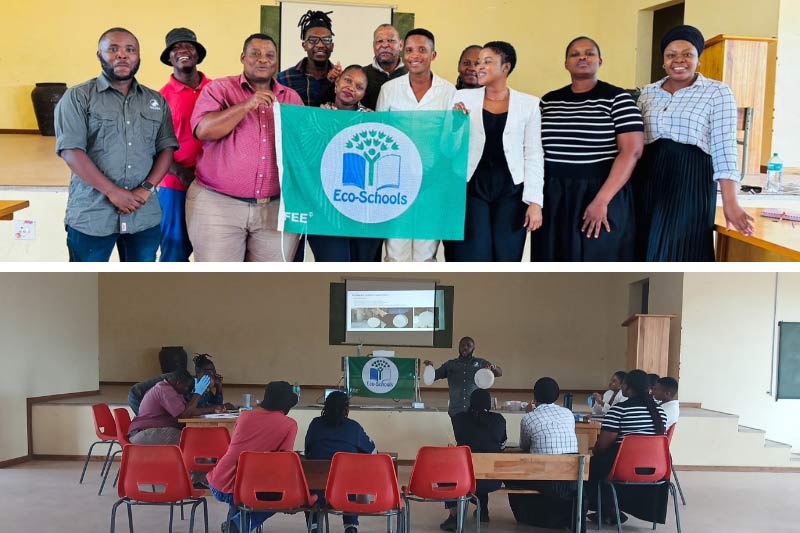
Pictured: Teachers and ground staff in attendance and that form part of the school Eco-Committee, committed to driving environmental awareness and action.
In February, WESSA took an important step in expanding environmental education around air quality through a two-day Clean Air Fund implementation visit to Ditheku Primary School in Lephalale, Marapong.
Held on 16–17 February, the sessions focused on building awareness of air pollution while equipping teachers and learners with practical knowledge and tools to understand how air quality affects their health, environment and everyday lives. More importantly, the visit laid the groundwork for long-term collaboration with participating schools, helping to embed clean air education into the broader school community.
By combining classroom learning with hands-on experimentation and real-world observation, the programme aimed to turn awareness into meaningful action.
Building knowledge through teacher development
The first day of the visit focused on teacher development, with 14 participants attending the workshop. The group included teachers from Grade R through to Grade 7, as well as members of the school’s ground staff who play an important role in maintaining the school environment.
During the session, the WESSA team introduced the Clean Air project and explored key topics including:
- The basics of air quality
- Sources of air pollution
- The health impacts of polluted air
- Practical mitigation strategies
The goal was to equip educators with the knowledge and confidence needed to integrate air quality education into everyday teaching and learning within the school.
To make the topic more relevant to the community, discussions focused on local air quality conditions and challenges experienced in the Marapong area. Participants also took part in a practical activity using an air pollution catcher experiment, allowing them to see how particulate matter can be collected and examined.
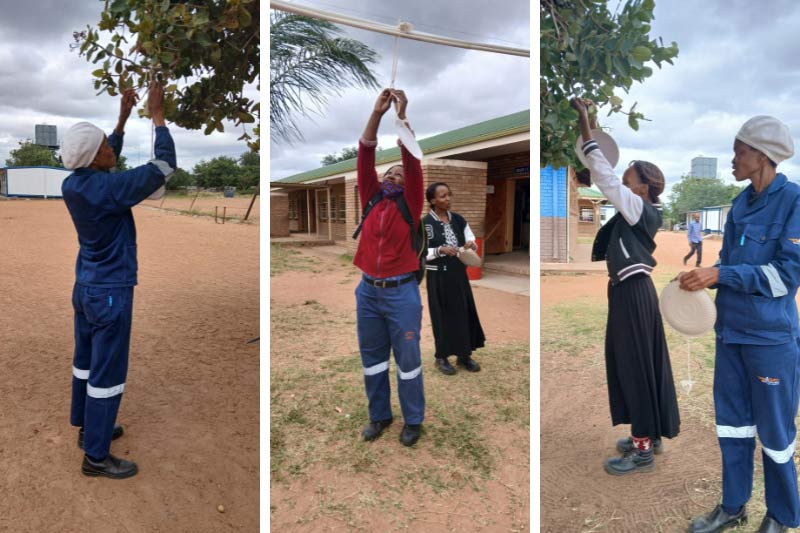
Pictured: Before the workshop commenced, the ground staff assisted with placing pollution catchers strategically around the school as part of the experiment.
Hands-on learning through experimentation
Following the setup of the air pollution catcher experiment, teachers participated in a practical session examining collected samples.
This activity allowed participants to observe and discuss particulate matter present in the air, helping them connect theoretical discussions with visible evidence from their own environment.
Through this exercise, teachers were able to reflect on what the findings might reveal about local air quality conditions and how these issues can be explored further with learners in the classroom.
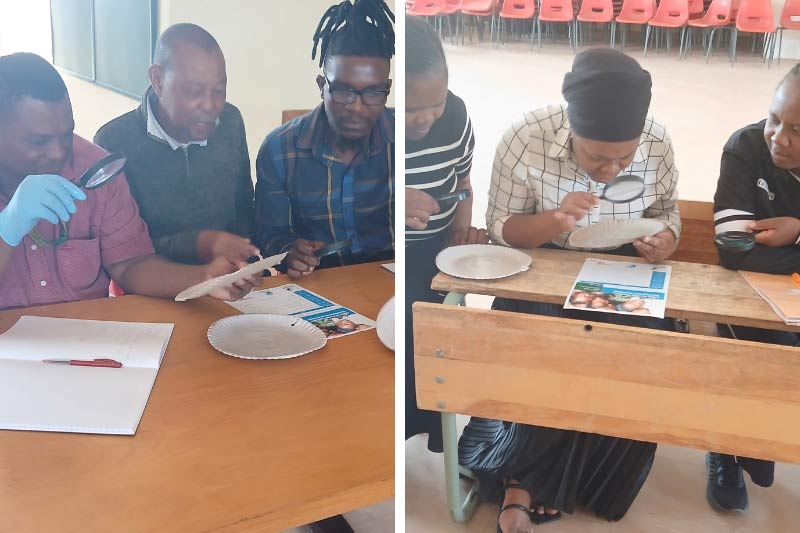
Pictured: Teachers actively participating in the air pollution catcher activity, closely examining the collected samples to identify any particulate matter present in the air and discussing what the findings reveal about local air quality
Engaging learners in understanding air pollution
On the second day, the focus shifted to learners, with 60 students from Grade 2 to Grade 7 taking part in an interactive education session.
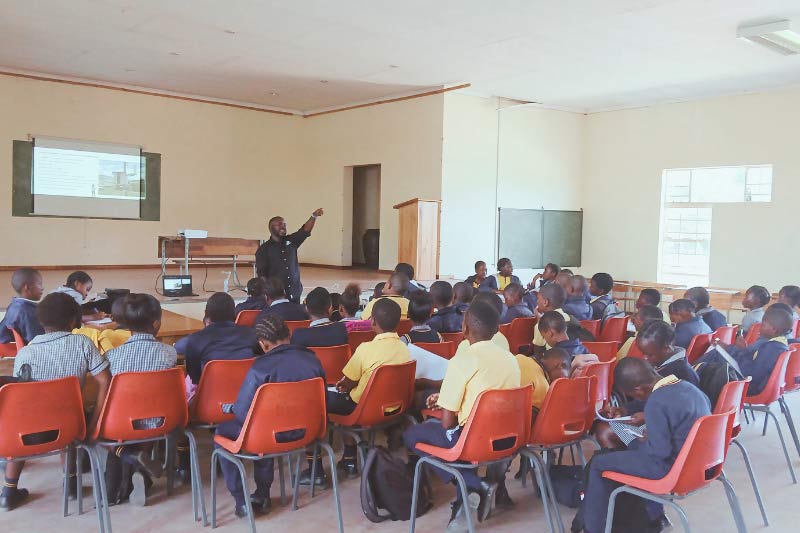
Pictured: WESSA facilitator engaging with learners during the education session.
The session began with a presentation introducing learners to:
- What air pollution is
- Common sources of pollution
- The health impacts of polluted air
- Possible solutions to reduce pollution
Rather than limiting the session to the classroom, the WESSA team encouraged learners to step outside and observe their surroundings more closely.
Connecting learning to local reality
To help learners understand how air pollution affects their community, the group visited an open field behind the school where open waste burning regularly takes place.
Standing in the environment where these practices occur created a powerful moment of connection between the lesson and the learners lived reality.
Together, the group discussed how open waste burning contributes to air pollution and why improving waste management practices is essential for protecting air quality and public health.
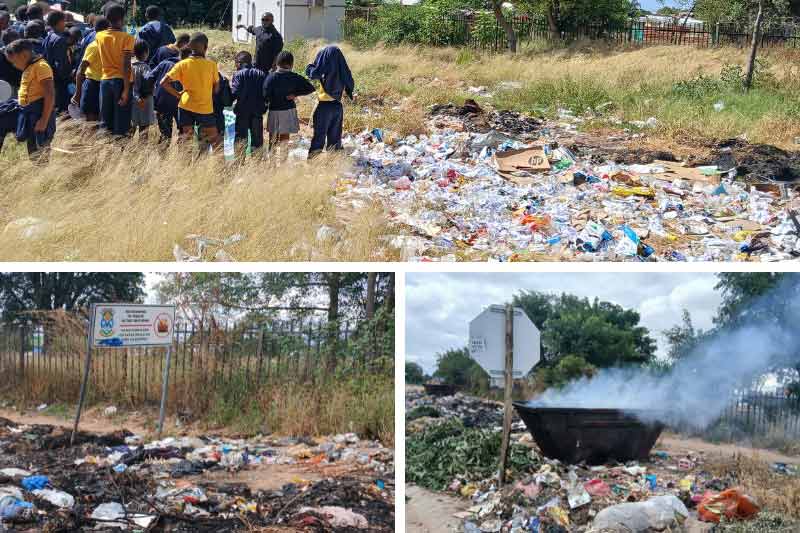
Pictured: Waste management practices in and around the school. Learners get to further understand the connection between waste burning and air pollution.
This discussion reinforced the message that everyday actions and community practices play a role in shaping air quality.
By linking classroom learning to real-world environmental challenges, learners gained a clearer understanding of their own role in protecting the air they breathe and supporting healthier communities.
Laying the foundation for long-term impact
The two-day implementation visit represents the beginning of a broader effort to support clean air awareness and environmental education within schools and communities.
By strengthening teacher capacity, engaging learners directly, and grounding discussions in local environmental realities, the programme is helping to build a generation that is better equipped to understand and address air quality challenges.
As the partnership with participating schools continues to grow, initiatives like these demonstrate how education can empower communities to take informed action for a healthier environment and a cleaner future.