Communities Unite to Tackle Open Waste Burning in South Africa’s Air Pollution Priority Areas

Communities Unite to Tackle Open Waste Burning in South Africa’s Air Pollution Priority Areas

Open waste burning is one of South Africa’s most overlooked environmental and public-health challenges. In many communities, especially low-income areas where waste removal services are inconsistent or unavailable, burning becomes a default method of getting rid of household waste. Yet this practice has devastating health, climate, and environmental consequences.

To address this urgent issue, the South African Waste Pickers Association (SAWPA), the Clean Air Fund (CAF), groundwork (gW), and WESSA have launched a collaborative community initiative focused on awareness, education, and data collection. The project is being rolled out across the Vaal Triangle, Highveld, and Watergate-Bojanala air quality priority areas.

Why open waste burning must be stopped

The scale of the problem is far bigger than many realise. According to the 2022 CSIR SA Pathways report:

  • 37% of households in South Africa do not receive weekly waste collection
  • As a result, 29% or 196 kilotons of household waste goes uncollected
  • This waste often ends up in illegal dumping sites or is burned in the open

These fires release toxic pollutants into the air, affecting the health of millions and contributing to respiratory diseases, poor air quality, and climate-changing emissions.

Waste pickers as champions for change

One of the strengths of the initiative is the central role played by waste pickers. Often undervalued despite the essential environmental services they provide, waste pickers will be trained, supported, and recognised as leaders in sustainable community waste management.

By strengthening recycling networks and raising community awareness, waste pickers will help reduce the dependence on open burning while improving their own livelihoods.

Schools and communities at the heart of the project

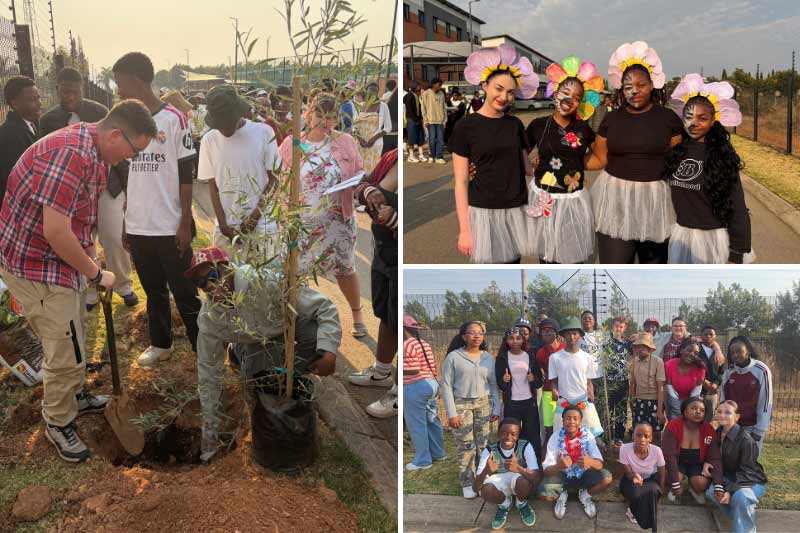
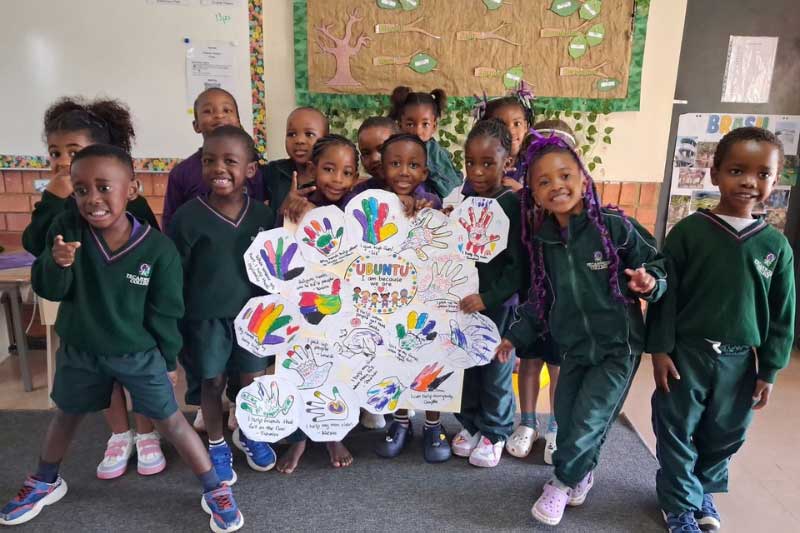
Education is a powerful tool, and this project puts it front and centre. Schools, households, and community groups will participate in awareness sessions, activities, and practical guidance on how to manage waste responsibly.

The initiative also supports Education for Sustainable Development, empowering learners to understand environmental challenges and take meaningful action.

WESSA CEO Cindy-Lee Cloete highlights the role of young leaders, “Our Eco Schools learners and teachers are powerful agents of change; together we can reverse the harmful cycle of open waste burning and create a more sustainable future for all.”

Gathering data to influence policy

In addition to raising awareness, the project will collect community-level data through door-to-door surveys. This research will help map the patterns, reasons, and impacts of open waste burning, information that is critically needed for shaping effective policy interventions.

By combining real-life data with community-driven insights, the initiative aims to strengthen the national response to waste mismanagement and air pollution.

What the initiative will achieve over two years

The project aims to:

  • Build widespread awareness about the health and climate impacts of open burning
  • Reduce burning incidents through improved waste practices and increased recycling
  • Support waste pickers and residents as active partners in air quality and waste management initiatives
  • Provide evidence to inform policy and practical, effective interventions
  • Help build healthier communities with cleaner air and more sustainable waste management

A pathway to cleaner, healthier communities

This initiative is more than an awareness campaign, it is a step toward building a more just, sustainable, and community-driven approach to waste management. By empowering residents and recognising waste pickers as environmental leaders, the project hopes to shift behaviours, influence policy, and ultimately reduce open waste burning across South Africa.

Activate Your Conservation Career with Waynz World & WESSA

Activate Your Conservation Career with Waynz World & WESSA

Hands-on Wildlife, Conservation & Eco-Tourism Learning Experiences

WESSA, in partnership with Waynz World of Edu-Eco Learning-by-Design, is proud to offer an immersive conservation career activation programme designed to equip aspiring environmental professionals with real-world field experience.

Led by renowned Edupreneur and FGASA Professional Trails Guide, Wayne Johnson, this programme blends adventure, applied science, and career-focused development to support the next generation of conservation leaders.

A transformational learning journey

This experiential programme is designed for curious minds, students in natural sciences, and anyone passionate about understanding Africa’s ecosystems. Through hands-on, field-based activities, participants will gain practical skills and direct exposure to both terrestrial and marine environments.

The programme offers:

  • Practical, field-based training across Africa’s diverse ecosystems
  • A blend of adventure, citizen science, and real research
  • Career-oriented awareness and development opportunities

Whether you’re pursuing a career in environmental sciences or simply seeking meaningful insight into conservation, this programme offers an invaluable stepping stone.

Who should join? This programme is ideal for:

  • Students studying biological, ecological, or environmental sciences
  • Nature enthusiasts seeking in-depth understanding and practical experience
  • Future conservationists exploring career pathways across wildlife, ecology, education, and eco-tourism

Participants will leave equipped with new skills, real field experience, and a deeper understanding of the natural world, enabling them to take the next step in their conservation journey.

Programme details:

Marine Experience

  • Venue: WESSA’s Twinstreams Centre
  • Dates: 05 to 16 January 2026

Dive into marine ecology, coastal conservation, and citizen science projects that bring ocean learning to life.

Cost: R12,500 per person

Includes accommodation, meals, full programme access, all training content, and personalised career activation support.

Book today!

Spaces are limited to ensure an immersive and high-quality learning experience.

Contact Kristi Garland, WESSA Education Centres Manager –   kristi.garland@wessa.co.za, or reach out to Programme Lead, Wayne Johnson –  info@waynzworld.com

World Volunteer Day, 5 December 2025: Message from WESSA CEO

World Volunteer Day, 5 December 2025: Message from WESSA CEO

This World Volunteer Day, WESSA CEO Cindy-Lee Cloete shares a heartfelt message honouring the incredible individuals who give their time, passion, and energy to protect the environment we all share.

Our volunteers are the lifeblood of WESSA.
They educate.
They advocate.
They act.
And they inspire all of us to do better.

This video launches our new movement: #WeAreAllWESSA, a call to every South African to take action, no matter how small. Volunteer at your local branch, join an event, support a programme, or simply show up for your environment.
Together we educate, we advocate, and we act — because we are all WESSA.

Join the movement:
• Become a WESSA volunteer
• Connect with your local branch
• Follow us on social media
• Share this video to inspire others

WESSA Welcomes Hendrik Isaks to the Wildlife Protection Unit

WESSA Welcomes Hendrik Isaks to the Wildlife Protection Unit

WESSA is thrilled to welcome Hendrik Isaks to the team as a Wildlife Protection Unit Ranger at uMngeni Valley Nature Reserve, where he joins forces with fellow ranger Bongani Chisale to protect one of KwaZulu-Natal’s most treasured wilderness spaces.

Hendrik’s journey into conservation began the moment he left school in 1996, and by the following year, he was already working as a field ranger. Over the past 27 years, he has built a career grounded in deep bush knowledge, operational leadership, and frontline anti-poaching work across various reserves in South Africa.

“I read about WESSA, and ever since then, I’ve wanted to get here,” says Hendrik. “Now that I’m finally here, I want to use my skills and knowledge to make an impact. The organisation has been on the map for years, and if I can put my stamp down as an achiever at WESSA, I’ll know I’ve made a difference.”

Hendrik brings a wealth of practical and technical expertise to his role. He is a Level 1 Trails Guide, a qualified dog handler and trainer, an Environmental Inspector, and a veteran anti-poaching ranger. From tracking poachers to training dogs that save rhinos, Hendrik’s work has helped protect South Africa’s most vulnerable wildlife.

His leadership, humility, and commitment to nature will be key in strengthening WESSA’s on-the-ground biodiversity protection efforts at uMngeni Valley and beyond.

“Every park and every reserve is unique. It doesn’t matter where you find yourself, enjoy it, give your absolute best, leave a positive mark wherever you go… and always remember to stay green.”

With decades of conservation experience now supporting WESSA’s mission, we’re honoured to have Hendrik join the team.

100 Reasons to Care: November’s WESSA 100 Highlights

100 Reasons to Care: November’s WESSA 100 Highlights

Month two of our #WESSA100 campaign, brought another wave of inspiring moments from the WESSA community, each a reminder of how caring for the Earth starts with awareness, empathy, and everyday action.

From alien plant awareness to unexpected garden visitors and acts of compassion for wildlife, these stories show how deeply connected we all are to the natural world.

Beautiful but destructive, lessons from nature

At first glance, the bright blooms of Lantana in the Oribi Gorge seem harmless, even beautiful, but beneath the colour lies a quiet threat.

“Beautiful but destructive, the Lantana in full spring bloom is a reminder that not everything vibrant in nature is harmless,” said Morgan Griffiths, WESSA Chief Operating Officer. “Thankfully, most of the walkers I was with today are farmers who recognised it as an alien invasive plant that needs to be rooted out. Caring for the Earth means understanding balance and acting to protect it.”

This reflection reminds us that protecting biodiversity sometimes means making tough choices, and that stewardship begins with knowledge.

A surprise visitor indoors

For WESSA member Paddy Norman, nature’s magic appeared unexpectedly, right at home.

“Just a few days ago, I looked up and there on the wall by my chair was this strange creature, something I’d never seen before. The size of a large moth but actually related to Antlions and Owlflies, this is Cymothales eccentros. Isn’t it wonderful when nature comes to visit and surprise you!”

Moments like these remind us that nature doesn’t just exist “out there”, it finds ways to weave into our daily lives if we simply pause to notice.

Caring for the vulnerable

In the Western Cape, Jo Eyre shared the story of Goosey-Lou, a young spur-winged goose found abandoned and in danger.

“Goosey-Lou was found worryingly close to some hawks flying overhead. He’s small and vulnerable right now, so we’re keeping him warm in our bathtub brooder,” said Jo. “We’ll help him get fledge-ready and hope he’ll rejoin other wild spur-winged geese before long.”

Jo’s story beautifully captures what People Caring for the Earth truly means, compassion in action, no matter the scale.

Share YOUR reason to care

As we move closer to WESSA’s 100-year milestone in 2026, we invite you to add your voice and your moments to the celebration.

  • Capture your favourite nature moment, a walk, a creature encounter, or a view that took your breath away.
  • Tell us why it matters to you.
  • Tag @wessa_sa and include #WESSA100 and #PeopleCaringForTheEarth in your post.

Your story could be featured in our next monthly highlights, helping inspire 100 (and more!) reasons why people care for the Earth.

Tackling Ghost Gear, Growing Coastal Stewardship

Tackling Ghost Gear, Growing Coastal Stewardship

Pictured above: (Top left) Fish River Lighthouse captured on our fieldwork travels; (top right) Kei River Pont, a WESSA Green Coast site feat. The Ford Ranger (bottom right) ‘Stop the Strangle’ addressing marine pollution with the roll out of the Ford 100 Relay in which 100 new sites for collection and data analysis will be created (bottom left) Cliffs at Morgan Bay, a Green Coast site.

As summer approached, WESSA’s Coastal Programme stepped into a month filled with action, collaboration, and national visibility. Whether raising awareness about ghost gear through a new documentary, guiding municipal decision-makers, or contributing to national coastal and tourism strategy platforms, the team continued to champion the protection of South Africa’s coastline.

Each initiative reflects our commitment to enabling communities, strengthening governance, and safeguarding the ecosystems that sustain us.

Spotlighting the fight against ghost gear – an upcoming documentary on ‘Stop the Strangle’ thanks to the Ford Wildlife Foundation

WESSA hosted the Ford Wildlife Foundation and their marketing and production team to film a documentary on our ‘Stop the Strangle’ coastal action campaign. This forms part of the national Ford 100 Relay, which will publicly spotlight WESSA’s initiative to roll out 100 fishing-line collection and monitoring bins across South Africa.

This activation highlights the challenges of marine pollution with a spotlight on ghost gear and ghost fishing where 640,000 tonnes of fishing gear are lost annually, contributing to the deaths of 100,000 marine mammals and over one million seabirds each year. The filmed feature will showcase the national placement of our branded collection and analysis bins and explain how coastal communities are tacking the issue of ghost fishing by contributing as citizen scientists in ‘Stop the Strangle.’

Strengthening coastal compliance and management

The WESSA Coastal Programme presented to the City of Cape Town Permit Advisory Forum, where we provided expert input on coastal management considerations linked to beach operations, tourism activities, and environmental compliance. Our contribution emphasised Blue Flag standards, marine pollution risks, and opportunities to strengthen coastal stewardship.

Sharing WESSA’s model for community-led coastal protection at the ICM Lekgotla, East London

The team participated in the ICM Lekgotla held in East London, delivering a presentation that showcased WESSA’s role in strengthening national coastal governance. We highlighted progress across Blue Flag, Green Coast, and community-driven coastal conservation initiatives, while contributing to discussions on integrated coastal planning, improved stakeholder coordination, and alignment with national policies.

Contributing to coastal conservation and tourism strategic drivers

WESSA has continued to play an active role in shaping national coastal and tourism strategies. Over the past month, the Coastal Programme has participated in:

  • Coastal committee meetings focused on coastal management, pollution mitigation, and user-conflict resolution.
  • The Operation Phakisa Tourism Skills Expert Group, where WESSA contributed insights on coastal tourism workforce development, inclusive coastal access, and skills pathways that support sustainable coastal economies.

These engagements continue to position WESSA as a leading contributor to the national coastal and tourism agenda.