Sep 5, 2024 | News
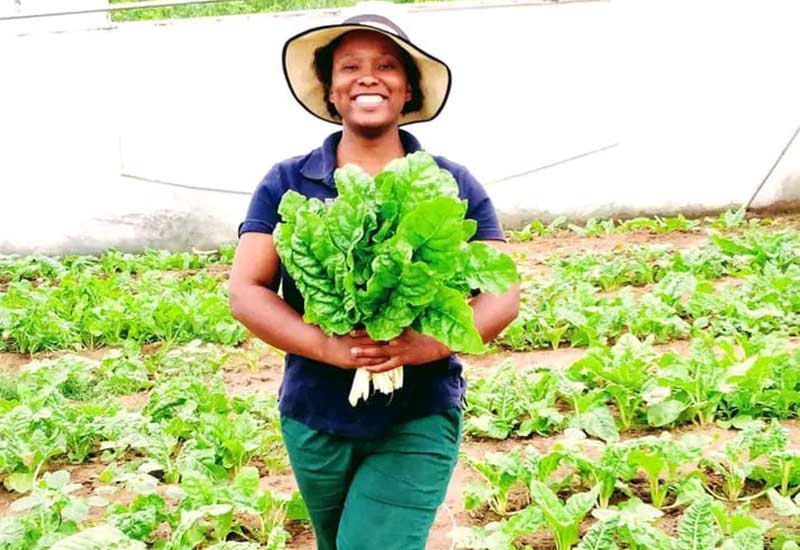
Siphokuhle Mdluli and Samkelisiwe Dlanzi are shining examples of how youth empowerment and sustainable agriculture can transform lives and communities. Both participants in the WESSA South32 Eco-Hub Project, joined the programme in 2022, each with unique backgrounds and aspirations.
Siphokuhle, initially disinterested in agriculture, now holds a profound love for the soil and the art of growing food. Reflecting on her journey, she shares, “Sometimes what we thought we wanted arrives in a different package than expected, but when we unwrap it, it is far more beautiful than we ever could have imagined. It is a gift we never asked for, but we never knew we needed. That is what being part of this project has meant to me. I have gained lifelong skills that will sustain me.”
Samkelisiwe, who grew up with exposure to subsistence farming, has found the programme to be an avenue for innovation and growth. “The training has equipped me with theoretical knowledge and allowed me to innovate,” she says. Today, uMkhoma Eco Hub is not only providing employment opportunities for unemployed youth in the community but has also signed a partnership agreement with Boxer Supermarket Richards Bay to purchase their entire harvest. Another success story from the South32 Eco-Hub Project is the establishment of eight agribusinesses over the past two years. Eighteen young job seekers have now transformed into job creators, significantly impacting their communities through ventures ranging from poultry farming to crop production. These young agripreneurs received comprehensive support, including solid business plans and exit funds, ensuring the sustainability and growth of their enterprises. The WESSA South32 Eco-Hub Project, launched in 2022 in the King Cetshwayo District, has established four Agriculture Eco-Hubs situated in Amangwe, uMkhoma, uMhlathuze and Madlankala communities.
This initiative is a powerful platform for youth engagement, employability, and entrepreneurship in the agriculture sector, ensuring climate-resilient food systems in the communities.
In just two years, the WESSA South32 Eco-Hub Project has created a transformative impact. By preparing youth ambassadors with comprehensive agribusiness development support and equipping them with tools for self-employment, the initiative has fostered sustainable development and ensured a brighter future for these communities.
Sep 5, 2024 | News
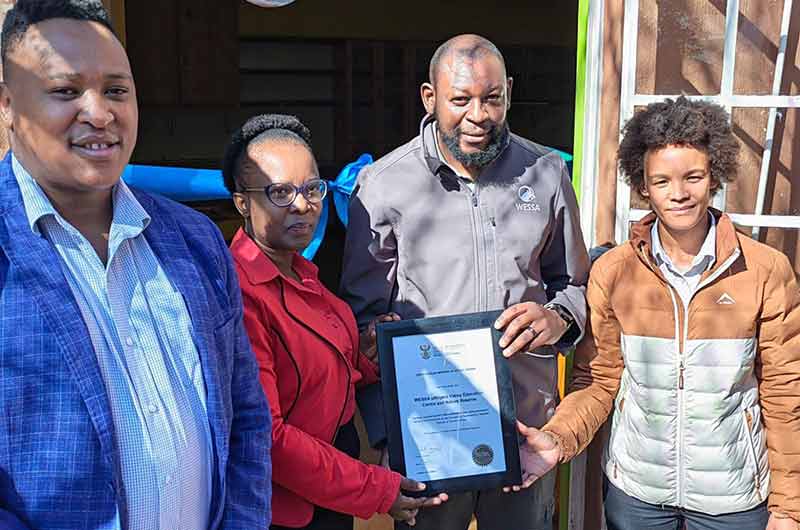
In a remarkable achievement for the Howick community, the WESSA uMngeni Valley Education Centre in KwaZulu-Natal has been officially accredited as a Science Centre by the Department of Science and Innovation (DSI), following a thorough evaluation and recommendation process.
This recognises the centre’s commitment to enhancing science communication and education for school learners and the surrounding local communities. The accreditation ceremony, held at the WESSA uMngeni Valley Education Centre, was attended by distinguished guests including Deputy Mayor of uMngeni local municipality, Sandile Mnikathi, WESSA acting CEO, Cindy-Lee Cloete, and National Research Foundation (NRF) – South African Agency for Science and Technology Advancement (SAASTA) Managing Director, Dr. Mamoeketsi Mosia.
In a significant boost to the centre’s capabilities, WESSA received nine new Science and Technology exhibits from NRF SAASTA. These include a multimedia aquarium, metal detector, tower of Hanoi, Dr Panic, star drawing, sundial, dizzy viewer with optics, and a Dobsonian telescope. These interactive exhibits will provide learners with hands-on opportunities to explore and understand scientific concepts. The exhibits will enable individual learners to visit the centre and immerse themselves in the science exhibit room, encouraging self-directed learning and experimentation.
“We are very excited to have partnered with WESSA Education Centre,” said Dr. Mamoeketsi Mosia, Managing Director of NRF SAASTA. “We recognise that science centres with live exhibits play a crucial role in growing the science community in South Africa. This handover is a success for us as it helps cultivate a love for science among learners and students in and around Howick.”
Deputy Mayor of uMngeni local municipality, Sandile Mnikathi highlighted the dual educational and economic benefits WESSA brings to Howick: “We often talk about the educational value WESSA uMngeni Valley adds to our community, but we frequently need to remember the positive economic value that its ecotourism brings to our small town. Government cannot do it alone, and we look forward to working closely together and supporting organisations such as WESSA.”
Cindy-Lee Cloete, acting CEO of WESSA, shared her excitement about the new developments: “The accreditation and the new exhibits mark a significant milestone for WESSA uMngeni Valley Education Centre. We are committed to enhancing our educational programmes and providing engaging, hands-on learning experiences for our learners. These exhibits will greatly enrich our science communication efforts and help us inspire young learners.” WESSA extends and open invitation to parents, learners, schools, and community members to visit and experience these new exhibits. Beginning in October, Science Saturday’s will be held on the last Saturday of every month offering an enriching experience for a nominal fee of R15. For more information, please contact 033 330 3931.
The goal at WESSA uMngeni Valley Education Centre is to improve learning through interactive science communication activities. The new exhibits will significantly contribute to achieving this goal by meeting necessary performance and operational standards for optimal functioning as a science centre.
Sep 5, 2024 | News
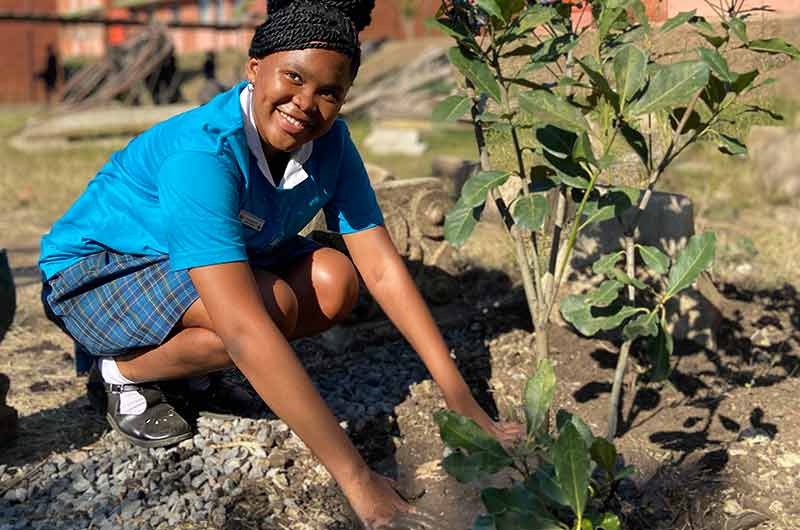
Emihle Mkhize, a grade 10 pupil and dedicated young reporter at Glenhaven Secondary School in Verulam, KwaZulu-Natal, has taken proactive steps toward environmental advocacy. She is a proud participant in the Youth Environmental Reporters and Advocates (YERA) Programme, a collaborative initiative by UNICEF South Africa and WESSA (Wildlife and Environmental Society of South Africa). This initiative empowers 400 young reporters, predominantly girls, along with 80 educators across 40 schools in South Africa. The YERA Programme integrates the Young Reporters for the Environment (YRE) approach, encouraging youth to investigate local environmental issues, conduct research and interviews, and create journalistic pieces such as articles, photos, or videos to raise awareness and educate others.
After a two-day induction at uMngeni Valley Nature Reserve, Emihle acquired essential skills, including water quality monitoring using miniSASS, conducting tap water testing, impactful article writing, leadership development, and capturing powerful stories through photography and videography. Equipped with these essential skills to drive climate justice and environmental advocacy, she is motivated and inspired to make a positive impact on her school environment. She has taken on the responsibility of cleaning up litter around the school and actively collaborates with other young reporters to raise awareness about crucial environmental issues in the community. As a member of the Eco Avengers, Emihle plays a pivotal role in advocating for environmental care and instilling a sense of responsibility among her peers. Her commitment to environmental stewardship extends beyond school. At home, she spends time gardening and recycling waste, particularly plastic bottles. This dedication emphasises the importance of increasing environmental awareness, education, and empowering individuals to amplify the value of their ideas.
Emihle says she draws inspiration from Nelson Mandela’s profound words: “Education is the most powerful weapon which you can use to change the world.” Striving to embody this wisdom, Emihle’s actions resonate with the power of education in driving change. Emihle’s story is a shining example of how South African youth, equipped with education and passion, can create significant impact. Through the YERA programme and personal commitment, Emihle is making her mark, embodying the belief that education is indeed the most powerful weapon to change the world.
Sep 3, 2024 | Success Stories
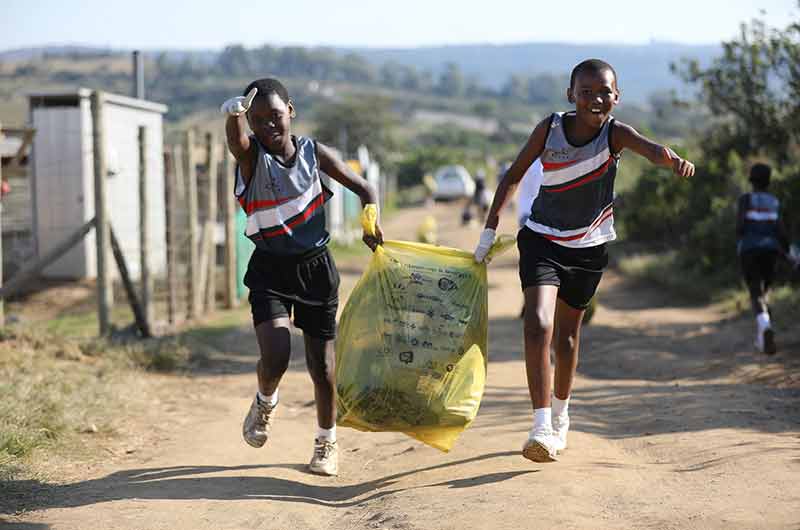
In a landmark celebration of two decades of environmental education, WESSA proudly hosted the Eco-Schools Awards, honouring the transformative impact of the Eco-Schools programme across the nation.
For the past 20 years, the Eco-Schools initiative has been instrumental in promoting sustainability and conservation practices within schools and communities. WESSA Eco-Schools have taken the lead in environmental education, equipping students, teachers, and local communities with the knowledge and tools to champion environmental stewardship, encouraging a culture of environmental awareness and responsibility.
Over 2,300 schools have registered for the Eco-Schools programme, engaging more than 1.3 million learners and 32,000 teachers in direct and indirect environmental education efforts. These outstanding statistics highlight the significant impact of the Eco-Schools initiative in shaping environmental consciousness of South Africa’s youth.
The recent annual WESSA Eco-Schools Awards ceremonies, held across six regions, serve as a platform to commend schools, teachers, and learners for their exceptional commitment and achievements in promoting environmental stewardship. Through partnerships with organisations such as Sun International, eWASA, Nedbank, and others, WESSA has been able to amplify the reach and impact of the Eco-Schools programme, driving positive change in communities nationwide.
Among the notable recipients of this year’s awards are Epworth School and The Birches Pre-Primary School in KZN, honoured with Emerald awards for their sustained dedication to environmental action over 20 years. Additionally, 40 International Green Flags were awarded nationally, recognizing schools for their outstanding environmental efforts.
In a shining example of environmental leadership, Kabega Primary School in Gqeberha received a prestigious Diamond award for their decade-long commitment to sustainability. Through initiatives like a comprehensive recycling programme and integrated environmental curriculum, Kabega Primary has emerged as a model of promoting active citizens of environmental stewardship, inspiring change within their school and beyond.
The Department of Basic Education has identified local teacher support as a key objective for achieving educational quality.
Busi Dladla, Director for Curriculum General Education and Training, outlined that by incorporating WESSA Eco-Schools activities into the curriculum, educators provide students with practical experiences that enhance their learning outcomes while nurturing a culture of sustainability.
Dladla’s emphasis on the synergy between Eco-Schools and CAPS curriculum highlights the programme’s significance in shaping holistic education that prepares learners for the challenges of the 21st century. Through project-based learning initiatives, WESSA Eco-Schools empower students to become active participants in their education, encouraging critical thinking, problem-solving skills, and environmental awareness.
Nomfundo Ndlovu, WESSA’s Schools Programme Manager, expressed her pride in the accomplishments of participating schools and the enduring impact of the Eco-Schools programme. “These awards reflect the dedication and passion of our educators and learners towards environmental awareness and action,” she remarked.
For more information about the WESSA Eco-Schools programme and the awards ceremony, please contact Nomfundo Ndlovu at nomfundo.ndlovu@wessa.co.za.
Sep 3, 2024 | Success Stories
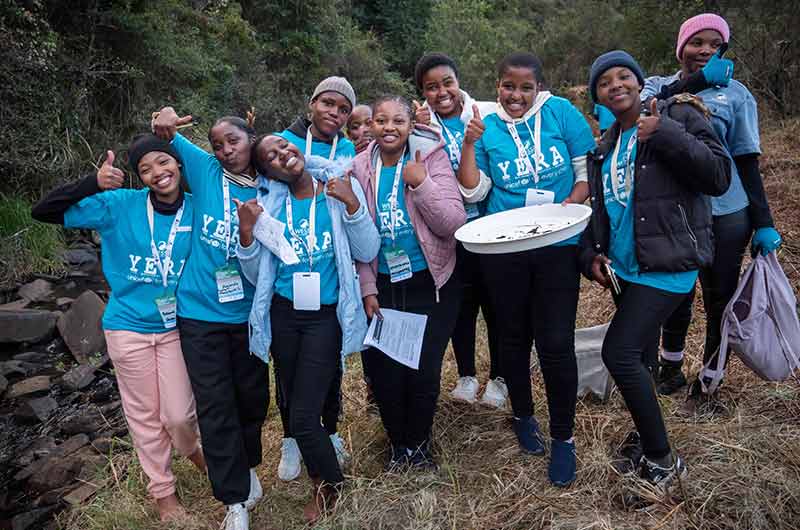
The ‘Youth Environmental Reporters and Advocates’ (YERA) programme, aims to empower a cohort of young people across South Africa to investigate, document, and communicate environmental issues in their communities.
The initiative, led by UNICEF South Africa and WESSA (Wildlife and Environment Society of South Africa), in collaboration with the Department of Basic Education, will build learners climate literacy and environmental knowledge, and enhance communication and reporting capacities on the local issues that matter to them.
“I am excited to learn how to raise my voice to create more awareness about the pressing environmental issues in our school and community,” said Saron Gidiso, a grade 10 learner at Marklands Secondary in Chatsworth. Another grade 10 learner, Imithle Mkhize, from Glenhaven Secondary in Tongaat stressed the importance of taking action now so that authorities could address the issues of water shortages, pollution, and littering to create a more pleasant environment. “If we don’t speak about it as the youth, then who will? These are things that affect us in our daily lives. We see it. We might turn our heads when we see a piece of paper and ignore it, but it affects us in the long run,” she said.
Over the next eight months, the YERA programme will be implemented across four provinces – KwaZulu-Natal, Western Cape, Northern Cape, and Eastern Cape, targeting 40 schools (ten in each province), and empowering 400 young reporters.
“The YERA programme embodies our commitment to environmental and social justice,” said Cindy Cloete, WESSA CEO. “By empowering young people, we are shaping a new generation of environmental champions who will lead the fight against climate change and advocate for sustainable solutions. We are thrilled to partner with UNICEF on this critical initiative and look forward to its transformative impact,” added Cloete.
Young people’s voices, particularly girls, often remain stifled, disconnected, and under-supported in the vital call for urgent action against the climate crisis and other environmental challenges they face. The ‘Climate, Energy, and Environment Landscape Analysis for Children in South Africa’, released by UNICEF South Africa in late 2023, reiterated the importance of increasing the visibility of children and young people in the climate and environment agenda to ensure policies and actions that respond to their specific needs.
“Empowering learners and young people, particularly girls, through education and nurturing their skills will build on their local knowledge to help raise their voices and strengthen action on local climate and environmental challenges,” said Christine Muhigana, UNICEF South Africa Representative.
“Young people are exposed to climate and environmental challenges today, they are best placed to tell that story and we need to respond to their needs by directly influencing climate policies and related community level adaption efforts,” added Muhigana.
Through a series of training, the programme will educate participants in investigative journalism, environmental science, and advocacy skills to enable young reporters to be champions of the environment. The workshops will utilise WESSA’s ‘Young Reporters for the Environment’ (YRE) methodology, with one of the key outputs being journalistic works produced by each participating school for distribution across a range of online and media platforms.
By working together, we can all ensure that youth in South Africa, especially girls, are equipped with the knowledge, skills, and platforms needed to raise awareness, influence policy, advocate for the environment, and take meaningful action.
“This programme is an important step forward in further nurturing environmental awareness among learners in South Africa and we hope the programme can be expanded in the coming months and years to benefit more South African schools,” said the KZN Department of Basic Education acting Chief Education Specialist, Lazi Mtwa.
The programme is made possible thanks to generous funding through the UNICEF Canada National Committee.
Click to watch the launch: https://youtu.be/i3RCQYcplFY?si=lhT8fPE2wZbdVK7q
Sep 3, 2024 | Success Stories
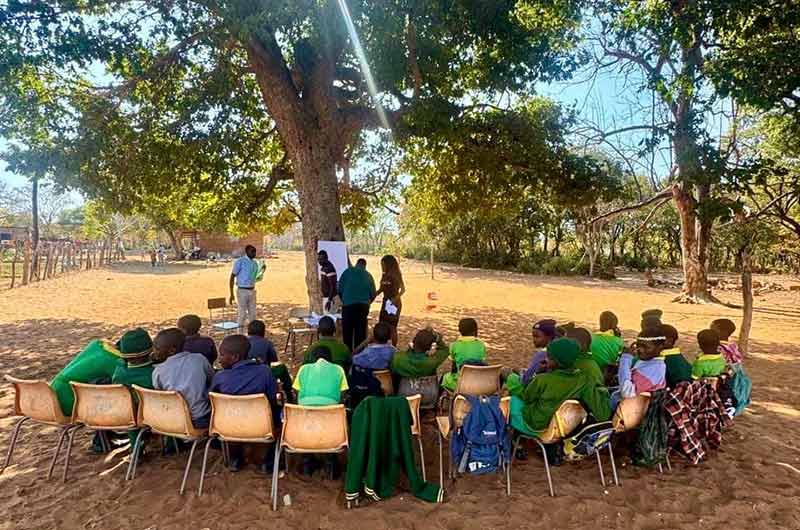
In a landmark collaboration, WESSA and the Foundation for Environmental Education (FEE) have partnered with Children in the Wilderness (CITW) to extend the reach of the Eco-Schools programme into Zimbabwe. This initiative marks a significant step forward in encouraging environmental stewardship and sustainability across borders, uniting Zimbabwe and South Africa in a shared mission to educate the next generation of eco-conscious leaders.
The partnership was forged with a dynamic three-day training session, led by Nomfundo Ndlovu WESSA’s senior manager for Schools and Youth programmes. Designed to equip the CITW team with the tools and knowledge needed to successfully implement the Eco-Schools programme, this training laid the foundation for sustainable environmental education in Zimbabwe. In addition, Nomfundo visited schools across Zimbabwe to directly understand the unique challenges they face.
WESSA’s expansion into Zimbabwe is inspiring to schools across Southern Africa. By incorporating eco-lessons into the curriculum, these African schools are now poised to tackle the unique environmental challenges they face with a renewed sense of purpose and determination. The vision behind this expansion is clear: to create a ripple effect of environmental awareness that transcends borders, driving a network of young eco-warriors who will carry the torch of sustainability forward. Through ongoing support, regular follow-ups, and tailored guidance, WESSA ensures that the Eco-Schools programme in Zimbabwe not only takes root but flourishes.
As the programme continues to grow, so too does the bond between Zimbabwe and South Africa—a bond forged in a shared belief that environmental education is the key to a sustainable future. This collaboration is a symbol of what’s possible when communities come together with a common goal.