
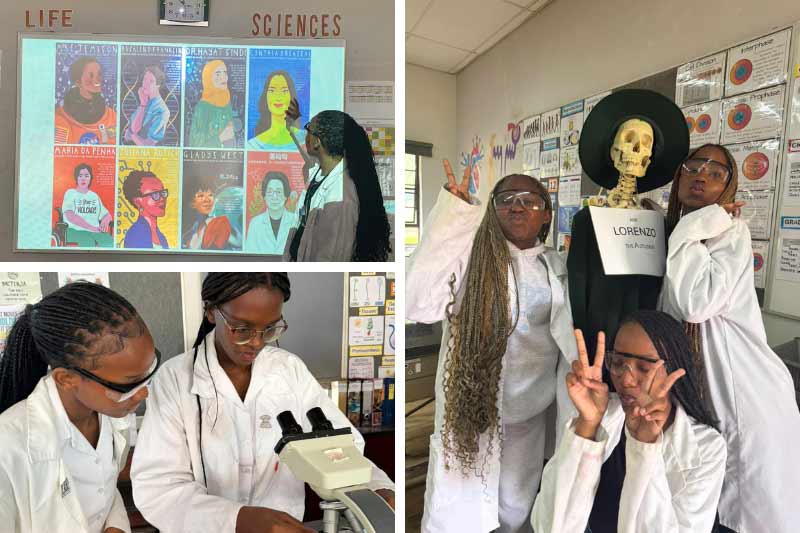
Pictured above: Learners presenting female scientists and conducting science experiments in the lab.
Across the ADvTECH school network, learners marked key environmental and science awareness moments during February through hands-on activities, creative exploration and peer-to-peer learning. From celebrating women in science, to learning about endangered wildlife and the importance of ocean health, these activities showed how environmental education can spark curiosity and empower learners of all ages to better understand the world around them.
Pecanwood College: Celebrating Women and Girls in Science
On 11 February, learners at Pecanwood College marked the global celebration of Women and Girls in Science with an engaging, learner-led event. Grade 11 science learners took the lead in teaching their peers about the achievements of influential female scientists and the groundbreaking discoveries they have contributed to the world.
Through a series of presentations and discussions, learners highlighted the inventions and scientific breakthroughs made by women across different fields. To make the experience interactive and inspiring, the group also conducted additional experiments outside of their normal classroom activities, demonstrating how science can be both accessible and exciting.
Learners further explored the topic by watching a video highlighting successful women in science and the difference their work has made globally. These activities encouraged discussion, curiosity and recognition of the role women continue to play in advancing scientific knowledge.
The event fostered peer-to-peer learning, with female learners confidently sharing their knowledge and enthusiasm for science with fellow students. Discussions also increased awareness of the important contributions women have made to scientific progress.
Pecanwood College Pre-Prep: World Whale Day sparks ocean curiosity
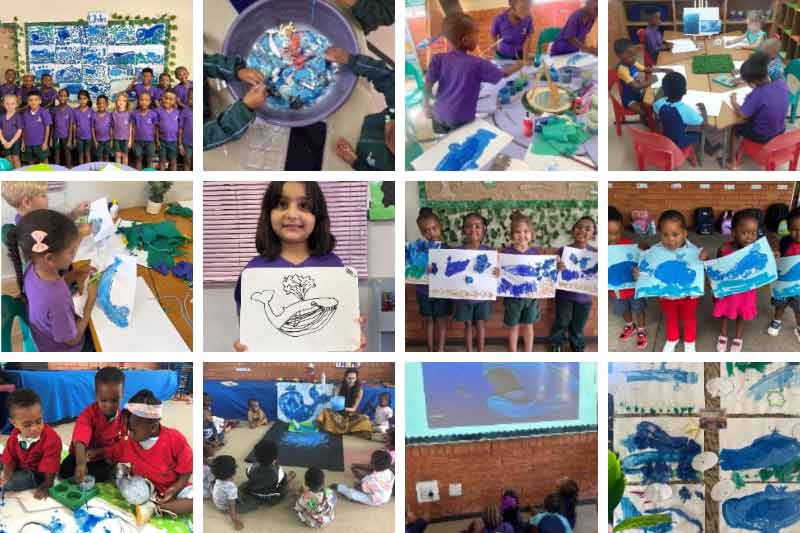
Pictured above: Classroom whale painting activity and learners with their whale artwork.
On 15 February, the Pecanwood College Pre-Prep celebrated World Whale Day through a series of creative and educational classroom activities designed to raise awareness about whales and their role in healthy oceans.
Each class approached the topic in different ways, blending science, storytelling, art and exploration to help learners understand marine life.
The youngest learners, the Grade 0000 class, explored whales through songs and stories and collaborated on a group art project where they used water and droppers to paint a large whale artwork.
In Grade 000, learners discussed the story of Jonah and the whale, exploring what type of whale it might have been and whether it would have had teeth or baleen. They then drew their own interpretations of the whale based on what they had learned.
The Grade 00 learners designed their own whales and presented them to the class, practising skills such as observation, questioning and sharing ideas. They also explored water, bubbles and ice while creating suncatcher artwork.
In Grade 0, learners examined how whales contribute to ocean health. Through discussion, observation and shared research, they expressed their understanding by drawing and painting their interpretations of these remarkable marine animals.
Together, these activities helped build awareness about whales and their importance in marine ecosystems, while also encouraging creativity, curiosity and early scientific thinking.
Junior Colleges Meyersdal: Young learners celebrate World Pangolin Day
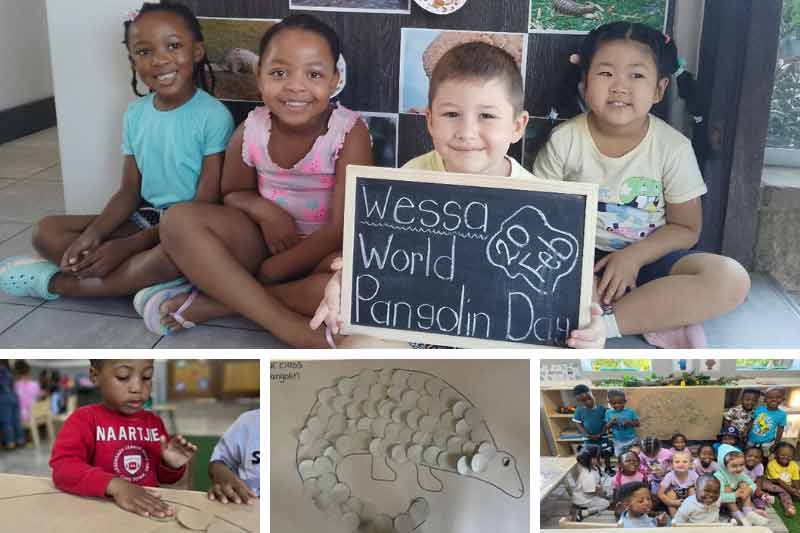
Pictured above: Learners participating in pangolin artwork activity and showcasing their classroom Pangolin display.
At Junior Colleges Meyersdal, even the youngest learners took part in environmental learning by celebrating World Pangolin Day on 21 February 2026.
Learners aged two to six years old were introduced to the pangolin, one of the world’s most unique yet threatened animals. Teachers explained what pangolins are, why they are endangered, and why protecting wildlife is important for our planet.
The classes also explored ten interesting facts about pangolins, helping learners understand these fascinating animals in a way that was engaging and age appropriate.
Creativity played a central role in the learning process. Learners created colourful pangolin-inspired artwork using a variety of materials, turning their new knowledge into visual expressions of what they had learned about the species.
Through storytelling, discussion and creative activities, the young learners began developing an early appreciation for wildlife conservation and the importance of protecting endangered animals.
Learning that inspires action
Across these activities, ADvTECH schools demonstrated how environmental education can be brought to life through curiosity-driven learning. Whether exploring the achievements of women in science, discovering endangered wildlife like the pangolin, or learning about the vital role whales play in ocean ecosystems, learners engaged with real-world environmental themes in ways that were both meaningful and memorable.
By combining creativity, discussion and hands-on exploration, these initiatives help nurture a generation of learners who are not only informed but inspired to care for the natural world.