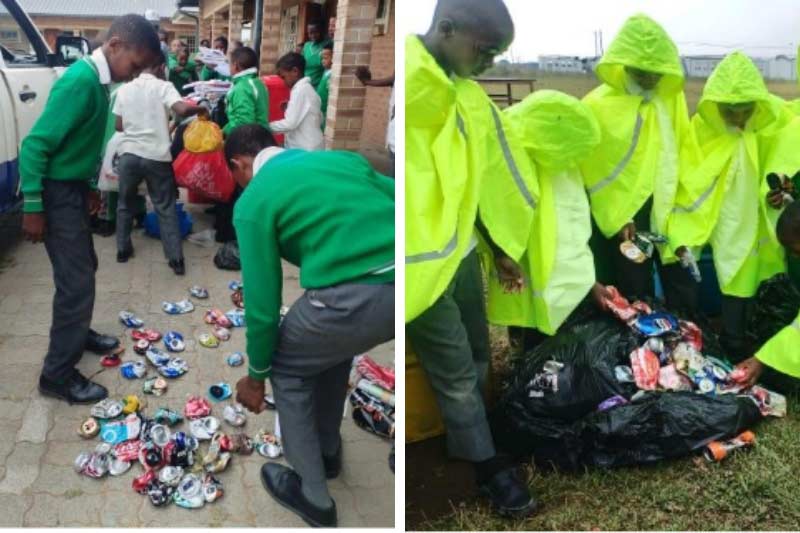
Pictured above: Bekezela Learners compressing their Waste tins and sorting recyclables
WESSA’s partnership with Nedbank continues to bring the principles of the circular economy to life in classrooms, equipping learners with practical knowledge and real-world skills to address waste challenges while unlocking economic opportunity.
From awareness to action
The March rollout of the Nedbank Circular Economy Project focused on introducing learners to the concept of waste and its environmental impact, building on the foundation laid during the educator workshop.
Teachers piloted their lesson plans by guiding learners through the fundamentals of the circular economy, including how the 7R’s framework can be applied to reduce waste and rethink resource use.
Importantly, learners were encouraged to think beyond theory, engaging in discussions on how waste can be repurposed into income-generating opportunities through creative, small-scale business ideas.
Learning through upcycling
Hands-on learning formed a central part of the programme, with learners participating in upcycling activities that demonstrated how everyday waste materials can be reused in practical ways.
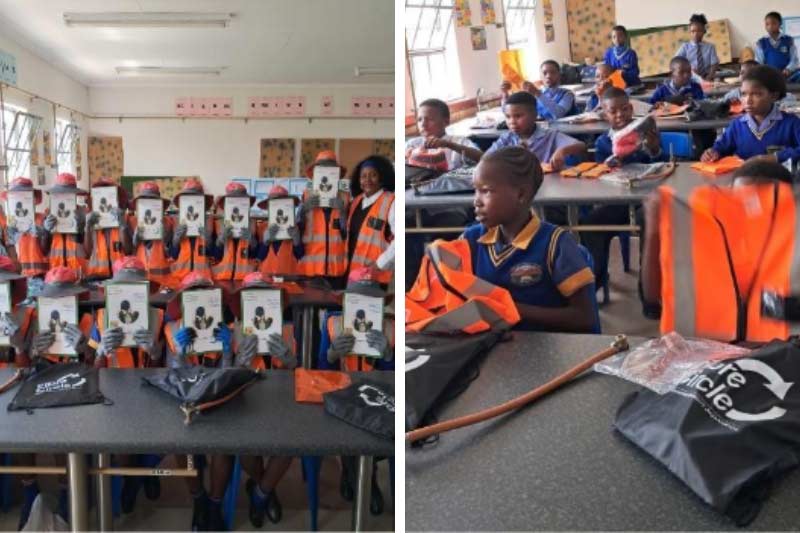
Pictured above: Lehutso Primary School learners engaging in the session on the reuse of waste
From repurposing paper packaging to cover books, to transforming plastic bottles into functional containers, learners explored how simple interventions can extend the life cycle of materials while reducing environmental impact.
These sessions were further strengthened through a presentation by Indalo Yami Recyclers, who shared insights into how recycling contributes to both environmental protection and income generation. Learners were also introduced to key health and safety considerations, including the risks associated with handling contaminated or hazardous waste.
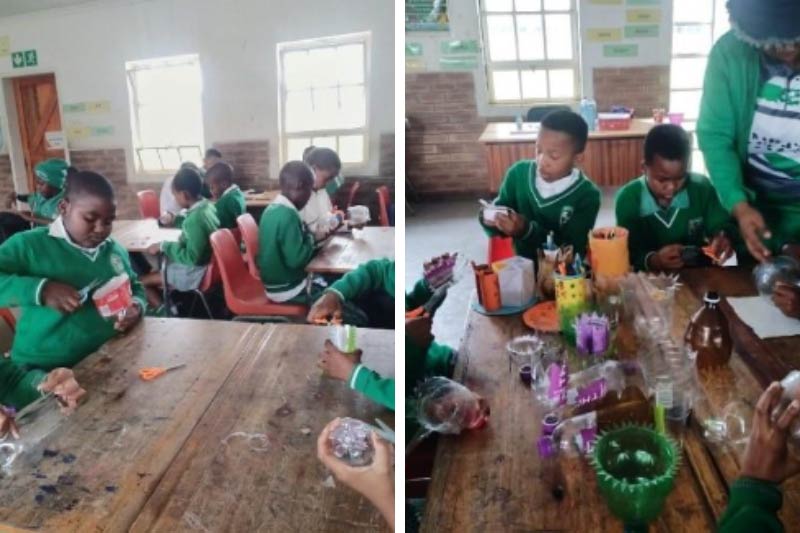
Pictured above: Bekezela Primary School learners reusing 2lt bottles to make containers
Building a culture of recycling
The second phase of the project deepened learners’ understanding of recycling systems and the finite nature of natural resources.
Learners explored how waste materials are categorised into reclaimable and non-reclaimable streams, and why sorting waste at source is critical to improving recycling efficiency and reducing contamination.
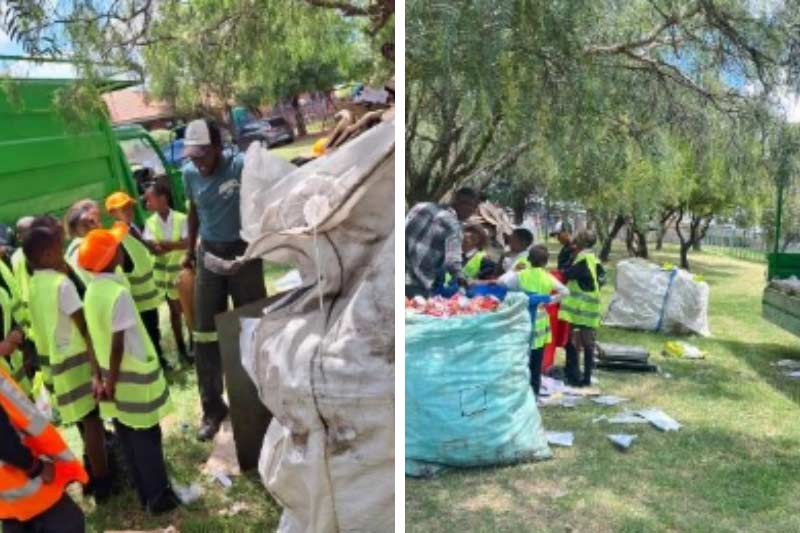
Pictured above: Nelson Mandela P.S learners learning about recycling and sorting waste
Across participating schools, learners are now actively collecting and sorting recyclable materials including beverage cans, paper, cardboard, and plastic – turning environmental responsibility into measurable action.
Turning waste into opportunity
A key outcome of the project has been the ability of schools to begin generating income through their recycling initiatives, demonstrating the tangible value of circular economy principles in action.
Looking ahead, the next phase will integrate Economic and Management Sciences (EMS) into the programme, enabling learners to manage and grow the income generated through their recycling and upcycling activities.
This progression ensures that learners not only understand sustainability concepts but also develop the financial literacy and entrepreneurial skills needed to sustain and scale their initiatives.
Educating for a circular future
Through this project, WESSA and Nedbank are demonstrating how environmental education can move beyond awareness to meaningful, learner-led action.
By linking sustainability with economic opportunity, the initiative is helping to shape a generation of young people who are not only environmentally conscious, but also enabled to innovate, lead, and contribute to a more circular and resilient future.