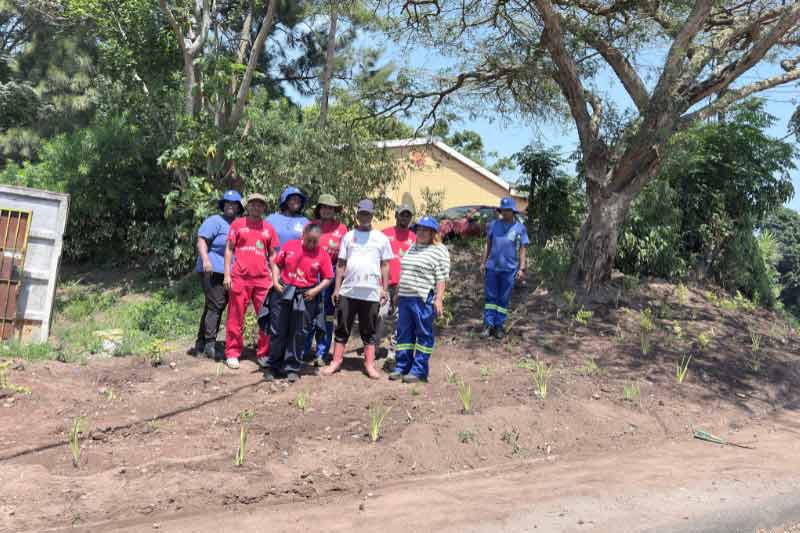
Pictured above: WESSA and Durban Solid Waste teams work together to rehabilitate an illegal dump site in Clermont.
Across KwaZulu-Natal this January, young people, community members and local partners came together to take tangible action for the environment. Through the Green Rising initiative, implemented by WESSA in partnership with UNICEF, two community-led interventions demonstrated how collective effort can restore degraded spaces while strengthening environmental stewardship at a local level.
From clearing invasive alien vegetation on a school campus to transforming an illegal dump site into a thriving biodiversity garden, these activities highlight what is possible when communities are empowered to care for the environments they live, learn and work in.
Restoring a school environment at Sthengile Senior Secondary
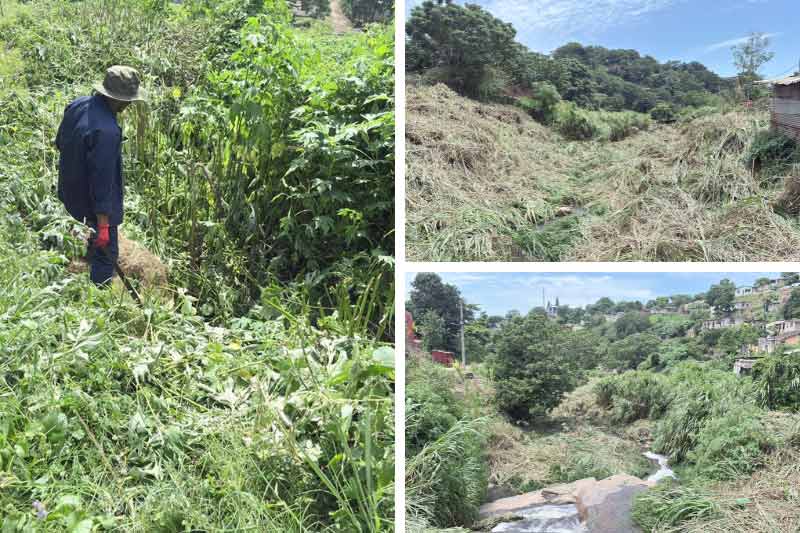
Pictured above: Alien invasive clearing activity at Sthengile Senior Secondary School
On 22 January 2026, WESSA, together with PEP Volunteers, community members and the local ward councillor, hosted an alien invasive clearing activity at Sthengile Senior Secondary School.
The initiative focused on removing dense invasive vegetation that had spread across more than two hectares of land on and around the school grounds. Through a coordinated, hands-on effort, the area was cleared, allowing indigenous plant life to recover and creating a safer, healthier environment for learners and educators alike.
Beyond the immediate ecological impact, the activity also served as a practical learning opportunity reinforcing the link between environmental care, climate resilience and community wellbeing, particularly for young people who are central to the Green Rising vision.
From illegal dump to biodiversity garden in Clermont
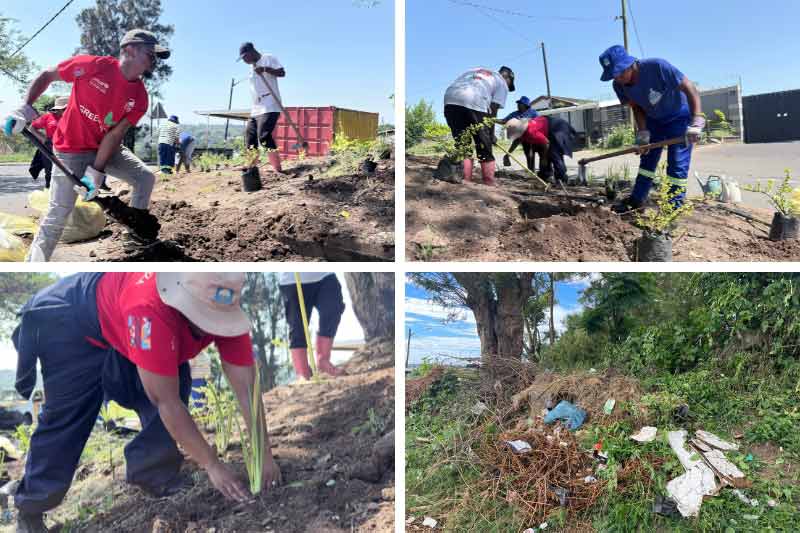
Pictured above: Clermont – WESSA and Durban Solid Waste teams hard at work to clear 20 tonnes of waste.
Just days later, on 28 January 2026, WESSA partnered with Durban Solid Waste to rehabilitate an illegal dump site in Clermont.
More than 20 tonnes of waste were removed from the site, significantly improving environmental conditions and reducing health risks for nearby residents. Following the clean-up, the space was rehabilitated and transformed into a functional biodiversity garden, offering a visible and lasting example of how degraded urban spaces can be reimagined.
Crucially, long-term sustainability was built into the project. A neighbouring spaza shop formally adopted the garden, committing to its ongoing care and maintenance, a powerful demonstration of local ownership and pride in the restored environment.
Enabling youth-led environmental action
Both activities form part of the Green Rising initiative, which supports youth-driven environmental action while strengthening community resilience in the face of climate and ecological challenges.
By combining hands-on environmental restoration with local partnerships and shared responsibility, these KwaZulu-Natal interventions show how meaningful change happens not only through policy and programmes, but through people working together to protect and restore the places that matter most to them.