
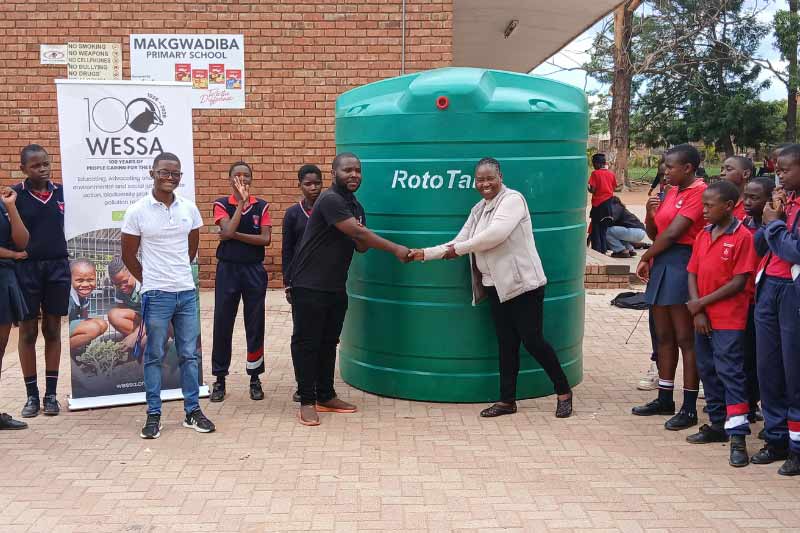
Pictured above: Makgwadiba Primary School Principal, Mrs Linah Malatji shaking hands with WESSA representative, Sabelo Sithole, during the resource hand over.
Through the WESSA & Capricorn District Municipality (CDM) Eco-Schools programme, educators and learners worked together to champion water-wise behaviour and long-term environmental stewardship.
Building Educator capacity for long-term climate resilience (Eco Schools Teachers workshop)
On 10 November 2025, the WESSA team hosted a dynamic teachers’ workshop at Makgwadiba Primary School to conclude this year’s project focused on building climate change resilience through water conservation. The session brought together all the knowledge gained throughout the year, with a strong emphasis on how schools can sustain the momentum moving forward.
Teachers engaged in meaningful discussions on the importance of critically assessing the trade-offs and consequences of resource allocation to maximise objectives, especially when working with limited resources. A key takeaway was the need for transparency, accountability, and the involvement of all stakeholders in decision-making processes ensuring everyone plays a part in achieving shared environmental goals.
One of the highlights of the workshop was welcoming newly joined Eco-Club teachers who were inspired by the ongoing Eco-Schools activities at their respective schools. Participants also took part in an interactive resource allocation simulation, applying their new knowledge to real school scenarios. Their enthusiasm and commitment showcased the growing strength of environmental leadership within the community.

Pictured above: (top) Teachers participating in a resource allocation simulation activity during the Teacher’s workshop session (bottom) Maribe Primary School Eco Club enjoyed our last engagement.
Hands-on water conservation, enabling learners to turn knowledge into daily action
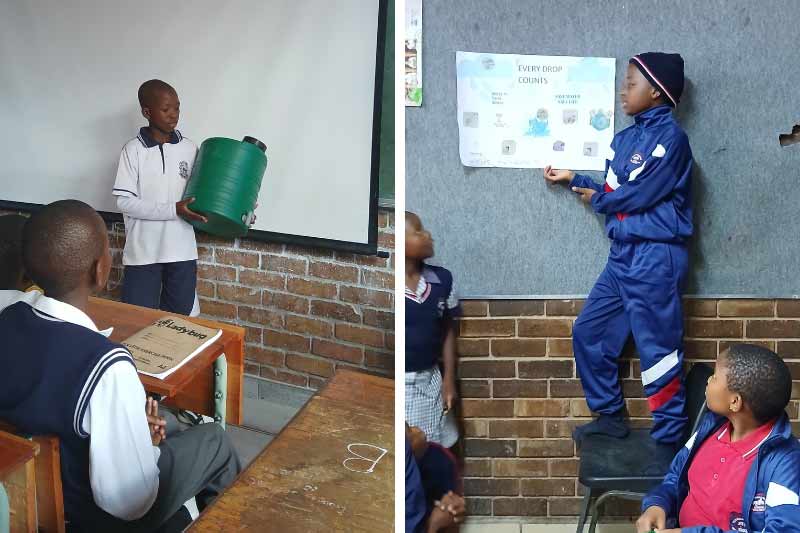
Pictured Above: (left) A learner at Dikolobe Primary School presenting on the importance of rainwater harvesting; (right) Learners at Pulamadibogo Primary School, prepared posters on water conservation and here a learner is seen presenting her poster.
Education sessions were conducted on the 11th and 12th of November across six schools in Turfloop as part of the final engagements with learners for this year’s Eco-Schools project.
These sessions focused on:
- Strengthening learners’ understanding of practical water conservation techniques that can be applied both at school and at home.
- Learners exploring simple yet effective practices such as fixing leaks, using water wisely during daily routines, and adopting methods that reduce unnecessary wastage.
By revisiting the concepts learned throughout the year, the sessions helped consolidate knowledge and highlight the importance of responsible water use.
The overall aim was to reinforce practical approaches to saving water and empower learners to take an active role in safeguarding this vital resource. Through discussions and interactive demonstrations, learners were encouraged to see themselves as key contributors to water conservation efforts within their communities. The sessions emphasised that small, consistent actions such as reporting leaks, reusing greywater safely, or practising mindful consumption can collectively make a significant impact.
As a result, learners left with a renewed sense of responsibility and a stronger commitment to protecting water resources for the future.
A water tank that changes everything
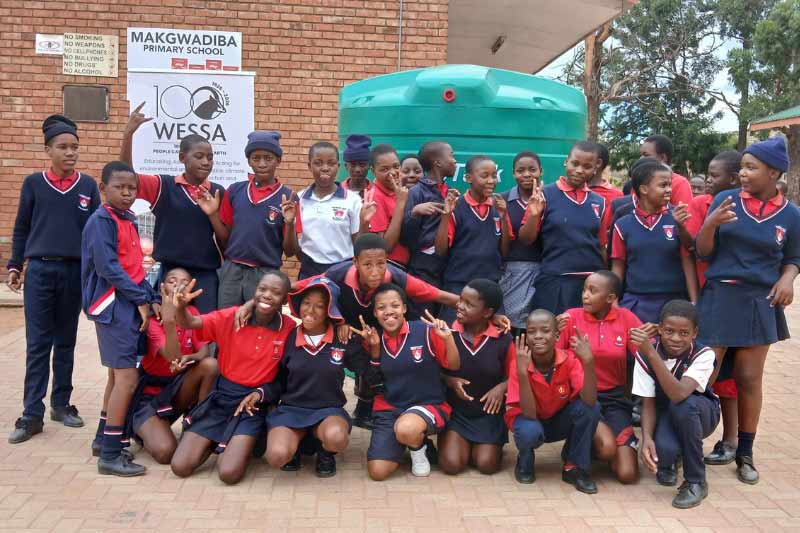
Pictured above: The Makgwadiba Primary School Eco Committee with the newly received water tank.
Makgwadiba Primary School received a much-needed water tank donation after the lack of proper water storage was identified as a key challenge.
The principal and staff expressed their heartfelt gratitude, noting that the tank would make a meaningful difference in the school’s efforts to use water responsibly and sustainably. They highlighted how the donation came at the perfect time, as the school had recently established a food garden to improve nutrition and support feeding programmes.
With the new tank, the school can store rainwater and ensure a steady supply for irrigation, especially during dry periods. This reliable water source is expected to greatly enhance food production, allowing the garden to flourish and ultimately benefit learners through fresh produce and improved food security.